

The Place: Al-Aan Palace in Najran, an architectural gem in Saudi Arabia

1 / 2
Image: SPA
2 / 2
Image: SPA
Short Url
Updated 17 October 2022
Follow

The Place: Al-Aan Palace in Najran, an architectural gem in Saudi Arabia

Architectural heritage in Saudi Arabia represents an important historical sector, the preservation of which has received significant funding from the state under the framework of Saudi Vision 2030.

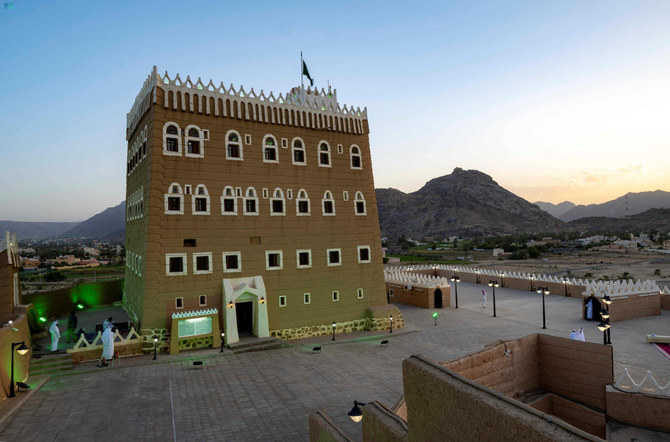
Al-Aan Palace in Najran, with its unique style of construction and ornate white edges, remains one of the most splendid architectural gems in the region.

The renovation of the palace, which dates back more than 340 years, has preserved the heritage of the region, which is rich in structures made from local, raw materials, and which are decorated in traditional styles.

Al-Aan Palace is located on the Aan Mountain to the west of Najran, and comprises four floors built according to a unique architectural pattern that reflects the identity and history of the local community.

The supervisor of the palace, Hussein Al-Makrami, said it was built in 1688 and witnessed successive renovation works, the last and most extensive of which was in 2018.

The palace is built entirely of mud with the building blocks system Najran is famous for, where walls are built in successive stages on a foundation of stone, while the roofs are made of wood, palm trunks and fronds, and Ziziphus trees.

Al-Aan Palace is a model of traditional architecture consisting of 4 floors, each occupied by one family, surrounded by a wall with several circular and rectangular towers to protect the palace and its surrounding areas.

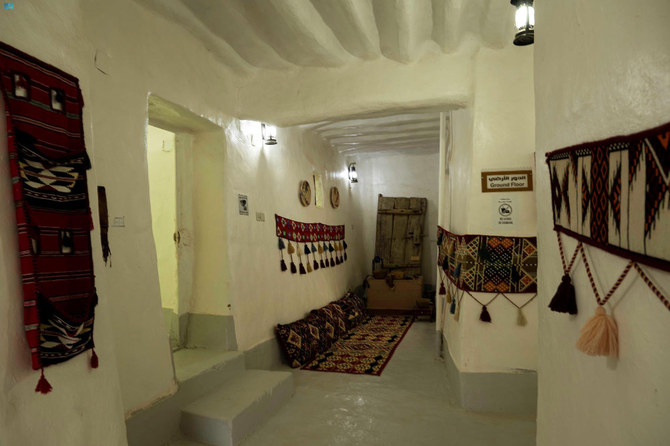
Al-Makrami added that the rooms of the palace were equipped with tools, pots and clothes to acquaint visitors with the heritage of the region. The palace receives visitors three days per week, in addition to receiving official, scientific and tourist delegations around the year.


Pakistan, Saudi Arabia explore joint investment push in high-growth regions

Updated 29 min 10 sec ago
Follow

Pakistan, Saudi Arabia explore joint investment push in high-growth regions

  • Both sides discuss combining Pakistan’s production capacity with Saudi capital and regional market access
  • Government says Saudi side expressed interest in corporate farming in Pakistan, particularly in rice sector

KARACHI: Pakistan and Saudi Arabia are looking to jointly tap high-growth regional markets and align production and capital strengths, according to an official statement on Wednesday, following talks between Commerce Minister Jam Kamal Khan and Saudi Investment Assistant Minister Ibrahim Al-Mubarak in the Kingdom.

The two countries have long maintained close bilateral ties that have evolved into a multidimensional strategic partnership.

In October last year, the two countries launched an Economic Cooperation Framework aimed at shifting relations beyond aid toward sustainable trade, investment and development links. The framework followed the signing of a joint security agreement a month earlier, under which aggression against one would be treated as an attack on both.

“A key focus of the discussion was the joint exploration of regional markets, particularly Central Asia, Africa, and ASEAN, identified as high-growth regions offering significant opportunities for collaboration,” according to a statement circulated by Pakistan’s commerce ministry after the meeting.

“The two sides agreed that Pakistan and Saudi Arabia, by leveraging their respective strengths, can position themselves as complementary partners — combining Pakistan’s production capabilities with Saudi Arabia’s capital strength, market access, and regional connectivity,” it added.

The Saudi side expressed interest in corporate farming in Pakistan, particularly in the rice sector, with discussions covering mechanization, storage and logistics to enable consistent, long-term exports under structured arrangements.

Talks also covered broader cooperation in agriculture and food security, including rice, fodder, meat and other agri-products, with the potential involvement of Saudi financing institutions in supporting export-linked agricultural and infrastructure projects.

Corporate farming and mechanization were discussed as long-term solutions to productivity challenges in crops such as cotton, where declining yields and high manual input costs have hurt competitiveness, the statement said.

Human resource development emerged as another area of focus, with both sides noting shortages in mid-tier skills such as nurses, caregivers, technicians and hospitality staff.

The Saudi side expressed openness to replicating vocational “train-to-deploy” models in Pakistan that link training programs directly with overseas employment opportunities.

The meeting also examined opportunities in building materials, pharmaceuticals, sports goods, footwear and light manufacturing, with both sides agreeing to pursue sector-specific workshops and business-to-business engagements to translate policy alignment into tangible trade and investment flows.