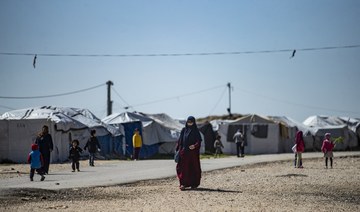
LONDON: A British woman has been repatriated from a Syrian detention camp, becoming the first detained adult to return to the UK since the defeat of Daesh.
The Foreign Office said that policy towards others still in Syria was unchanged, but campaigners said the repatriation of the woman, along with her child, was a significant first step.
Reprieve, a human rights group that had been monitoring the case, said that the woman was “a victim of trafficking, taken to Syria by a male relative when she was a young girl” and that “she and her child have suffered extreme trauma.”
The group has asked for her identity to remain confidential.
Jonathan Hargreaves, the UK’s special representative for Syria, tweeted: “UK officials have facilitated the repatriation of two British nationals from Syria.
“In line with longstanding policy we consider each request for consular assistance in Syria on a case by case basis, taking into account all relevant considerations including national security.”
It is estimated about 60 Britons, including 35 children, are being held in indefinite detention in Syria. The best known is Shamima Begum, who traveled to the country from Bethnal Green in London when she was 15.
Most of those in detention were captured by Syrian-Kurdish forces in the final days of the ground war in early 2019 and have been held in indefinite detention in sprawling camps such as Al-Hawl in the northeast of the country.
Some countries have been gradually taking back their nationals. Earlier this month Australia said it would start repatriating around 20 women and 40 children.
Britain repatriated a number of orphans around three years ago, which the then-foreign secretary, Dominic Raab, said was the “right thing to do.”
However, up until this week, requests from adults were refused. The government has also removed citizenship from some of those in detention, including Begum. Her lawyers continue to contest her case.
Experts say that those who remain in the female camps are at risk from a hardcore of “radical women” still loyal to Daesh.
Men who are detained are typically held separately in makeshift prisons.