
DUBAI: Niloofar Hamedi, an Iranian journalist specializing in women’s rights, got away with hard-hitting stories for years — until the day she took a photo of Mahsa Amini’s parents hugging each other in a Tehran hospital, where their daughter was lying in a coma.
The photo, which Hamedi posted on Twitter on Sept. 16, was the first sign to the world that all was not well with 22-year-old Amini, who had been detained three days earlier by Iran’s morality police for what they deemed inappropriate dress.
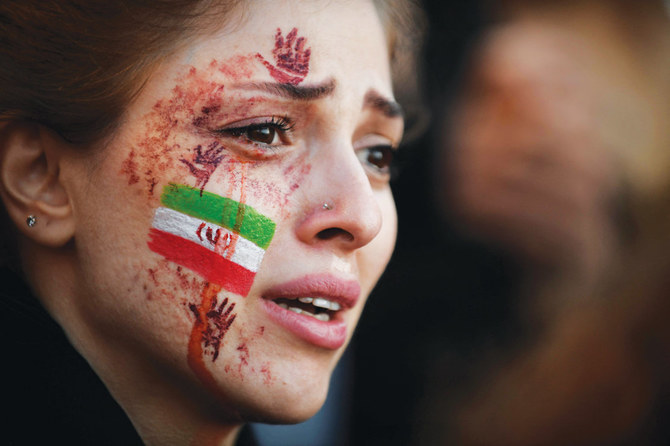
Amini’s death later that day would unleash a wave of mass protests across Iran that continue nearly three weeks later in different parts of the country, despite a government crackdown.
The photo of Amini’s parents was also one of the last things Hamedi, who worked for the pro-reform Sharq daily, would post before she was arrested some days later and her Twitter account listed as suspended.
“This morning, intelligence agents raided my client Niloofar Hamedi’s house, arrested her, searched her house, and confiscated her belongings,” Hamedi’s lawyer Mohammed Ali Kamfirouzi tweeted on Sept. 22. Hamedi has not been charged and is being held in solitary confinement in Iran’s Evin prison, he wrote.
Facing one of the boldest challenges to the Islamic Republic since the 1979 revolution, the authorities have used force to suppress the biggest public show of dissent in years.
At least 185 people, including 19 children, have been killed, hundreds injured and thousands have been arrested by security forces, according to rights groups.
The Iranian government said more than 20 members of the security forces have been killed and that it will investigate civilian deaths. The Committee to Protect Journalists has called on Iranian authorities to “immediately and unconditionally release ... all journalists arrested because of their coverage of Mahsa Amini’s death and the protests that have followed.”
It said last month that at least 28 journalists had been detained by the security forces, including Hamedi.
Friends of Hamedi described her as a brave journalist who is passionate about women’s issues and rights. Her investigative articles covered topics such as self-immolation among women suffering domestic abuse, and she interviewed the family of Sepideh Rashno, an Iranian writer and artist who was arrested in July for defying the Islamic dress code.
“She always went beyond her limit to be the voice of voiceless women who were deprived of their rights, whether by their fathers, husbands or by social limitations,” one friend of hers told Reuters, her name withheld for fear of reprisals.
“We hope Hamedi returns to the office, puts her bag on the table, ... write about the deprived and anonymous women who are victims of prejudice in Iran,” wrote her editor, Shahrzad Hemmati, on Oct 11.