

Thousands protest after deadly attack on Pakistan school van 

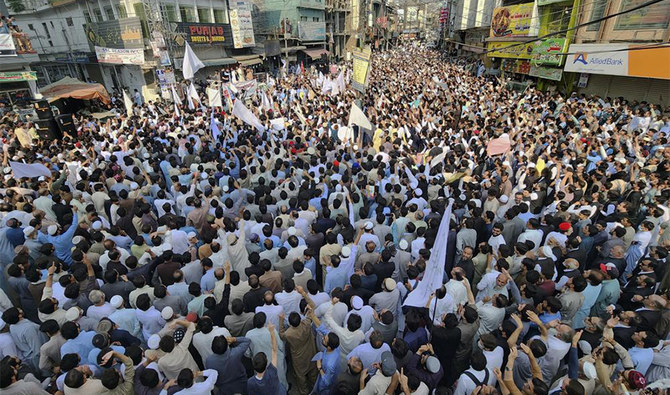
People take part in a protest rally to condemn the killing of a school van driver by a gunman in a Monday attack and demanding the immediate arrest of the attacker, in Mingora, Swat Valley, Pakistan, Tuesday, Oct. 11, 2022. (AP)
Short Url
Updated 11 October 2022
Follow

Thousands protest after deadly attack on Pakistan school van 

  • School van attack coincided with the 10th anniversary of Malala Yousufzai being shot in Swat 
  • Protesters demanded immediate arrest of the attackers and for peace and order to be restored 

PESHAWAR: Thousands of people protested in northwest Pakistan on Tuesday after a gunman opened fire on a school van, killing the driver and critically injuring a child, a decade after schoolgirl Malala Yousufzai was shot by the Taliban in the same city. 
Monday’s attack took place in Mingora in the Gully Bagh neighborhood, sparking fears of a resurgence in militant activity in the Swat Valley. 
The Swat Valley was the focus of a monthslong army offensive in 2009 to push out militants from the area, but the operation also displaced hundreds of thousands of people. 
Political activists, members of civil society and members of the public thronged to the city’s main intersection chanting slogans denouncing the Gully Bagh attack. The mass protest brought the city to a standstill, with businesses and markets closing in solidarity. 
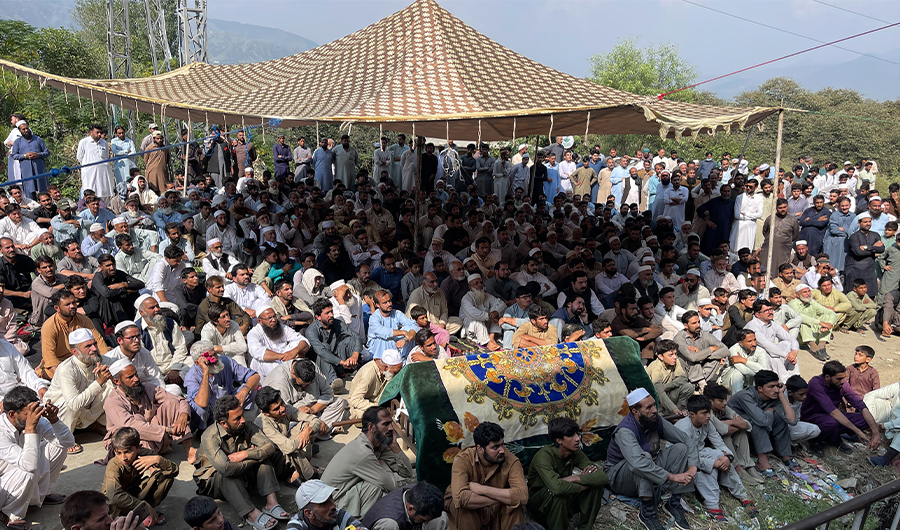


Relatives and residents take part in a protest with the body of a school bus driver a day after he was shot dead in an attack on his bus in Mingora on October 11, 2022. (AFP)

Protesters demanded the immediate arrest of the attackers and for peace and order to be restored. One placard read: “We cannot let the hard earned peace be destroyed,” while another read: “Act now against the attackers before it becomes too late.” 
The school van attack coincided with the 10th anniversary of Yousufzai being shot in Swat for her outspoken advocacy for girls’ education. On Tuesday, the Nobel winner arrived in Pakistan to visit flood-hit areas.
The funeral for the driver killed in Monday’s attack hadn’t yet take place as his relatives are demanding the arrest of the perpetrators. A protest was also held in Gully Bagh, with the driver’s casket put out on the street. Police have made security arrangements at both the places to avert any violence. 
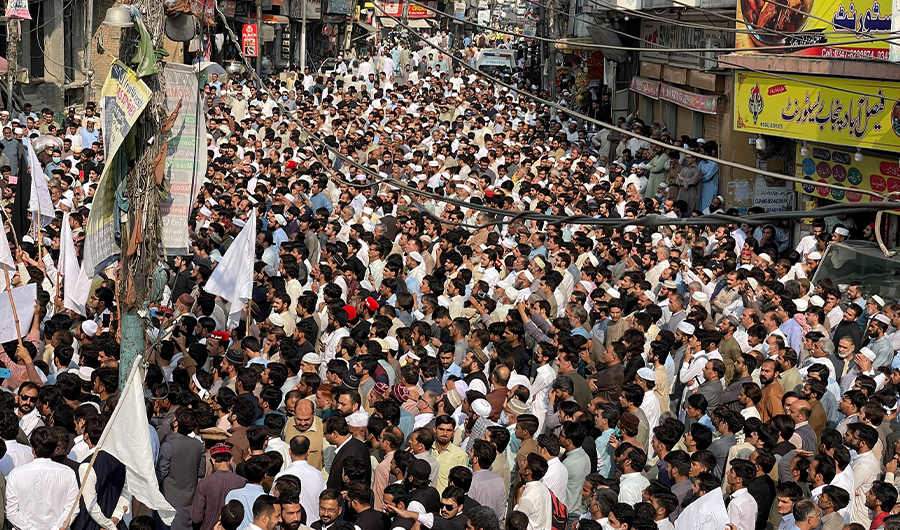


Residents take part in a protest a day after an attack on a school bus in Mingora on October 11, 2022. (AFP)

No one claimed immediate responsibility for the shooting. A local police officer, Zafar Khan, said Monday that a hunt was underway to trace the attackers who fled the scene on a motorcycle. 
Sawab Khan, president of the Private Schools Management Association, told The Associated Press that all 1,300 private schools in the Swat Valley were shut Monday and Tuesday. From Wednesday, the private schools will observe a partial strike and teachers and staff will hold a demonstration. 


Pakistan’s Mahnoor Omer named among TIME’s ‘Women of the Year’ for 2026

Updated 01 March 2026
Follow

Pakistan’s Mahnoor Omer named among TIME’s ‘Women of the Year’ for 2026

  • Omer moved a Pakistani court against the so-called ‘period tax’ in Sept. 2025 which has since sparked a national debate
  • Taxes on sanitary pads in Pakistan can add up to 40 percent to retail price, UNICEF says only around 12 percent women use such products

ISLAMABAD: Pakistani women’s rights activist Mahnoor Omer, who fought against taxes on menstrual products, has been named among the TIME magazine’s ‘Women of the Year’ for 2026.

Omer’s efforts have been recognized alongside 16 activists, artists, athletes and businesswomen in the TIME’s Women of the Year 2026 list, including Olympic gold medalist Sydney McLaughlin-Levrone and Oscar-nominated filmmaker Chloe Zhao.

Dissatisfied with the efforts to educate Pakistani girls about sexual violence, Omer founded the Noor Foundation at the age of 14 and held her own workshops with village girls about everything from climate change to menstruation, according to the TIME magazine.

Two years later, a conversation with a domestic worker about the price of pads made her realize that not everyone could afford these essentials. She moved a court against the so-called “period tax” in Sept. 2025 and the case has sparked a national debate on the subject, considered a taboo by many in Pakistan, since its first hearing late last year.

“A decade and one law degree after her interest in activism was sparked, Omer, now 25, is putting her passion and expertise to work in the name of gender equity,” TIME wrote about Omer on its website.

Taxes imposed on sanitary products in Pakistan can add up to 40 percent to the retail price. UNICEF estimates just 12 percent of women in the country use commercially produced pads or tampons. The alternative, using cloth, risks health impacts including rashes and infections, and can make it impossible for girls to attend school while menstruating.

Omer’s suit, which awaits the government response, has sparked a national discussion. She says she spoke about menstruation to her father and male cousins, who thanked her for standing up for their daughters.
The 25-year-old, who is currently enrolled in a master’s degree in gender, peace, and security at the London School of Economics, sees this case as just the first of many.

“I’m not free until every woman is free,” she was quoted as saying by TIME. “I want to leave no stones unturned in terms of what I can do with the next few decades, as a lawyer for the women in my country and gender minorities in general.”