

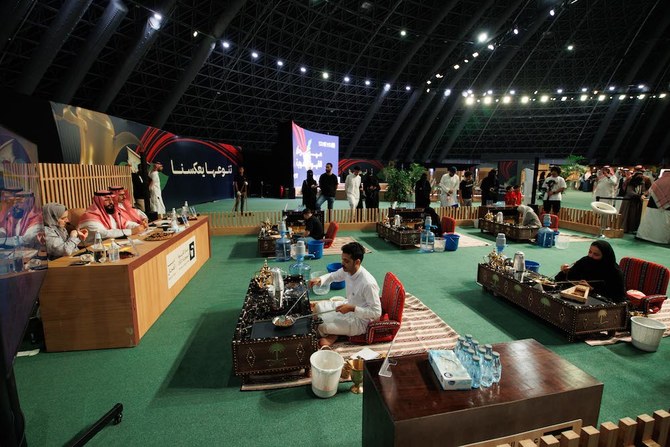


JEDDAH: The Saudi Coffee Festival at the Jeddah Superdome introduced visitors to the Kingdom’s coffee story, and a whole new world of delicious drinks and flavors.
It ran from Oct. 6 to 8, highlighting Saudi coffee’s cultural heritage and increasing its global and local presence. The festival, which was organized by the Culinary Arts Commission in collaboration with the Ministry of Culture and the Quality of Life Program, was one of the activities of the “Year of Saudi Coffee 2022” initiative.
Visitors were met at the entrance with a small cup of Saudi coffee before they started their cultural journey.
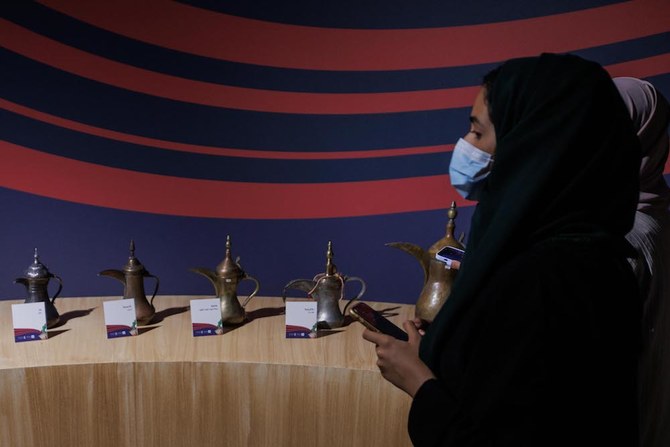
The festival was divided into four different sections. The first, “Finjal Al-Daif,” consisted of the green museum that focused on the cultivation of coffee bean plants and the tools used in farming. There was also a museum displaying antiques and valuable items used in coffee consumption. Visitors also discovered different kinds of dallah, a traditional coffee pot, including one used by the late King Faisal.
A screen featuring videos of the “Year of Saudi Coffee 2022” activities and achievements was also showcased.
The most important area in this section was the kid’s area, which focused on teaching children about the diverse and rich culture of Saudi Arabia.
Mayada Badr, CEO of the Culinary Arts Commission, said: “We are educating everyone on the Saudi coffee culture and shedding light on one of our heritage ingredients — the Saudi Khawlani coffee beans. The festival serves as a platform for spreading awareness about Saudi coffee and promoting the private sector investment in our coffee and heritage.”
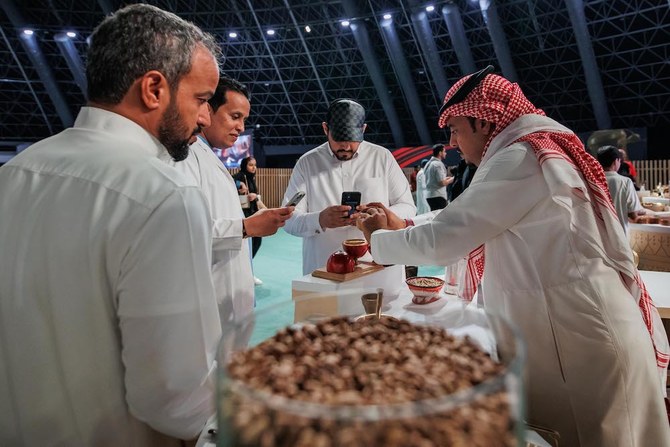
The second section, “Fiinjal Al-Kaif,” held coffee exhibitors and experts explaining the different kinds of Saudi beans cultivated across the Kingdom along with a special tasting experience.
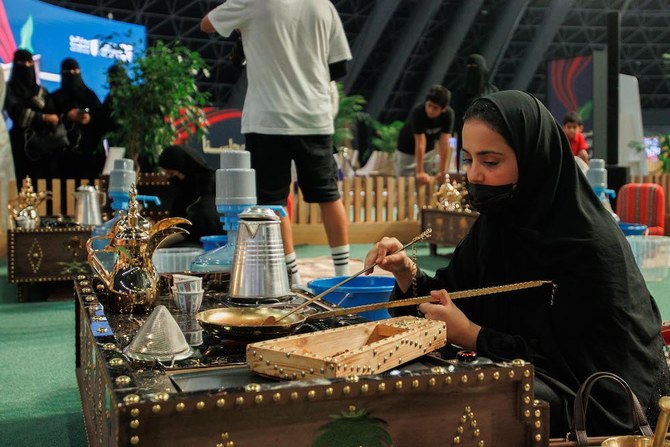
This section brought together key players from the Saudi coffee industry, owners of coffee shops and roasteries who shared their love for coffee with the visitors. There were also many interactive experiences arranged for the visitors where they were taught about the various types of Saudi coffee beans and the special tools and utensils used in making the coffee. Guests were also introduced to the recipes from the Kingdom’s various regions, giving them an authentic insight into the different sweets or dates that accompany coffees from their respective region.
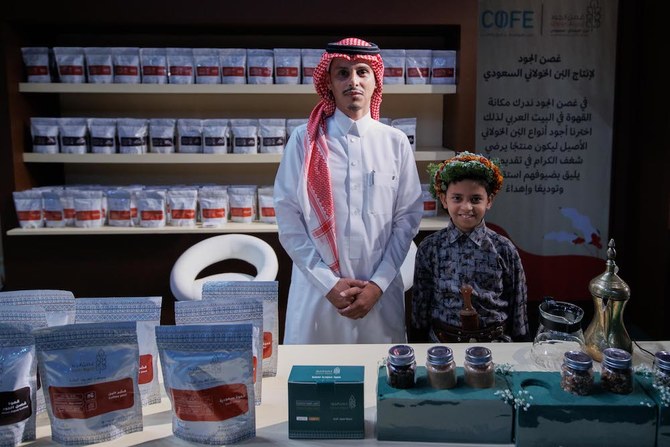
Speaking to Arab News, Esmail Almalki, founder of Ghosn Algod, an online coffee trading platform that sells authentic Saudi Khawlani coffee from the mountains of Jazan, said: “I am very excited to be part of the festival and glad that it has grabbed the attention of the people in Saudi coffee.”
A native of Al-Dayer Bani Malek province, Almalki owns many farms and tries to help other farmers around him by marketing and selling their products through his online store to the people who love specialty coffee. The store was created to produce high-quality Khawlani beans, which coffee connoisseurs hold in high regard.
“This unique opportunity presented by the Ministry of Culture helps an online platform like us to interact with customers since most of the work is done online,” he added.
Al-Mohanad Al-Marwai, co-founder and CEO of the Arabian Coffee Institute, said that they were using the event to spread awareness about all aspects of the coffee sector. “During the festival, we conducted different workshops to persuade the people to recognize coffee as different than out of the box strategy. Everyone thinks coffee is basically copying or tasting. But we wanted to take people out of the box in terms of evaluating coffee in a professional manner and provided them with some free informative sessions during the three days of the festival.”
He added: “We are focused heavily on sensory performance, sensory marketing, neurosensory as neuromarketing. We are training the participants to understand the ways to open a successful coffee business and start a failed business in the coffee industry. One of the workshops was on the coffee roastery trending business.”
He believes that the trend of roastery is becoming dangerous not only for the market but also for the people who are investing in the market. “With the right guidance to everyone involved in the coffee industry achieving success will be much easier.”
Along with Rakan Alsuwaydi, a senior training specialist, and Mohammed Abughazalah, co-founder of the Arabian Coffee Institute, Al-Marwai gave three workshops and sessions each day covering all the aspects of the industry, starting from the perception of the product, logo, coffee cup and the coffee itself.
Before the third section, “Finjal Al-Saif,” which featured a series of coffee dialogue and panel discussions, workshops and training, a storyteller tent hosted prominent introduced visitors to traditional coffee stories from days gone by.
The “Finjal Al-Saif” section provided a specialized platform to encourage and train those interested in Saudi coffee.
Sultan Al-Sudairi, program developer at the Royal Institute of Traditional Arts, told Arab News: “With our participation in the festival, we aim to basically preserve and maintain traditional arts by infusing coffee elements to it and engage with the community in preparing these crafts.”
A series of workshops on creating metal-based accessories for dallah and carving traditional Saudi motifs on the gypsum material was organized by the institute.
COFE, the e-commerce app, presented several workshops to teach people the techniques to get the most out of their coffee, showing them the process from bean to cup.
The first workshop helped the participants prepare the perfect cup of Saudi coffee with spices from various regions, bringing out the scent and flavor.
The second workshop centered around educating people on the wealth of flavor and taste that is hidden in Saudi coffee beans and what they can do to really create a cup of rich specialty coffee.
The festival’s collaboration with Pur Gahwa, which is a local brand, highlighted the importance of its partnership with Saudi farmers, who form an integral part of the growing chain of Saudi coffee.
COFE vendors and workshops at the festival gave people the true flavor of everything COFE stands for: Bringing together coffee communities everywhere.

keywords


