



MIRPURKHAS, SINDH: Nasir Khan, a 40-year-old laborer from the southern Pakistani district of Mirpurkhas, stood outside the Civil Hospital last week, complaining of anxiety and feelings of sadness and hopelessness.
In August, Khan’s home and livestock were washed away in deadly floods that have affected at least 33 million people in Pakistan since mid-June and killed nearly 1,700. The father of four has since been living with his family at a relief camp in Sindh, the province worst-hit by the floods, where water and vector borne diseases are now rampant and a return to normalcy is months, if not years, away.
Last year, the Institute of Global Health Innovation at Imperial College London said intensifying climate change impacts, from fiercer heatwaves to flooded homes, were driving a growing mental health crisis around the world.
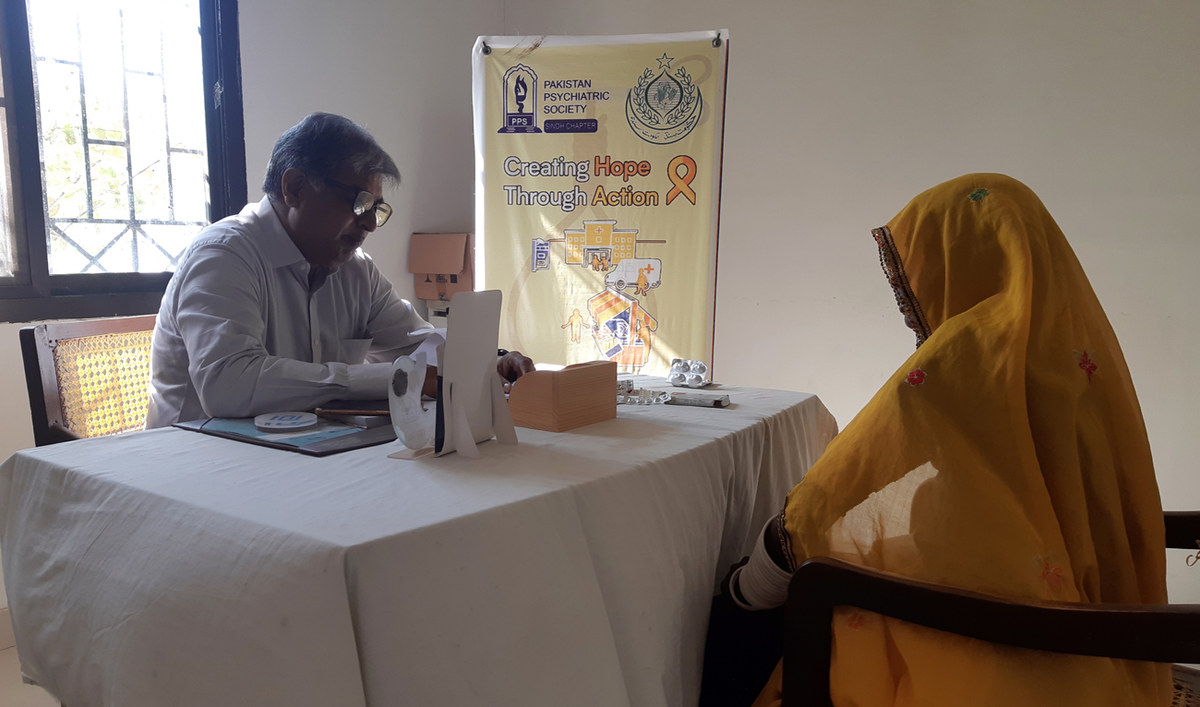
A view of the psychiatric outpatient department (OPD) at the Civil Hospital Mirpurkhas where Dr Lakesh Khatri, the district psychiatrist, examines a patient in Mirpurkhas, Pakistan, on October 3, 2022. (AN photo by Zulfiqar Kunbhar)
“Before the floods, I did not have any psychiatric issues,” Khan told Arab News, describing sleepless nights spent swatting mosquitos and days with little food. “Now, I feel scared for mine and my family’s future.”
Pakistan’s minister for climate change, Sherry Rehman, has highlighted the need for urgent medical supplies to protect against fast-spreading water-borne diseases due to stagnant water, urging the developed world to accelerate funding for a disaster that she has said had no parallel in known history.
But little to no attention is being paid to the psychological toll of the catastrophe.
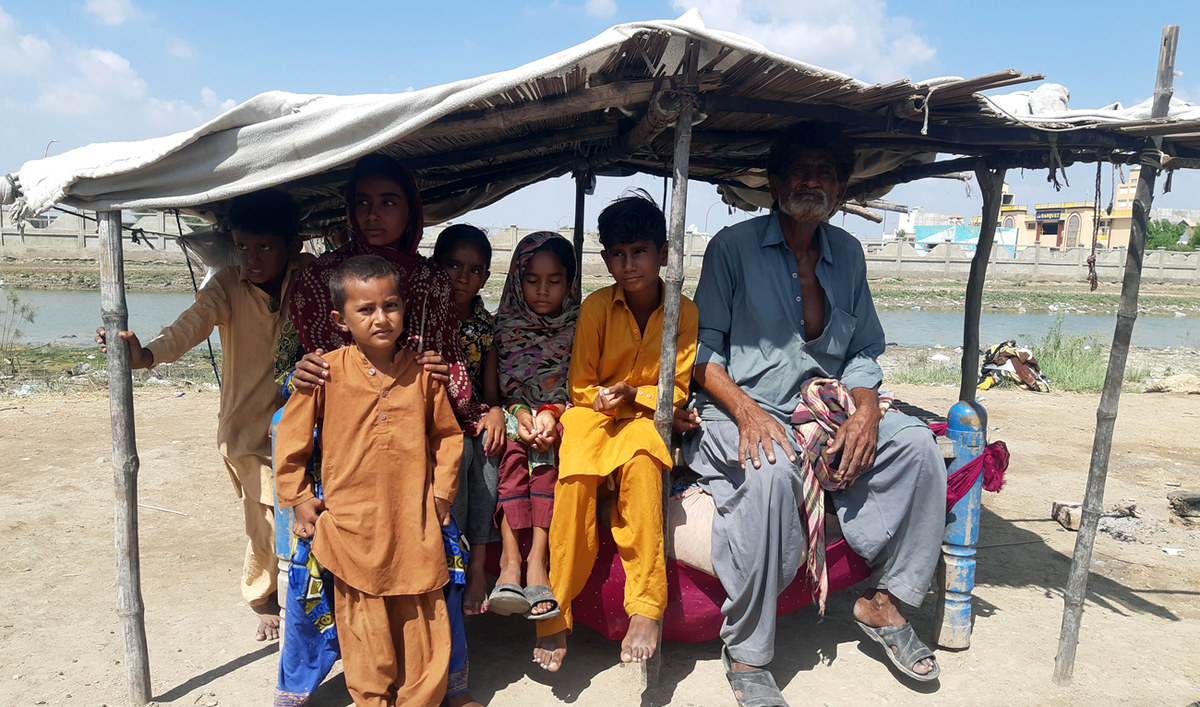
A view of a roadside temporary shelter for flood survivors in Mirpurkhas, Pakistan, on October 3, 2022. (AN photo by Zulfiqar Kunbhar)
Already, the damage from the floods is reflected in a jump in the number of people reporting mental health problems. Over 2,000 people came to the Civil Hospital Mirpurkhas between June and September this year to seek psychiatric treatment, at least a 10 percent increase from the past four months, according to data from the facility.
“At Civil Hospital Mirpurkhas, the number of patients coming to the psychiatric outpatient department has increased by 10 percent as compared to the average number of patients in the previous four months,” Dr. Lakesh Khatri, the district psychiatrist, told Arab News. “The increased number of cases are flood-affected people who have faced trauma due to the widespread devastation.”
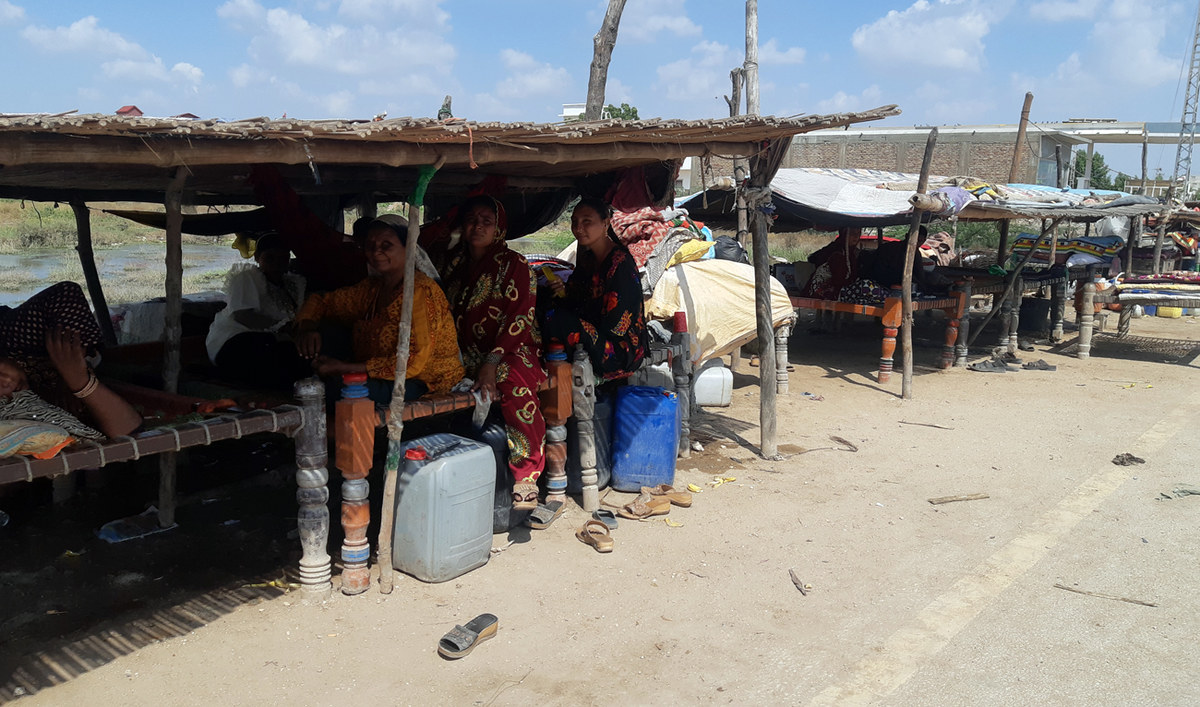
A view of a roadside temporary shelter for flood survivors in Mirpurkhas, Pakistan, on October 3, 2022. (AN photo by Zulfiqar Kunbhar)
Mental health patients, a majority of them male, were also arriving at the hospital from the nearby Sanghar and Umerkot districts, Khatri added. Diagnosed mental health problems were caused by financial stressed, as well as a lost sense of security.
The Sindh Mental Health Authority (SMHA) said the surge in mental health cases was mostly due to uncertain and deteriorating socio-economic conditions in the wake of the floods. It would take months, according to the body, to quantify the exact damage to mental health in the province where over 750 people have been killed, 2,045,349 homes damaged and 435,173 livestock lost.
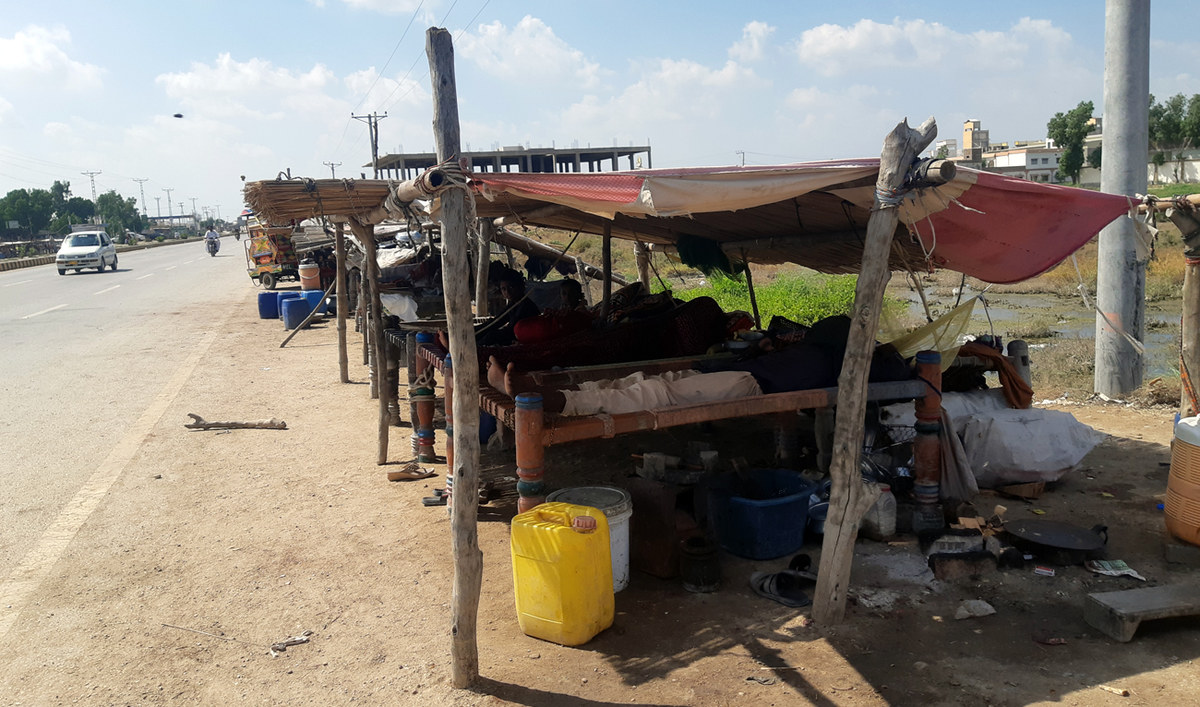
A view of a roadside temporary shelter for flood survivors in Mirpurkhas, Pakistan, on October 3, 2022. (AN photo by Zulfiqar Kunbhar)
Officials say more than two million acres (809,371 hectares) of agricultural land has been flooded countrywide, destroying most standing crops and preventing farmers from sowing new ones.
“This monsoon and floods affected farming communities’ dual crops, standing and upcoming. It also washed away their houses and uprooted them,” SMHA chairman Dr. Karim Ahmed Khawaja told Arab News last week.
At this stage quantifying the number of mental health patients related to Sindh flood devastation is difficult and the SMHA will conduct a study after the flood water recedes close to the end of the year.”
Due to stagnant floodwater in agricultural fields, a large number of farmers were likely to miss the upcoming winter cultivation season Khawaja said. As the next cultivation season would begin in March 2023, many farmers would have no livelihood for at least the next six months, a worry that was triggering mental health problems.
Referring to a 2020 mental health study in Sindh focused on the COVID-19 pandemic, Khawaja said the prevalence of depression was assessed at 42 percent, while 85 percent of the 1,494 people surveyed had anxiety. Among the participants, 10 percent were reported to have received a psychiatric diagnosis.
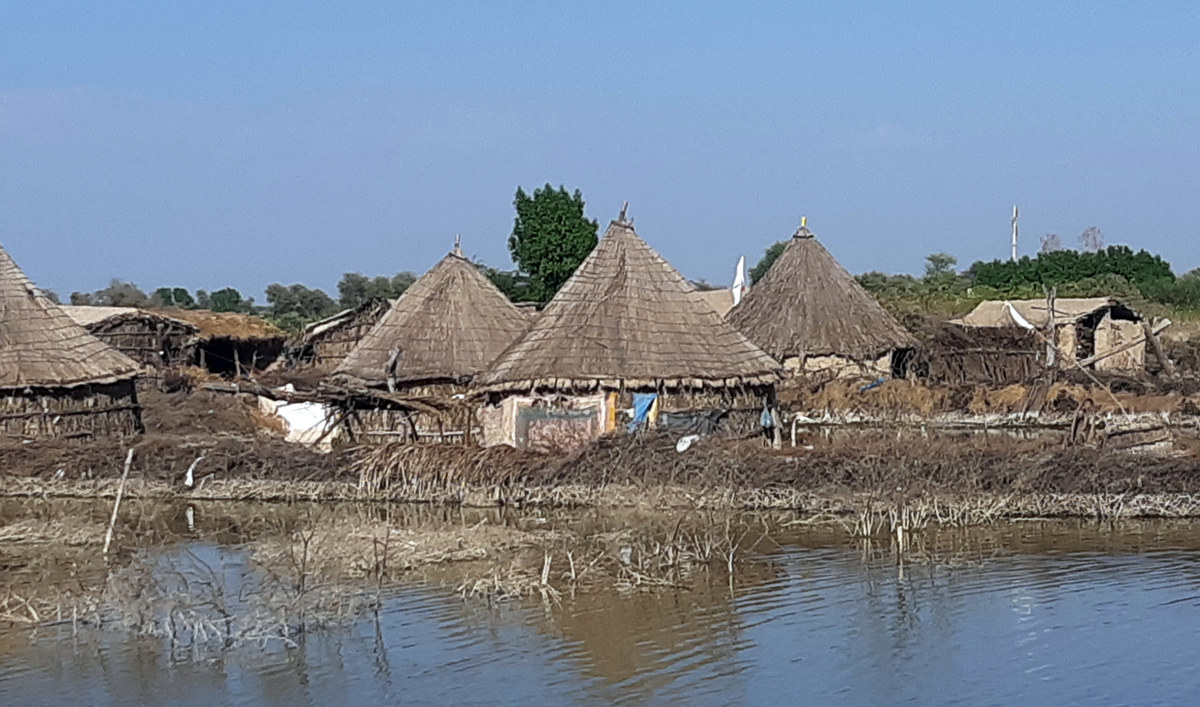
A view of submerged houses on the Mirpurkhas-Sanghar road, Mirpurkhas, Pakistan, on October 3, 2022. (AN photo by Zulfiqar Kunbhar)
“Since the COVID pandemic is still continuing and so are its impacts, the devastation from floods has added to the mental health impacts [already] present in the society,” the SMHA chairman said.
“Floods have caused depression and anxiety among survivors,” he added. “They find their future bleak because of poor health, economic and livelihood conditions.”
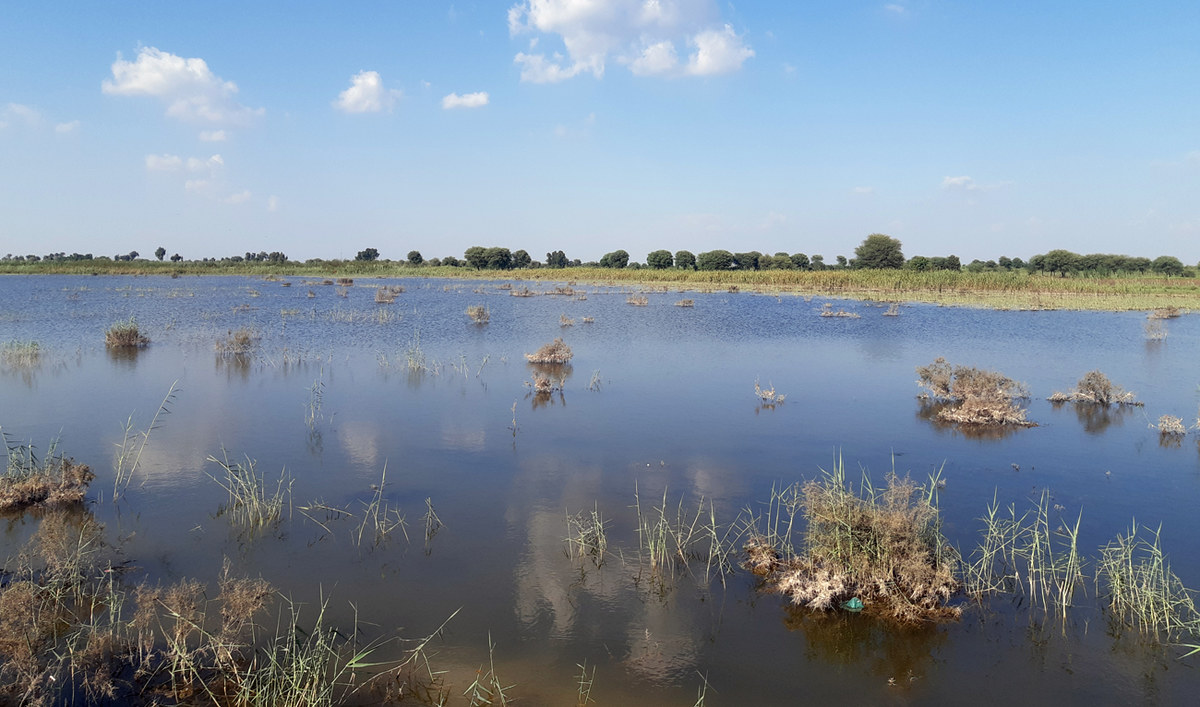
A view of submerged agricultural lands on the Mirpurkhas-Sanghar road, Mirpurkhas, Pakistan, on October 3, 2022. (AN photo by Zulfiqar Kunbhar)
The province also does not have the requisite number of doctors to deal with the surge in mental health concerns, Khawaja said.
“Sindh has a total of 145 psychiatrists,” he said. “Out of 30 districts in the province, more than 20 districts do not even have a single psychiatrist.”
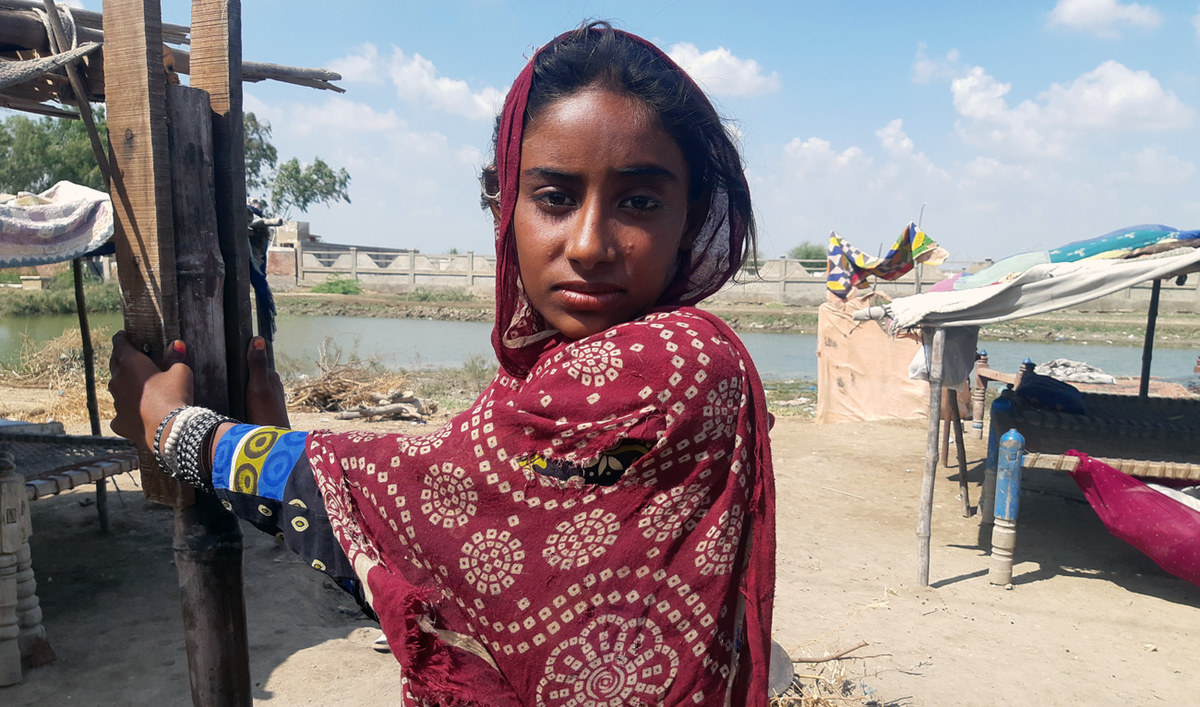
A girl poses at a roadside shelter in Mirpurkhas, Pakistan, on October 3, 2022. (AN photo by Zulfiqar Kunbhar)


