



ISLAMABAD: Pakistan and the United Nations on Tuesday jointly launched a humanitarian appeal of $816 million, revising it up five-fold from $160 million, as a surge of water-borne diseases and fear of growing hunger pose new dangers after weeks of unprecedented flooding in the South Asian nation that has left 33 million people struggling to survive.
The torrential rains and floods have so far killed over 1,700 people while many districts in the southern Sindh and southwestern Balochistan provinces still remain inundated. A preliminary assessment by the UN has found that some 8.62 million people in 28 assessed districts are estimated to be in crisis.
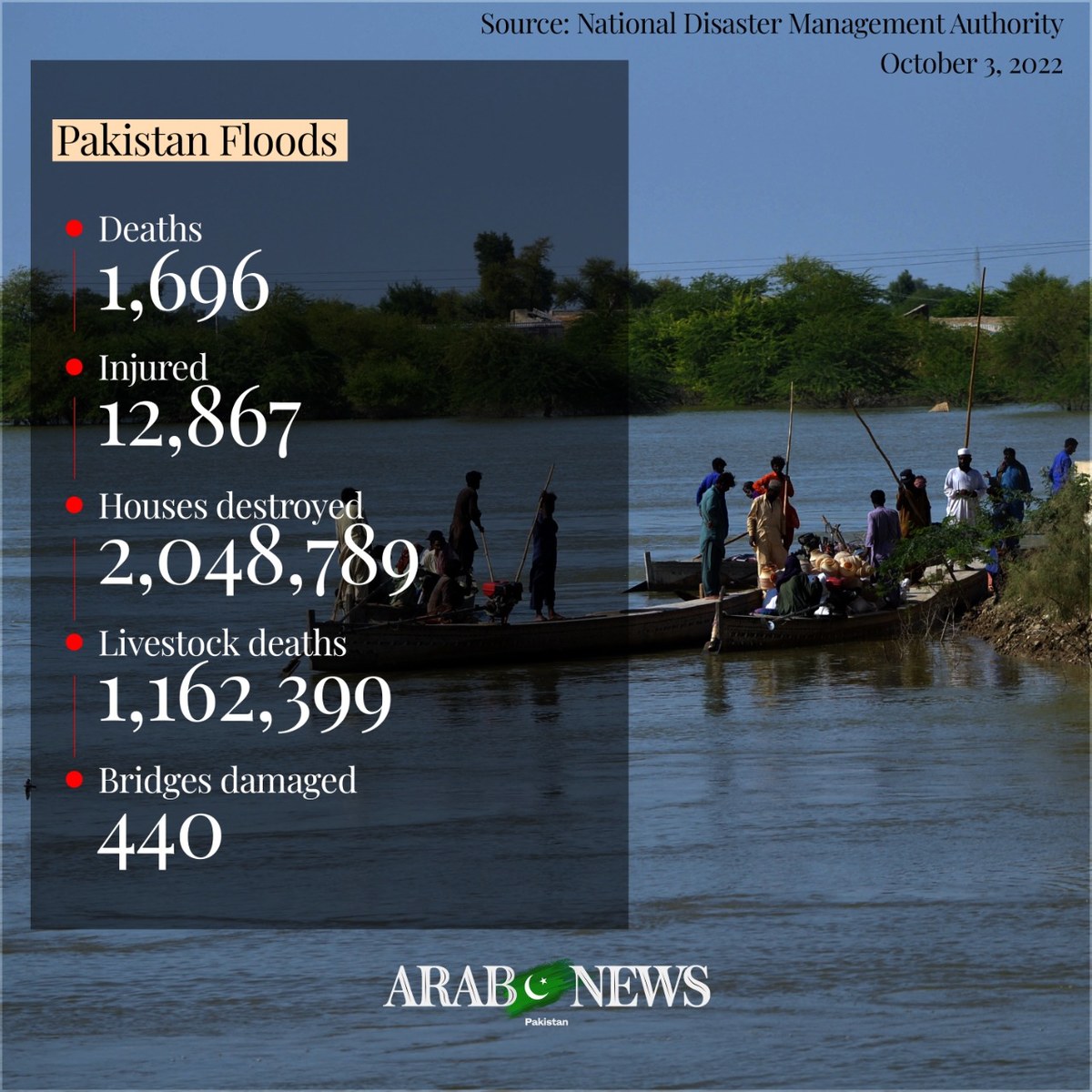
The government estimates damages caused by the floods, that have swept away homes, roads, bridges and livestock, are at least $30 billion.
Hundreds of thousands of displaced people who are living in the open are being exposed to diseases like malaria, diarrhea, dengue fever, severe skin and eyes infections, all of which are fast spreading amid stagnant floodwaters that officials say could take up to six months to recede.
Both the UN and Pakistan have blamed the floods on climate change as Islamabad is among the top ten countries hit by global warming.
“Pakistan is on the verge of a public health disaster,” Tedros Adhanom Ghebreyesus, director-general of the World Health Organization, said while speaking on the occasion of the UN appeal. “The floods have damaged approximately ten percent of the country’s health facilities.”
Stocks of medicines and medical supplies had also been washed away in floods. “We must move together to support Pakistan,” he said.
Pakistan’s minister for climate change, Sherry Rehman, highlighted the need for urgent medical supplies to protect against fast-spearding water-borne diseases, urging the developed world to accelerate funding for the ongoing climate-linked disaster, which she said had no parallel in known history.
Over seven million people had been displaced from their homes, she added.
“The flood affectees and Pakistan are facing the real race against time as winter is coming,” Rehman said, addressing the flash appeal ceremony in Geneva, saying millions of people were living under the open sky, with up to 7.9 million people “still scrambling for dry land.”
“We are still in the longest rescue and life-saving phase crossing 16 nightmarish weeks,” she said, adding that one-third of all reported deaths and injuries were children.
“Meeting the needs on the ground, even for the relief phase, is beyond the overstretched capacities of any one country, especially the one that is already paying for climate losses at about 9.1 percent of GDP,” Rehman said.
The climate minister said Pakistan’s export crops had also been largely destroyed: “We will even need to now import a huge quantum of food to feed our population.”
Director-General of the Provincial Disaster Management Authority in Sindh, Salman Shah, said the relief phase in the province was near completion as the flood water had started receding in some parts while efforts were underway to prepare the land for the cultivation of wheat and other crops in the next two months.
“We will be utilising international aid for provision of free seed and fertilizer to our farmers,” he said, “to restore their livelihoods and ensure the country’s food security.”


