

UN to seek $800 million more in aid for flood-hit Pakistan

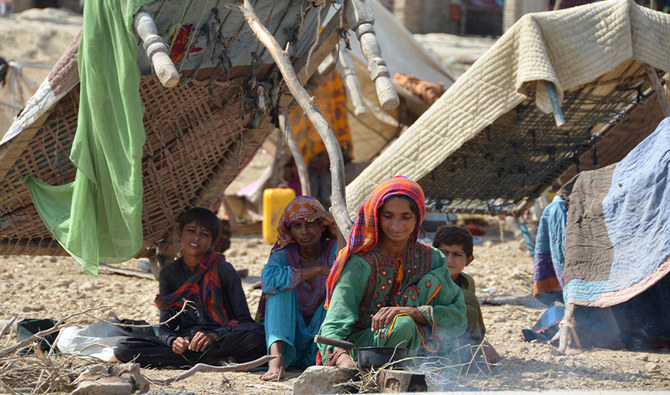
A displaced flood-affected family sits under the shade of a cot bed at Dera Allah Yar in Jaffarabad district of Balochistan province on September 20, 2022. (AFP)
Short Url
Updated 01 October 2022
Follow

UN to seek $800 million more in aid for flood-hit Pakistan

  • Unprecedented deluges have killed 1,678 people in Pakistan since mid-June
  • About half a million survivors are still living in tents and makeshift shelters

ISLAMABAD: The United Nations will seek $800 million more in aid from the international community to respond to soaring life-saving needs of Pakistani flood survivors, a UN official said Friday.

The unprecedented deluges — likely worsened by climate change — have killed 1,678 people in Pakistan since mid-June. About half a million survivors are still living in tents and makeshift shelters.

Julien Harneis, the UN resident coordinator in Pakistan, told reporters in the Pakistani capital, Islamabad, that the latest appeal will be issued from Geneva on Tuesday. It comes just weeks after the agency sought $160 million in emergency funding for 33 million people affected by floods.

Harneis said the UN decided to issue the revised appeal “to respond to the extraordinary scale of the devastations” caused by the floods. Pakistan’s displaced are now confronting waterborne and other diseases, he said. The outbreaks, health officials say, have caused more than 300 deaths so far.

Since July, several countries and UN agencies have sent more than 130 flights carrying aid for the flood victims, many of whom complain they have either received too little help or are still waiting for aid.

Officials and experts have blamed the rains and resulting floodwaters on climate change. UN Secretary-General Antonio Guterres visited some of the flood-hit areas earlier this month. He has repeatedly called on the international community to send massive amounts of aid to Pakistan.

The Pakistani government estimates the losses from the floods to be about $30 billion.

Meanwhile, the US embassy in Pakistan took to Twitter, saying Ambassador Donald Blome on Friday signed the second US-Pakistan bilateral agreement under the G20 Debt Service Suspension Initiative, providing $132 million in US debt relief to flood-hit Pakistan. “Our priority is to redirect critical resources in Pakistan,” it said.


Challenges for millions pushed back to Afghanistan from Iran, Pakistan

Updated 01 February 2026
Follow

Challenges for millions pushed back to Afghanistan from Iran, Pakistan

  • Over five million Afghans returned home since September 2023 as Iran, Pakistan ramp up deportations
  • Those who returned face challenges in form of unemployment, lack of housing, shortage of electricity and water

KABUL: After decades hosting Afghans fleeing crises at home, Pakistan and Iran have ramped up deportations and forced millions back across the border to a country struggling to provide for them.

Whether arriving at the frontier surrounded by family or alone, Afghan returnees must establish a new life in a nation beset by poverty and environmental woes.

AFP takes a look at the people arriving in Afghanistan and the challenges they face.

FIVE MILLION

More than five million Afghans have returned home from Iran and Pakistan since September 2023, according to the International Organization for Migration (IOM).

The figure equates to 10 percent of the country’s population, according to the agency’s deputy head in Afghanistan, Mutya Izora Maskun.

Three million returnees crossed the borders just last year, some of whom have spent decades living abroad.

Such a huge influx of people would be hard for any country to manage, Maskun said.

INADEQUATE HOUSING 

Months after arriving in Afghanistan, 80 percent of people had no permanent home, according to an IOM survey of 1,339 migrants who returned between September 2023 and December 2024.

Instead, they had to live in temporary housing made from materials such as stone or mud.

More recently, the UN refugee agency (UNHCR) spoke to Afghans who arrived back between January and August last year about their living arrangements.

Three-quarters of tenants said they could not afford their rent, while the majority of families were sharing rooms with up to four people, according to the survey of 1,658 returnees.

DESPERATE SEARCH FOR WORK 

Just 11 percent of adults pushed back from Pakistan and Iran were fully employed, the IOM survey found.

For those who returned in the first few months of last year, the average monthly income was between $22 and $147, according to the UNHCR.

WATER, ELECTRICITY SHORTAGES

More than half the returnee households lack a stable electricity supply, according to the IOM.
The agency said that households headed by women faced “significantly higher vulnerabilities,” with around half of them struggling to access safe drinking water.

SPEEDING UP LAND DISTRIBUTION

More than 3,000 plots of land have been distributed to returnees nationwide, Hamdullah Fitrat, the Afghan government’s deputy spokesman, said in mid-January.

The process “was accelerated,” he said while recounting a special meeting with supreme leader Hibatullah Akhundzada.

On their arrival in Afghanistan, returnees usually receive help with transport, a SIM card and a small amount of money.