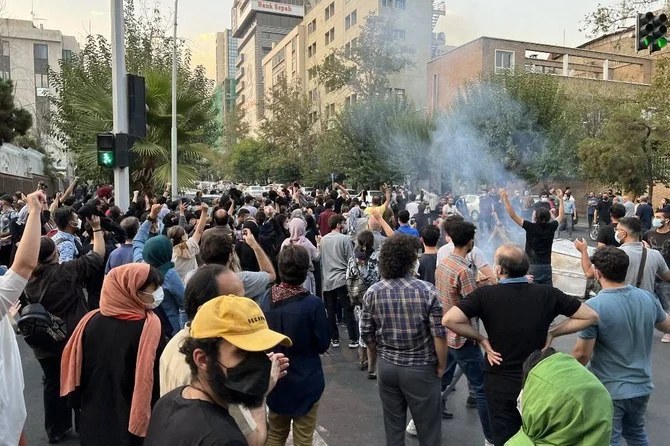
TEHRAN: Authorities in a northern Iran province have arrested 450 people during more than 10 days of protests following a young Kurdish woman’s death in morality policy custody, state media reported Monday.
Hundreds of demonstrators, reformist activists and journalists have been arrested during the mostly night-time demonstrations across the country since unrest first broke out after Mahsa Amini’s death was announced on September 16.
Amini, whose Kurdish first name was Jhina, was detained three days before that in Tehran for allegedly breaching rules mandating hijab head coverings and modest dress.
“During the troubles of the past days, 450 rioters have been arrested in Mazandaran,” the northern province’s chief prosecutor, Mohammad Karimi, was quoted as saying by official news agency IRNA.
They “have attacked government buildings and damaged public property in several parts of Mazandaran,” he added.
Local media reported that protesters were shouting anti-regime slogans, and Karimi said they were led by “foreign anti-revolutionary agents.”
On Saturday, authorities in the neighboring Guilan province announced the arrest of 739 people, including 60 women.
Iran’s judiciary chief, Gholamhossein Mohseni Ejei, on Sunday “emphasised the need for decisive action without leniency” against the core instigators of the “riots,” the judiciary’s Mizan Online website said.
At least 41 people have died since the unrest began, mostly protesters but including members of the Islamic republic’s security forces, according to an official toll.
Photos published Monday by the Tasnim news agency showed protesters in Qom, a holy Shiite city about 150 kilometers (90 miles) south of the capital Tehran.
Security forces have released these images of “lead instigators,” Tasnim reported, asking residents to “identify them and inform the authorities.”


![]()

Iran says 450 protesters arrested in northern province
Short Url
https://arab.news/rx5by
Iran says 450 protesters arrested in northern province
- Hundreds of demonstrators, activists and journalists have been arrested during the mostly night-time demonstrations
- The unrest first broke out on September 16 after the death of Mahsa Amini, 22, in custody of Iran's morality police
Latest updates




© 2026 SAUDI RESEARCH & PUBLISHING COMPANY, All Rights Reserved And subject to Terms of Use Agreement.