

Bahrain’s GDP grows at 6.9% in Q2 2022

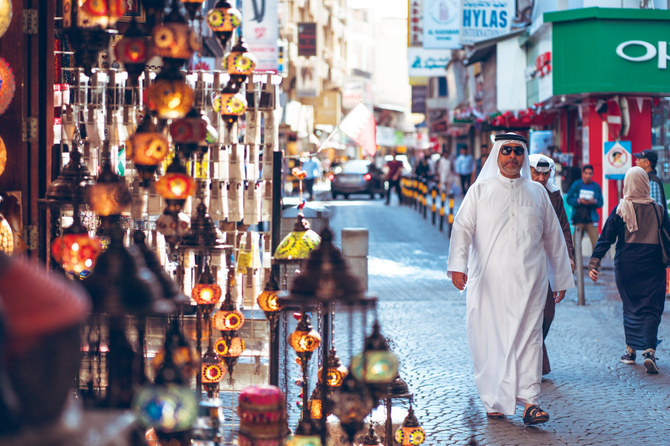
According to a recent industry report, Bahrain’s oil sector growth will be driven by higher oil production, despite a decline in the first quarter. (Shutterstock)
Short Url
Updated 25 September 2022
Follow

Bahrain’s GDP grows at 6.9% in Q2 2022

  • The Gulf country will see modest hike in oil production in 2022 to 0.19 mbpd

RIYADH: Bahrain’s gross domestic product grew 6.9 percent year on year in the second quarter of 2022, posting the biggest annual increase since 2011, Bahrain’s Crown Prince Salman bin Hamad Al-Khalifa said on Twitter on Sunday.

In the first quarter, the Gulf country’s GDP grew 5.5 percent year on year at constant prices. The country’s non-oil economy recorded growth of 7.8 percent in the same period.

According to the latest Economic Insight report for the Middle East, commissioned by ICAEW and compiled by Oxford Economics, Bahrain’s oil sector growth will be driven by higher oil production, despite a decline in the first quarter. Since 2015, the annual real growth of Bahrain’s oil sector has only expanded once relative to the previous year, in 2019. Based on the current OPEC+ agreement, Bahrain will see a modest increase in oil production in 2022 to 0.19 million barrels per day from 0.17 million bpd.

This small increase, combined with elevated prices, will return the oil sector to growth in 2022 before stagnating again as the government continues its diversification efforts. The forecast is for oil production to expand by 5.8 percent in 2022, compared to 2.4 percent in 2021.

Scott Livermore, ICAEW economic adviser, and chief economist and managing director, Oxford Economics Middle East, said: “The surge in oil prices and introduction of a 10 percent VAT is supporting Bahrain’s revenues and will help authorities come close to balancing the budget in 2022, two years earlier than the 2024 target set in the Fiscal Balance Program.”

The rise of inflationary pressures and rate hikes by the US Fed will force the Central Bank of Bahrain into more rate increases, beyond the 225 basis points cumulative increase in the key policy rate already this year.

Inflation averaged 3.4 percent in the first half this year, a level not seen since 2016, before rising to 3.9 percent in July.

ICAEW expects inflation to average 3.9 percent this year after prices fell annually in both 2020 and 2021.

Consumer spending is likely to be increasingly constrained going into 2023, leading to a GDP growth slowdown to below 2 percent by 2024.

As of now, the central bank has sufficient reserves to maintain the currency peg with the US dollar and is likely to follow policy moves by the Fed closely so it’s not expected to have significant pressure to devalue the dinar.

The current account returned to surplus in 2021 at 6.7 percent of GDP, the largest surplus since 2013. ICAEW expects the higher price of oil exports and a continued resurgence of international travel to push this surplus above 10 percent in 2022.


Global brands shut Middle East stores as conflict causes chaos

Updated 03 March 2026
Follow

Global brands shut Middle East stores as conflict causes chaos

  • Luxury brands and retailers close stores in Middle East
  • Conflict threatens the region that has ‌been luxury’s fastest growing
  • Mass-market retailers monitor situation, adjust operations in region

PARIS: In Dubai and other major Middle Eastern shopping hubs, many stores are closed or operating with a skeleton staff as the escalating conflict in the ​region causes chaos for businesses and travel.

The US-Israeli air war against Iran expanded on Monday with no end in sight, with Tehran firing missiles and drones at Gulf states as it retaliates for a weekend of bombing that killed Iran’s supreme leader and reportedly killed scores of Iranian civilians, including a strike on a girls’ primary school.

Chalhoub Group, which runs 900 stores for brands from Versace and Jimmy Choo to Sephora across the region, said its stores in Bahrain were closed, while other markets, including the UAE, Saudi Arabia, and Jordan remained open though staff attendance was “voluntary.”

“We operate with a lean team formed of members who volunteered and feel comfortable to come to the store,” Chalhoub’s Vice President of Communications Lynn al ‌Khatib told Reuters, adding ‌that the company’s leadership team personally visited Dubai Mall and Mall of the Emirates ​on ‌Monday ⁠morning to check ​in ⁠with workers.

E-commerce giant Amazon closed its fulfillment center operations in Abu Dhabi, suspended deliveries across the region and instructed its employees in Saudi Arabia and Jordan to remain indoors, Business Insider reported on Monday, citing an internal memo.

Gucci-owner Kering said its stores were temporarily closed in the UAE, Kuwait, Bahrain and Qatar and it has suspended travel to the Middle East.

Luxury growth engine under threat

Shares in luxury groups LVMH, Hermes, and Cartier-owner Richemont were down 4 percent to 5.7 percent on Monday afternoon as investors digested the knock-on impacts of the conflict.

The Middle East still accounts for a small share of global spending on luxury — between 5 percent and 10 percent, according ⁠to RBC analyst Piral Dadhania. But the region was “luxury’s brightest performer” last year, according to consultancy ‌Bain, while sales of expensive handbags have stalled in the rest of the ‌world.

Now, shuttered airports have put an abrupt stop to tourism flows into ​the region and missile strikes — including one that damaged Dubai’s ‌five-star Fairmont Palm hotel — are likely to dissuade travelers, particularly if the conflict drags on.

“If you assume that it’s ‌a $5 billion to $6 billion (travel retail) market and let’s say it’s going to be shut down for a month, we are talking about hundreds of millions of dollars that are definitely at risk,” said Victor Dijon, senior partner at consultancy Kearney.

If Middle Eastern shoppers cannot travel to Paris or Milan, that could also hurt luxury sales in Europe, he added.

Luxury brands have been investing in lavish new stores and exclusive events ‌across the region. Cartier unveiled a “high-jewelry” exhibition in Dubai’s Keturah Park just days before the conflict started.

Cartier and Richemont did not reply to requests for comment.

Luxury conglomerate LVMH ⁠has also bet big on ⁠the region. Last month, its flagship brand Louis Vuitton staged an exhibition at the Jumeirah Marsa Al Arab hotel, and beauty retailer Sephora launched its first Saudi beauty brand.

LVMH does not report specific figures for the region, but in January Chief Financial Officer Cecile Cabanis said the Middle East has been “displaying significant growth.” LVMH did not reply to a request for comment on how its business may be impacted by the conflict.

The Middle East has also attracted new investment from mass-market players. Budget fashion retailer Primark said in January that it plans to open three stores in Dubai in March, April and May, followed by stores in Bahrain and Qatar by the end of the year.

“Primark is set to open its first store in Dubai at the end of March but clearly this is a fast-moving situation which we are monitoring closely,” a spokesperson for Primark-owner Associated British Foods said.

Apple stores in Dubai will remain closed until Thursday morning, the company’s website showed, while Swedish fast-fashion retailer ​H&M said its stores in Bahrain and Israel are ​closed.

Consumer goods group Reckitt has told all employees in the Middle East to work from home, temporarily closed its Bahrain manufacturing site and suspended all business travel to the region until further notice.