

Experience coffee’s journey from bean to taste at Ithra

1 / 5
Coffee is hitting the spotlight at Ithra’s Cultural Oasis to celebrate Saudi Arabia’s National Day. (AN Photo/Jasmine Bager)
2 / 5
Coffee is hitting the spotlight at Ithra’s Cultural Oasis to celebrate Saudi Arabia’s National Day. (AN Photo/Jasmine Bager)
3 / 5
Coffee is hitting the spotlight at Ithra’s Cultural Oasis to celebrate Saudi Arabia’s National Day. (AN Photo/Jasmine Bager)
4 / 5
Coffee is hitting the spotlight at Ithra’s Cultural Oasis to celebrate Saudi Arabia’s National Day. (AN Photo/Jasmine Bager)
5 / 5
Coffee is hitting the spotlight at Ithra’s Cultural Oasis to celebrate Saudi Arabia’s National Day. (AN Photo/Jasmine Bager)
Short Url
Updated 23 September 2022
Follow

Experience coffee’s journey from bean to taste at Ithra

  • Saudi Arabia is one of the world’s largest consumers of the drink
  • Kingdom is achieving self-sufficiency in its production, in accordance with the plans of Vision 2030

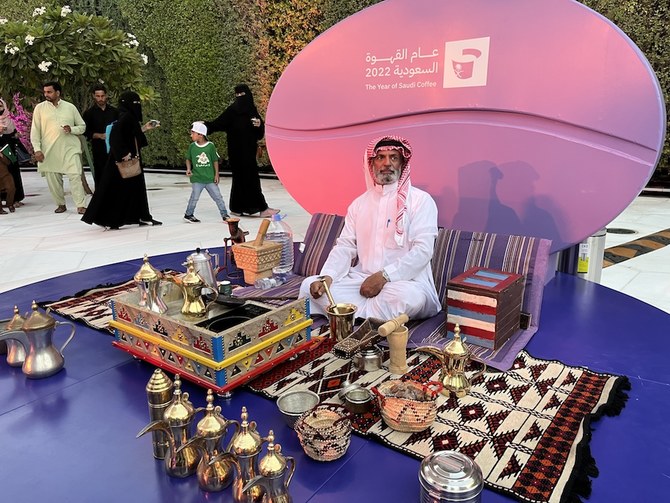
DHAHRAN: Coffee is hitting the spotlight at Ithra’s Cultural Oasis to celebrate Saudi Arabia’s National Day.

The Saudi Coffee Experience, which is in the outdoor space at the event and is free to enter, promises a tasty sensory journey.

Visitors first see a small stage with a potted plant to illustrate how the coffee bean appears when it is gently twisted off. The stage is painted purple, a color Saudi Arabia has adopted to signify those found in nature.

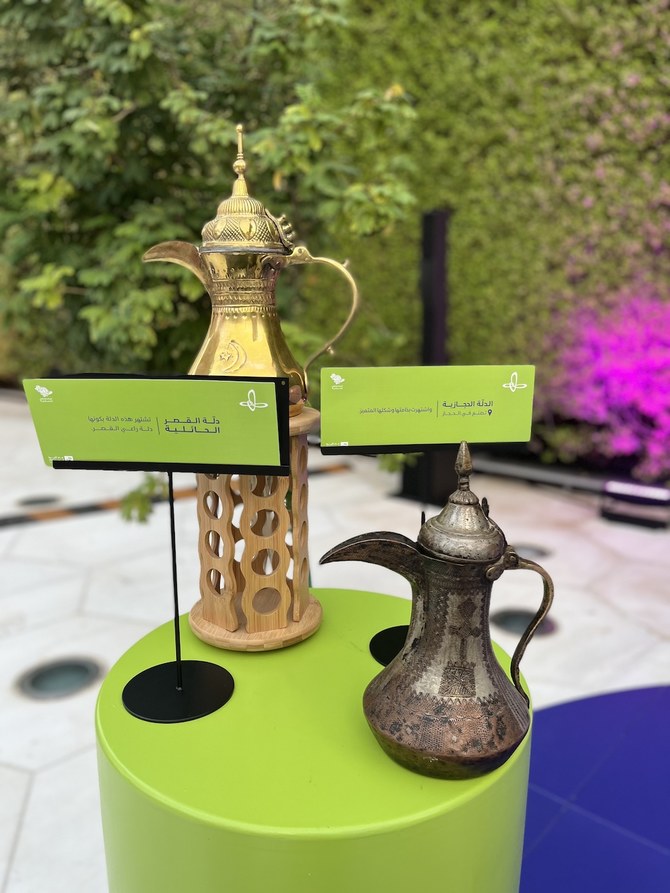
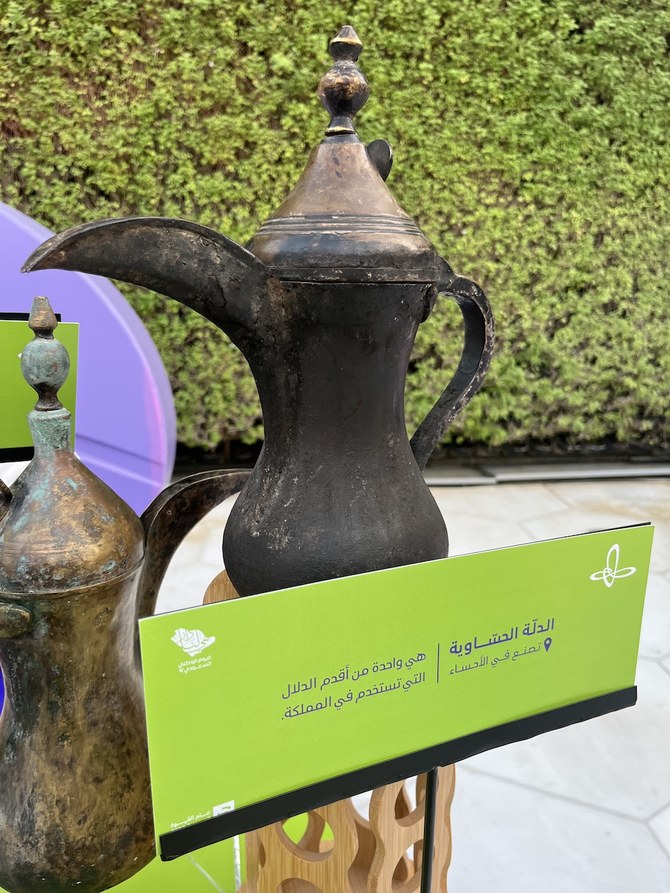
The next stage contains different coffee pitchers, or dallahs, the oldest of which is from Al-Ahsa in the Eastern Province, and the final stage features the roasting and tasting.

There are five small tables in the back, each dedicated to the regions where the coffees come from.

The north, south, east, west and central regions have distinctive tastes, and tiny cups are available for people to sample the drinks.

Mashari Khaled Al-Rasheed, one of the coffee experts on hand, told Arab News: “We have the journey of Saudi coffee here, in these different stations, from the bean until the taste.

“Aramco has provided a great irrigation initiative and training for 500 farmers in the southern region of the Kingdom, where the beans are grown.

“The bean itself could come from another country but it’s considered Saudi coffee by the way it’s roasted. It makes a difference if you say it’s Saudi-grown coffee or Saudi coffee.

“It’s actually a very complex process that includes very specific timing under a very certain temperature.

“Saudi coffee is known for being lighter. Even the darker roast is considered light in the coffee world.”

Saudi Arabia is one of the world’s largest consumers of the drink, and achieving self-sufficiency in its production, in accordance with the plans of Vision 2030 to diversify the country’s economy, is considered vital.

The Ministry of Culture last December designated 2022 “The Year of Saudi Coffee,” and visitors can taste the product at the Cultural Oasis from 5 p.m. to 11 p.m. until Sept. 24.


Saudi watchdog warns of possible health risk from Nestle baby formula

Updated 06 January 2026
Follow

Saudi watchdog warns of possible health risk from Nestle baby formula

  • Company voluntarily recalls its Nan, Alfamino, S-26 Gold and S-26 Ultima products over concerns they might be contaminated with cereulide, a toxin produced by bacteria
  • Saudi Food and Drug Authority says recall is precautionary and no related illnesses have been reported, but advises consumers to dispose of recalled products immediately

RIYADH: The Saudi Food and Drug Authority on Tuesday warned the public not to consume certain Nestle infant formula products, after the company issued a voluntary recall over concerns about possible contamination.

The advisory covers products marketed under the Nan, Alfamino, S-26 Gold and S-26 Ultima brands. They might be contaminated with cereulide, a toxin produced by the Bacillus cereus bacteria, which can pose a risk to infant health, the Saudi Press Agency reported.

The Saudi authority said the recall was a precautionary measure and no related illnesses have been reported. Possible symptoms of exposure can include nausea, repeated vomiting and abdominal pain.

It advised consumers to dispose of the recalled products immediately, and said it was coordinating with Nestle to ensure they are removed from stores and is monitoring the process.

Full details of the affected products, including batch numbers, are available at the Saudi Food and Drug Authority website. The organization said consumers can report any food safety concerns by calling 19999.