

UAE In Focus — UAE initiative aims to double family business contribution to GDP by 2032

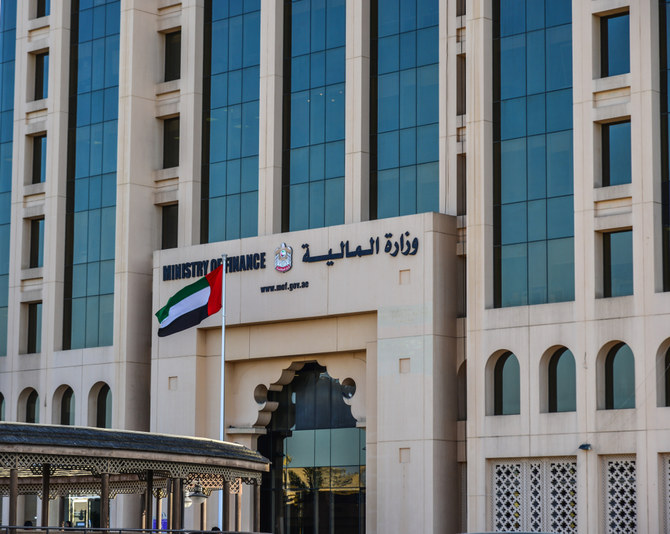
The UAE aims to double the contribution of family-owned businesses to the nation’s gross domestic product by 2032. (Shutterstock)
Short Url
Updated 21 September 2022
Follow

UAE In Focus — UAE initiative aims to double family business contribution to GDP by 2032

DUBAI: The UAE aims to double the contribution of family-owned businesses to the nation’s gross domestic product by 2032 to 1.17 trillion dirhams ($320 billion).

As part of Thabat Venture Builder, the first of its kind in the region, companies will be able to develop viable business projects by adopting emerging technologies, said the Ministry of Economy at the launch of the program in Dubai on Monday.

Through the initiative, family businesses can expand into sectors outside their traditional fields, including artificial intelligence, biotechnology, agriculture technology, space sciences, and renewable energy.

The program will take on batches of 10 to 20 family businesses, with each company nominating three members from its second or third generation.

At the end of the program, they will present their projects to potential investors.

Thabat program is supported by Investopia Summit, Abu Dhabi global technology ecosystem Hub71, Dubai Chambers, Family Business Council Gulf, CSR UAE, and Dubai Internet City incubator in5.

Huobi Global to list Inery Token by end of September

UAE-based decentralized data system Inery has announced its token will be listed on Huobi Exchange on Sept. 28, 2022, according to a statement.

By integrating blockchain properties such as immutability, security, and owner-controlled data assets into a distributed database ecosystem, Inery enables decentralized data management by enabling high performance, low network latency, and complex query functions.

Decentralizing data and managing data for both Web2 and Web3 companies is simplified with Inery while streamlining the move to the decentralized web, the statement added.

The Huobi Exchange is a crypto exchange that supports more than 600 cryptocurrencies and over 1000 trading pairs.

The network’s native token, $INR, secures and powers the ecosystem.

New properties under Rotana’s new brand revealed

Rotana has recently announced the opening of two new hotels under its Edge by Rotana brand in the Middle East, Africa, Eastern Europe, and Turkey.

During the Future Hospitality Summit in Dubai, it was announced that the Arabian Park Hotel and Damac Hills 2 Hotel will open in October 2022 and November 2022, respectively.

Edge by Rotana, which was launched in May 2022, provides independent properties with access to the company’s extensive network and systems.

The Edge by Rotana-managed Arabian Park hotel will open in Al-Jaddaf in October 2022.

The Damac Hills 2 Hotel will open in November 2022 at Akoya Oxygen.

With 71 hotels across the Middle East, Africa, Eastern Europe, and Turkey, Rotana serves more than six million guests annually, including 10,012 keys across 36 hotels in the UAE alone.

In line with the UAE’s vision to become a world-leading travel destination, the hospitality group has nine hotels set to open before the end of 2023, the statement said.


First EU–Saudi roundtable on critical raw materials reflects shared policy commitment

Updated 16 January 2026
Follow

First EU–Saudi roundtable on critical raw materials reflects shared policy commitment

RIYADH: The EU–Saudi Arabia Business and Investment Dialogue on Advancing Critical Raw Materials Value Chains, held in Riyadh as part of the Future Minerals Forum, brought together senior policymakers, industry leaders, and investors to advance strategic cooperation across critical raw materials value chains.

Organized under a Team Europe approach by the EU–GCC Cooperation on Green Transition Project, in coordination with the EU Delegation to Saudi Arabia, the European Chamber of Commerce in the Kingdom and in close cooperation with FMF, the dialogue provided a high-level platform to explore European actions under the EU Critical Raw Materials Act and ResourceEU alongside the Kingdom’s aspirations for minerals, industrial, and investment priorities.

This is in line with Saudi Vision 2030 and broader regional ambitions across the GCC, MENA, and Africa.

ResourceEU is the EU’s new strategic action plan, launched in late 2025, to secure a reliable supply of critical raw materials like lithium, rare earths, and cobalt, reducing dependency on single suppliers, such as China, by boosting domestic extraction, processing, recycling, stockpiling, and strategic partnerships with resource-rich nations.

The first ever EU–Saudi roundtable on critical raw materials was opened by the bloc’s Ambassador to the Kingdom, Christophe Farnaud, together with Saudi Deputy Minister for Mining Development Turki Al-Babtain, turning policy alignment into concrete cooperation.

Farnaud underlined the central role of international cooperation in the implementation of the EU’s critical raw materials policy framework.

“As the European Union advances the implementation of its Critical Raw Materials policy, international cooperation is indispensable to building secure, diversified, and sustainable value chains. Saudi Arabia is a key partner in this effort. This dialogue reflects our shared commitment to translate policy alignment into concrete business and investment cooperation that supports the green and digital transitions,” said the ambassador.

Discussions focused on strengthening resilient, diversified, and responsible CRM supply chains that are essential to the green and digital transitions.

Participants explored concrete opportunities for EU–Saudi cooperation across the full value chain, including exploration, mining, and processing and refining, as well as recycling, downstream manufacturing, and the mobilization of private investment and sustainable finance, underpinned by high environmental, social, and governance standards.

From the Saudi side, the dialogue was framed as a key contribution to the Kingdom’s industrial transformation and long-term economic diversification agenda under Vision 2030, with a strong focus on responsible resource development and global market integration.

“Developing globally competitive mineral hubs and sustainable value chains is a central pillar of Saudi Vision 2030 and the Kingdom’s industrial transformation. Our engagement with the European Union through this dialogue to strengthen upstream and downstream integration, attract high-quality investment, and advance responsible mining and processing. Enhanced cooperation with the EU, capitalizing on the demand dynamics of the EU Critical Raw Materials Act, will be key to delivering long-term value for both sides,” said Al-Babtain.

Valere Moutarlier, deputy director-general for European industry decarbonization, and directorate-general for the internal market, industry, entrepreneurship and SMEs at European Commission, said the EU Critical Raw Materials Act and ResourceEU provided a clear framework to strengthen Europe’s resilience while deepening its cooperation with international partners.

“Cooperation with Saudi Arabia is essential to advancing secure, sustainable, and diversified critical raw materials value chains. Dialogues such as this play a key role in translating policy ambitions into concrete industrial and investment cooperation,” she added.