

Spain, UK making headway on renewable energy, says climate report

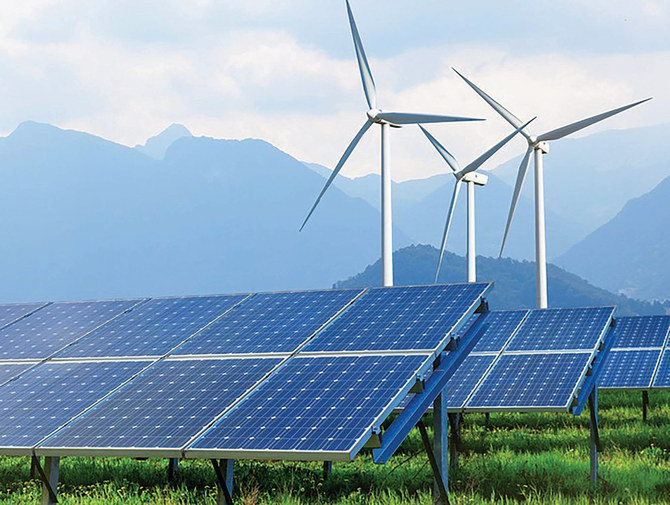
Modest climbers included Australia, India, the US and Japan —while Canada and Brazil score poorly. (File)
Short Url
Updated 20 September 2022
Follow

Spain, UK making headway on renewable energy, says climate report

  • International nonprofit Climate Group compiled the rankings of G20 countries based on both ambition and progress

NEW YERK: Germany, China, Spain and the UK are leading the world’s richest nations in the push toward renewable energy, a new report said on Tuesday.

International nonprofit Climate Group compiled the rankings of G20 countries based on both ambition and progress.

Modest climbers included Australia, India, the US and Japan —while Canada and Brazil score poorly, despite existing high renewable electricity use. Saudi Arabia and Russia hold down the bottom spots in the list.

“What we’ve recognized at the Climate Group over a number of years is the importance of the policy environment to enable rapid action on renewables,” Mike Peirce, the organization’s executive director of systems change, told AFP.

The report — published during New York’s annual Climate Week on the sidelines of the UN General Assembly — is designed with a group of 380 leading businesses in mind, called the RE100 companies, that have committed to go 100 percent renewable.

Twenty countries, including Spain as a permanent guest of the G20, were given grades from A to E.

Areas examined included net zero targets, renewable power target ambition, share of renewables in total installed capacity in 2021, and renewable capacity additions in 2021.

Spain, which got an A, was lauded for setting out to deliver “one of the most ambitious renewable power policies in the European Union,” with all new power capacity additions over the last decade coming from green energy.

Renewables accounted for 21 percent of Spain’s total final energy consumption in 2020, surpassing its goal of 20 percent, with plans to increase this to 43 percent by 2030 and 97 percent by 2050 when it is due to reach its climate neutrality goal.

India, which got a C, ranks fourth in the world for installed renewable power capacity with 158 GW — but while there are key signs of ambition from the central government, the report cited high capital costs and grid connection challenges as significant headwinds.

Brazil and Canada were termed “stragglers,” both receiving Ds despite having an abundance of hydropower, with the report urging more diversification as severe droughts have put future energy generation at risk.

The percentage of renewables in Canada’s total final energy consumption slipped slightly from 25.8 percent in 2009 to under 25 percent by the end of 2019. While Canada is targeting net zero by 2050, it lacks any interim dates for checkpoints along the way.

To do better, countries must lay out strong roadmaps with key interim targets, implement financing solutions to drive investor confidence.

“As Europe buckles under the weight of the energy crisis, its leaders are regretting that they didn’t transition from fossil fuels faster. They mustn’t lock themselves in to further damaging emissions,” Peirce said.


Saudi Arabia exports 1st industrial water treatment plant with nanotechnology to Europe

Updated 11 sec ago
Follow

Saudi Arabia exports 1st industrial water treatment plant with nanotechnology to Europe

JEDDH: Saudi Arabia’s GI Aqua Tech is set to export its first industrial wastewater treatment plant using nanotechnology in early 2026, the company’s CEO, Sherif Desouky, told Al Eqtisadiah.

The project, which operates on a per-cubic-meter treatment system, is valued at approximately €5 million ($5.9 million), with the first plant set for France, marking the first nanotechnology-based water treatment and reuse system manufactured and exported from Saudi Arabia to the world.

Expanding exports to GCC states in Q1 2026

These plants are designed for 100 percent reuse of industrial wastewater, and the expansion plan includes exporting several units to Bahrain and other Gulf countries with a combined capacity of 10,000 cubic meters in the first quarter of next year.

Desouky noted that the plant being exported to France will be installed at a cosmetics manufacturing facility, one of the most challenging industries for wastewater treatment.

Previously, wastewater had to be collected and transported for incineration at high costs, but nanotechnology now allows on-site treatment and reuse with higher operational efficiency.

He added that the technology directly contributes to reducing liquid waste disposal costs, saving up to 80 percent of energy, and replacing conventional disposal with reuse solutions compliant with strict environmental standards.

Desouky stated that the technology was fully developed and manufactured in Saudi Arabia with government support, enabling the project to move from local implementation to exports to European and global markets.

The plant, located in Al-Kharj Industrial City under the Saudi Authority for Industrial Cities and Technology Zones, known as Modon, spans 23,000 sq. meters and is the first in the Middle East to combine nanomaterial production with wastewater treatment plant manufacturing, according to Desouky.

Investments reach €150m, with 50 percent of workforce Saudi nationals

The CEO explained that the project investments are expected to reach €150 million upon completion, with 54 percent of the workforce currently Saudi nationals.

He added that the technology has already been deployed across major projects in Saudi Arabia, successfully integrating large volumes of industrial and sanitary wastewater, including at Riyadh’s Third Industrial Area, where it achieved 100 percent water reuse in a global first. 

He added that while Modon allocated 40,000 sq. meters for the project, the technology required only 4,000 sq. meters, allowing the remaining land to be transformed into a public park irrigated entirely with treated, odor-free water, underscoring the high environmental standards achieved.

Decentralized plants in areas not connected to sewage networks

Desouky highlighted the world’s first decentralized nanotechnology wastewater treatment plant within a residential neighborhood in Al-Mousa district, northern Jeddah.

He explained that the plant was constructed and became operational in just 10 days to address the issue of areas not connected to the central sewage network, which previously relied on tankers, and it now serves 8,000 residents.

This model represents a global first as a rapid solution for water and environmental crises, with the added advantage that the plant can later be relocated without leaving any negative impact.

According to the CEO, applications of the technology have also included the world’s largest plant for treating concrete factory wastewater in Neom and the Samhan Hotel plant in Riyadh, which has successfully treated all types of hotel wastewater for a year, including kitchen, laundry, and blackwater — not just greywater, as is common in hotels.

He added that this has opened avenues for collaboration with the global Marriott chain, noting that exporting this technology allows Saudi Arabia to achieve record energy savings of 80 percent, reduce space requirements by 90 percent, and ensure water meets the highest quality standards.