- Under verification scheme, Pakistani workers can get contracts directly from Saudi companies without needing sponsor
- Saudi envoy says 12 examination centers have been established in eight Pakistani cities to conduct tests of skilled workers
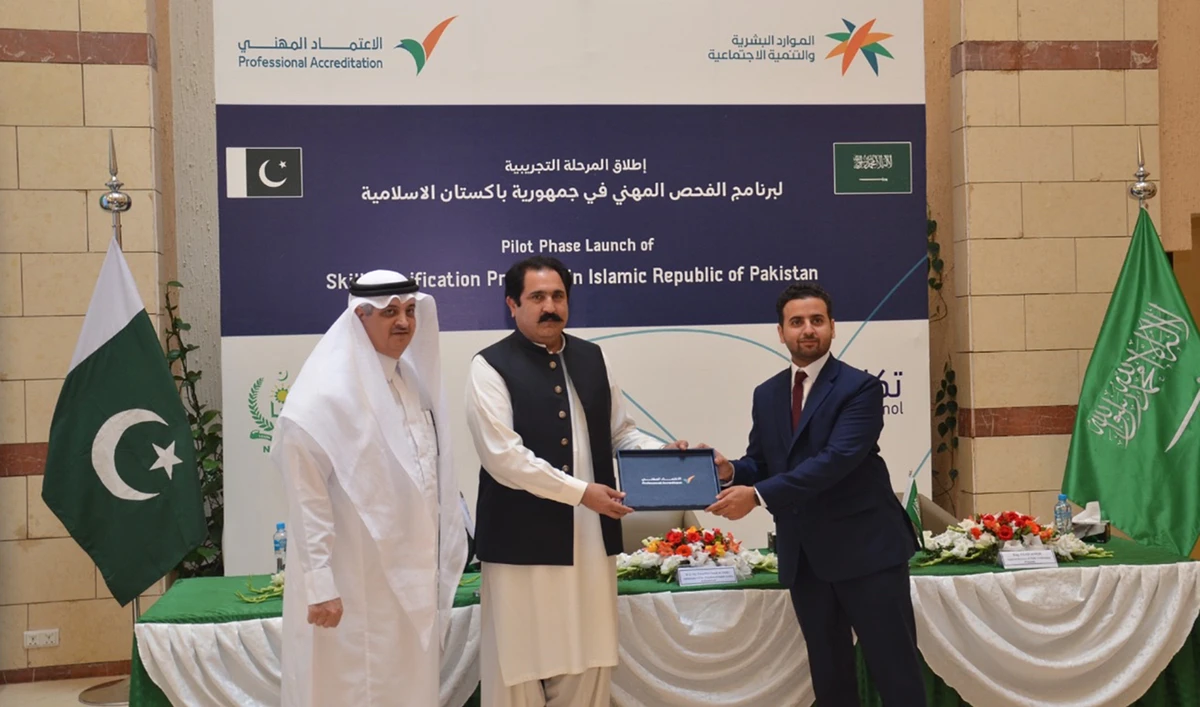
ISLAMABAD: Saudi Arabia on Monday launched a skill verification program in Pakistan, with the South Asia nation becoming the first beneficiary of Riyadh's new scheme for skilled workers.
Under the newly launched program, a dozen examination centers will conduct written and practical tests of skilled workers in Pakistan before they could apply for a Saudi work visa.
Saudi Arabia is home to more than 2.5 million Pakistani expatriates and one of the biggest sources of remittances to Pakistan.
Saad Aiaqil, director-general of the Saudi skill verification program, said Pakistan was the first country to utilize the skilled workers' scheme.
“We have a very strong strategic relationship with Pakistan and have selected it as the first country to start this program,” he told Arab News at the program's launch in Islamabad on Monday.
The initiative is aimed at ensuring skilled workforce comes to the kingdom, Aiaqil said.
“In the first phase we have selected five occupations for the program and these five have further 160 smaller categories for the workers,” he added.
Nawaf bin Said Al-Malki, Saudi Arabia's ambassador to Pakistan, said he was pleased at the launch of the program in Pakistan.
"Twelve examination centers have been established in collaboration with [Pakistan's] National Vocational and Technical Training Commission (NAVTCC) in eight different cities to conduct tests,” the envoy said. “In the first phase of the program, five occupations were selected including electrician, plumbing, welding, refrigeration/air conditioning, and auto electrician.”
The Saudi government was trying to provide best opportunities to Pakistani workers through the new program as the verified workers would be considered "more credible and useful" for Saudi firms, to Al-Malki added.
“There are a lot of projects in the kingdom going on and this is a very good opportunity for the Pakistani labor to get a job in Saudi Arabia,” he said. “This will benefit workers as well because there would be no need of a kafala (sponsor) now and through this program, there would be a direct contract between workers and the company,” he said, referring to the kafala system that generally binds a migrant worker to one employer.
Sajid Hussain Turi, federal minister for overseas Pakistanis, welcomed the Saudi initiative and vowed to provide maximum workers to the kingdom under the program.
“Pakistan welcomes the initiative and we hope it will provide better opportunities to the Pakistani labor market,” he said.
The minister said around 6 million Pakistanis had contributed to Saudi Arabia's development in various fields over the last 50 years and now his ministry would try to provide Pakistani workers with the best training so that they could benefit from the new Saudi scheme.
“Saudi Arabia is starting many mega projects under Vision 2030 like Neom, Taif city project, and development in Makkah, so we hope that a large number of Pakistani workers would be able to get employment there,” the minister said.
In 2020, Saudi Arabia announced new plans to ease foreign workers’ contractual restrictions, abolishing a seven-decade-old sponsorship system known as kafala.
The plans, which took effect in March 2021, aim to make the Saudi labour market more attractive by granting foreign workers the right to change jobs and leave the country without employers’ permission.
Saudi Arabia is seeking to boost its private sector, part of an ambitious plan to diversify its oil-dependent economy. The country's Vision 2030 reform plan is a package of economic and social policies designed to free the kingdom from reliance on oil exports.