

IMF to work with international community to support flood-hit Pakistan

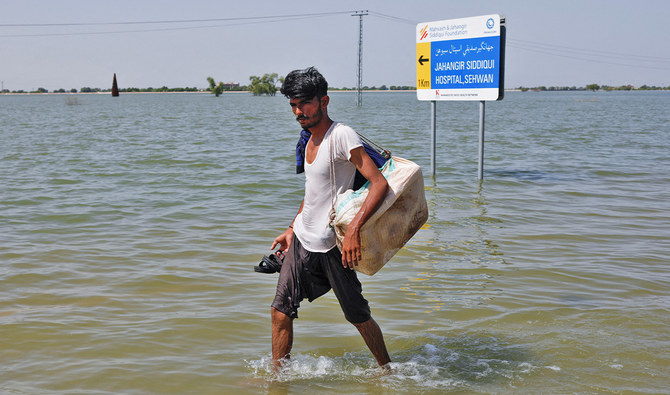
A displaced man walks on flooded highway, following rains and floods during the monsoon season in Sehwan, Pakistan, on September 16, 2022. (REUTERS)
Short Url
Updated 19 September 2022
Follow

IMF to work with international community to support flood-hit Pakistan

  • IMF representative says Fund will work to support relief and reconstruction efforts under the current program
  • Pakistan is expected to import food commodities as losses from massive floods are likely to exceed $40 billion

ISLAMABAD: The International Monetary Fund (IMF) will work with the international community to support Pakistan’s relief and reconstruction efforts, the lender’s resident representative said on Sunday, after the catastrophic floods that have caused widespread death and destruction in the country. 

Unusually heavy rains and glacier melt in the north brought massive floods in Pakistan that have killed 1,545 people and affected more than 33 million in the South Asian country since mid-June. 
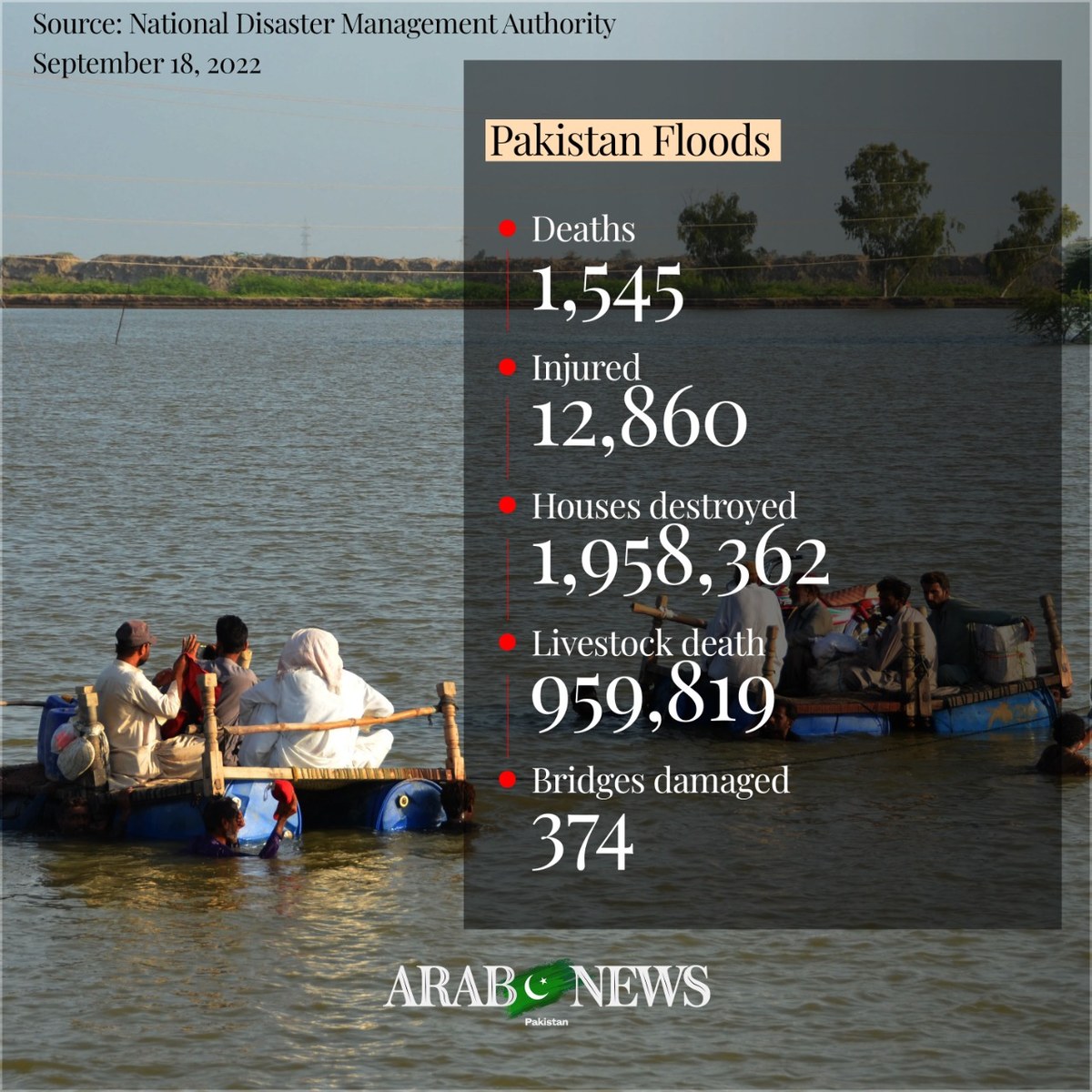
The deluges washed away livestock, swathes of standing crops, bridges and roads, with officials saying the losses could run as high as $40 billion. 

“We will work with others in the international community to support, under the current program, the authorities’ relief and reconstruction efforts, and especially their ongoing endeavour to assist those affected by the floods while ensuring sustainable policies and macroeconomic stability,” Esther Perez Ruiz said in a message to Reuters. 

The development comes as Pakistan continues to grapple with a widening current account deficit, currency depreciation and inflation that hit a 47-year high at 27.3 percent in August. 

Pakistan’s foreign reserves have declined by $176 million to stand at $8.624 billion — barely enough to cover 40 days of imports — due to external debt and other payments during the week that ended on September 09, according to the central bank data. 

This has led to added pressure on the rupee. The Pakistani currency lost 0.41 percent of its value on Friday as the US dollar closed at Rs236.84 after recouping from some of its earlier losses. 

The Pakistani currency lost its value by 3 percent, or Rs7.02, during the week, according to the State Bank of Pakistan (SBP). 

Late last month, the IMF completed seventh and eighth reviews of the extended arrangement under the $6.5 billion program for Pakistan, clearing the way for immediate disbursement of $1.1 billion that brings total disbursements for budget support to the South Asian country to around $3.9 billion. 

The IMF program availed in 2019 initially had $6 billion volume, however, the Fund on Monday expanded it on the request of Pakistani authorities to $6.5 billion until June 2023. 

Financial analysts say the devastation from floods may cause around $2 billion impact on the country’s balance of payments as Pakistan is expected to opt for the import of food commodities. 

Pakistan reviews austerity measures amid Middle East crisis, urges strict nationwide implementation

Updated 11 March 2026
Follow

Pakistan reviews austerity measures amid Middle East crisis, urges strict nationwide implementation

  • Deputy Prime Minister Ishaq Dar chairs review meeting of austerity steps
  • Officials briefed on salary cuts, school closures, four‑day week, petrol conservation

ISLAMABAD: Pakistan’s government on Wednesday assessed progress on a sweeping set of austerity measures introduced to mitigate the country’s economic strain from sharply rising global oil prices and supply disruptions linked to the ongoing war in the Middle East.

Prime Minister Shehbaz Sharif this week announced a series of austerity steps, including a four‑day work week for government offices, requiring 50  percent of staff to work from home, cutting fuel allowances for official vehicles by half, grounding up to 60  percent of the government fleet and closing all schools for two weeks to conserve fuel amid the global oil crisis.

The measures were unveiled in response to global oil market volatility triggered by the conflict involving the United States, Israel and Iran, which has disrupted supply routes such as the Strait of Hormuz and pushed crude prices sharply higher, straining Pakistan’s heavily import‑dependent energy sector.

“The meeting stressed the importance of strict and transparent adherence to the austerity measures, promoting fiscal responsibility and prudent use of public resources,” Deputy Prime Minister and Foreign Minister Senator Mohammad Ishaq Dar said in a statement.

He was chairing a meeting of the Committee for Monitoring and Implementation of Conservation and Additional Austerity Measures, constituted under the directions of the PM, bringing together federal and provincial officials to review execution of the broad cost‑cutting plan. 

Dar emphasized the government’s commitment to enforcing the PM’s austerity steps nationwide. The committee’s review also covered reductions in departmental expenditure, deductions from salaries of senior officials earning over Rs. 300,000 ($1,120), and coordination with provincial administrations to ensure uniform implementation of the plan.

Participants at the meeting reiterated that all ministries and divisions must continue strict monitoring and reporting, with transparent oversight mechanisms, as Pakistan navigates the economic pressures from the prolonged Middle East crisis and its fallout on global energy and trade markets.