YouTube, Meta will expand policies, research to fight online extremism

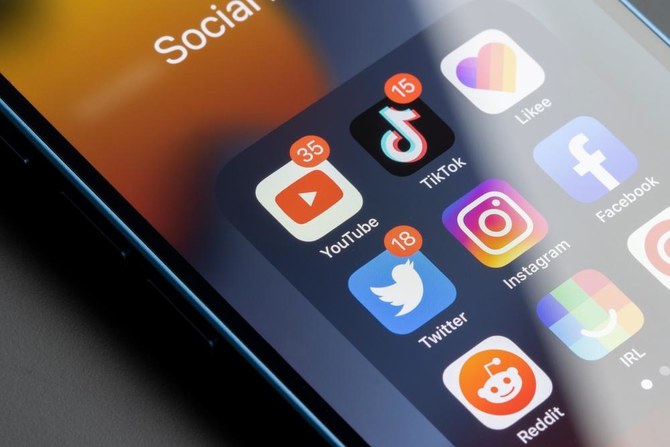
Platforms like Alphabet’s YouTube and Meta Platforms’ Facebook have come under fire for years from critics who say the companies have allowed hate speech, lies and violent rhetoric to flourish on their services.
Short Url
Updated 16 September 2022
Follow

YouTube, Meta will expand policies, research to fight online extremism

  • Some of the steps they plead to take include launching media literacy campaigns for younger users and new AI tools for schools to help detect and prevent violence

LONDON: Major tech companies on Thursday committed to taking fresh steps to combat online extremism by removing more violent content and promoting media literacy with young users, as part of a White House summit on fighting hate-fueled violence.
Platforms like Alphabet’s YouTube and Meta Platforms’ Facebook have come under fire for years from critics who say the companies have allowed hate speech, lies and violent rhetoric to flourish on their services.
US President Joe Biden earlier on Thursday called on Americans to combat racism and extremism during a summit at the White House that gathered experts and survivors and included bipartisan local leaders.
YouTube said it will expand its policies on violent extremism to remove content that glorifies violent acts, even if the creators of the videos are not related to a terrorist organization.
The video streaming site already prohibits violent incitement, but in at least some cases has not applied existing policies to videos promoting militia groups involved with the Jan. 6 storming of the US Capitol.
A report by the Tech Transparency Project in May found 435 pro-militia videos on YouTube, including 85 posted since the Jan. 6 attack. Some of the videos gave training advice, like how to carry out guerilla-style ambushes.
YouTube spokesman Jack Malon declined to say whether the service would change its approach to that content under the new policy, but said the update enables it to go further with enforcement than it had previously.
YouTube also said it will launch a media literacy campaign to teach younger users how to spot the manipulation tactics that are used to spread misinformation.
Microsoft said it will make a basic and more affordable version of its artificial intelligence and machine learning tools available to schools and smaller organizations in order to help them detect and prevent violence.
Facebook owner Meta announced it will partner with researchers from the Middlebury Institute of International Studies’ Center on Terrorism, Extremism and Counterterrorism.
Last year, lawmakers grilled the chief executives of Alphabet and Facebook, as well as Twitter Inc, on whether their companies bore some responsibility for the Jan. 6 attack.


Western media refute Trump’s claims Iran possesses Tomahawk missiles

Updated 10 March 2026
Follow

Western media refute Trump’s claims Iran possesses Tomahawk missiles

  • Speaking to journalists, Trump suggested Tehran used US-made cruise missile in school attack that killed over 170, calling the weapon ‘very generic’
  • CNN, Sky News and analysts said that ‘neither Israel nor Iran use Tomahawk missiles,’ urged accurate identification to ensure credibility in public discourse

LONDON: Western media outlets and defense analysts have pushed back against claims by US President Donald Trump that Iran possesses Tomahawk cruise missiles, after he raised the possibility while discussing a recent strike on an Iranian school that has drawn international scrutiny.

Speaking to reporters on Monday, Trump suggested Iran may have used Tomahawks in the attack, calling the weapon “very generic” and implying that multiple countries, including Iran, could have access to the system.

However, journalists and weapons experts swiftly disputed that assertion. They noted that Tomahawk missiles are US-manufactured cruise missile systems that Washington supplies only to a small number of close allies, primarily the UK and Australia. There is no credible evidence that Iran has ever obtained the weapon.

CNN anchor Erin Burnett referenced an investigation by correspondent Isobel Yeong that concluded “neither Israel nor Iran use Tomahawk missiles, according to experts.” Sky News and other Western outlets also challenged Trump’s remarks.

Analysts pointed out that Iran has developed its own domestic cruise missile systems, such as the Soumar and Hoveyzeh, which are believed to be based partly on older Soviet-era designs.

While these systems resemble cruise missiles in concept, experts say they differ significantly from the Tomahawk in design, propulsion configuration and operational characteristics.

While Iran has made substantial advances in ballistic and domestically produced cruise missiles over the past two decades, defense analysts said there is no verified evidence that Tehran holds the American-made system.

The episode reflects a broader pattern in which statements about military technology are rapidly scrutinized by open-source investigators and defense experts.

Experts say the distinction is important: accurately identifying the type of missile used in a strike can provide clues about the likely actor responsible, the launch platform involved and the broader geopolitical consequences of a strike.

Analysts also say that accurate identification of military systems remains essential for avoiding misinformation and for maintaining credibility in public discourse surrounding regional security.

Despite the growing body of evidence, the precise circumstances of the school attack nonetheless remain unclear, with investigators hampered by a lack of weapons fragments and limited access to the site.

Norway-based rights group Hengaw said the school was holding its morning session at the time of the reported attack and had at least 168 children and 14 teachers.

Trump said the US was continuing to investigate the incident. “Whatever the report shows, I’m willing to live with that report,” he said.