

Looking back at Queen Elizabeth II’s wedding gown made with Syrian brocade

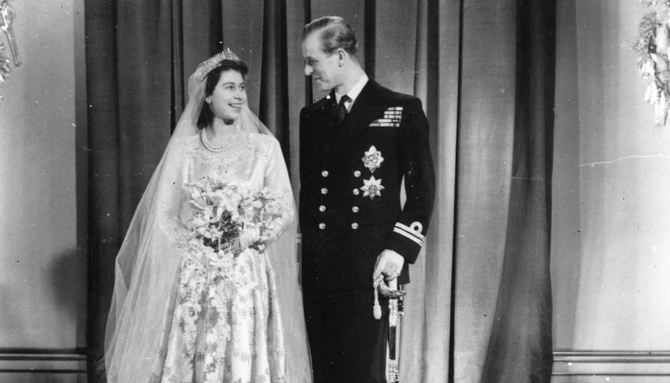
On Nov. 20, 1947, the then-21-year-old princess married naval officer Prince Philip of Greece. (Getty Images)
Short Url
Updated 11 September 2022
Follow

Looking back at Queen Elizabeth II’s wedding gown made with Syrian brocade

DUBAI: As the world looks back on the storied life of Queen Elizabeth II, fashion lovers could be pleasantly surprised to find the longest-serving British monarch championed Arab creativity on one of the most memorable days of her life.

On Nov. 20, 1947, the then-21-year-old princess married naval officer Prince Philip of Greece in a gown created by court designer Norman Hartnell.

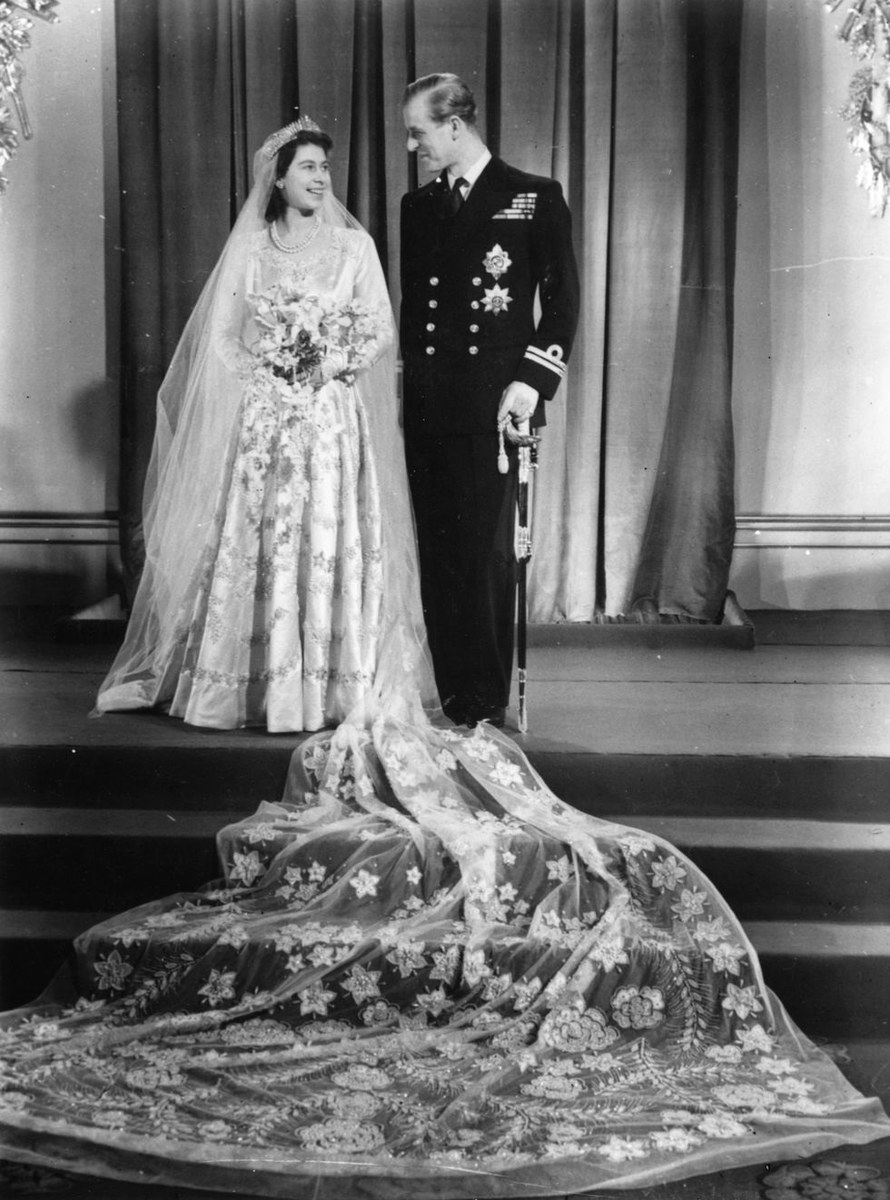
The regal dress was made of ivory silk from China — not Japan or Italy given the recent end of World War II — and featured 10,000 seed pearls imported from the US — as well as show-stealing Damask brocade from Damascus, Syria.


(Getty Images)

The brocade fabric was brought from the Al-Muznar factory in the Bab Sharqi neighborhood of Damascus’s Old City and featured embroidery of “two love birds” exchanging kisses in a pattern known locally as “the lover and the beloved.” Woven with 12-karat gold thread, the brocade fabric was reportedly sent to the queen by Syrian President Shukri al-Quwatli.

The luxurious fabric is one of many gifts sent from the Arab world throughout the royal’s life.
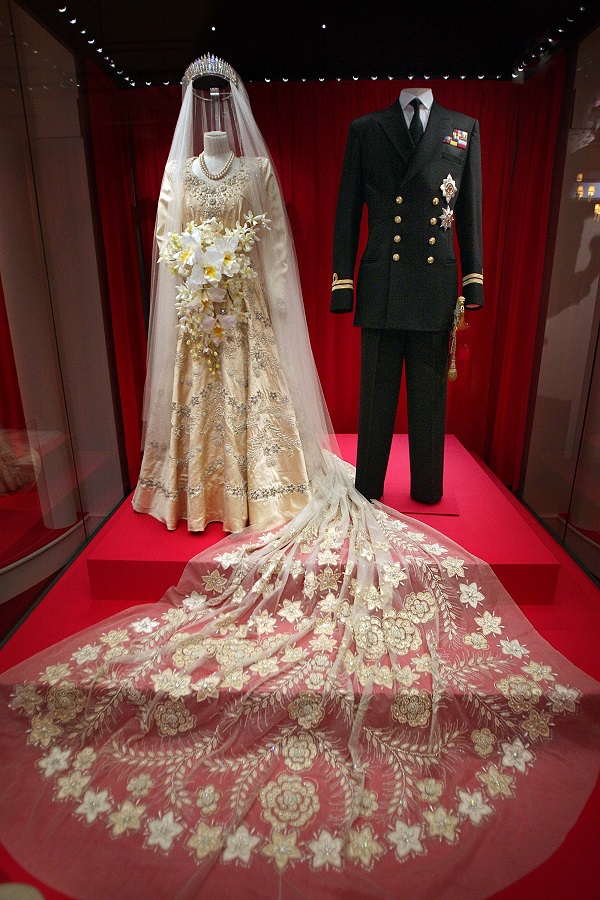


Princess Elizabeth’s wedding dress, designed by Norman Hartnell, and the Duke of Edinburgh's Royal Naval uniform are displayed at an exhibition at Buckingham Palace on July 27, 2007 in London. (Getty Images)

The dress was meant to symbolize “rebirth and growth” in Britain after the war, according to the Royal Collection Trust.

It took 350 women seven weeks to make, and featured elaborate floral motifs of jasmine, smilax, lilac and white rose-like blossoms added to the train. The design was inspired by Italian artist Botticelli’s 1482 painting of Primavera.


Riyadh celebrates Sudanese heritage in cultural week finale

Updated 15 December 2025
Follow

Riyadh celebrates Sudanese heritage in cultural week finale

  • Visitors experience sounds of dalooka, rababa in lively spectacle
  • Global Harmony 2 initiative has offered an integrated cultural experience highlighting 14 cultures

RIYADH: The Sudanese Culture Week continues in Riyadh until Dec. 20, attracting visitors from a variety of nationalities to diverse cultural performances, the Saudi Press Agency reported.

The Ministry of Media has organized the events as part of the Global Harmony 2 initiative, in cooperation with the General Entertainment Authority and the Quality of Life Program.

Held at Al-Suwaidi Park, one of Riyadh Season’s zones, the week began with a celebratory parade featuring traditional Sudanese music which included the sounds of the dalooka and the rababa. A traditional Sudanese bridal procession was the subject of a tableau that also engaged visitors.

Sudanese Culture Week also includes musical concerts, entertainment sections, and cultural pavilions, with participation from Sudanese singers and influencers presenting activities that reflect the cultural diversity of the country’s regions and communities.

The event’s stage hosted the opening concerts, which were attended by thousands who enjoyed rababa performances and popular Sudanese songs.

Citizens and residents explored Sudanese culture through its folk arts, traditional music, and customs.

The celebration marks the final week of the Global Harmony 2 initiative’s cultural events. These have built on the program’s success in promoting cultural exchange and showcasing the cultures of communities residing in the Kingdom, reflecting the values of coexistence and cultural openness.

Over more than 40 days the Global Harmony 2 initiative has offered an integrated cultural experience highlighting 14 cultures.

Indian Culture Week was the first in a series featuring countries from Asia, Africa, and the Arab world.

Other weeks have placed the spotlight on regions such as the Philippines, Egypt, Pakistan, Jordan, Lebanon, Palestine, Bangladesh, Yemen, Uganda, and Ethiopia, providing traditional arts and music, cuisine, and social activities.

The initiative has included more than 100 artists and creators presenting artistic and musical performances, along with areas showcasing traditional cuisine, clothing, handicrafts, and family-friendly interactive activities.

It has received wide acclaim for highlighting the lives of residents in the Kingdom and the services provided to them.