

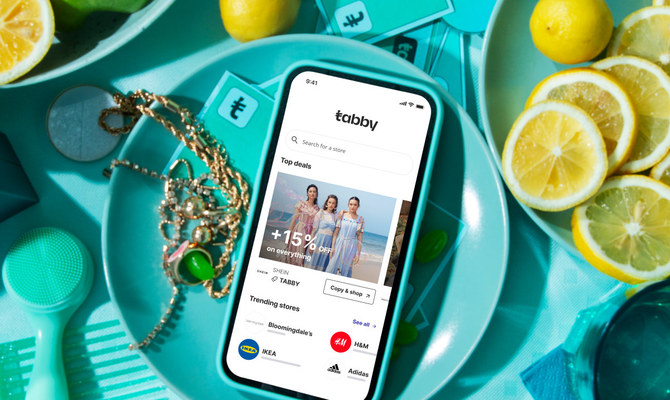
Tabby goes full deck to fix low credit card access in Saudi Arabia

The company will also use its recently raised funding to sustain its balance sheet as BNPL requires very high capital. (Supplied)
Short Url
Updated 12 September 2022
Follow

Tabby goes full deck to fix low credit card access in Saudi Arabia

  • Company wants to provide easy payment options in the Kingdom: Official

CAIRO: Tabby, the UAE-based buy now, pay later fintech company, will soon be widening its scope in Saudi Arabia with the introduction of its virtual card in the Kingdom.

The Tabby virtual card is a Visa card that allows shoppers to split their purchases into four payments at select in-store locations.

Fresh off securing $150 million in debt financing in early August, the company wants to provide easy payment options in the Arab world’s largest economy, where less than 20 percent of the population has a credit card, said a senior company official.

“Saudi Arabia has a penetration rate of around 0.3 credit cards per person, so there is a real need for easy consumer credit, especially for day-to-day payments,” Abdulaziz Saja, general manager of Tabby Saudi Arabia, told Arab News exclusively. 
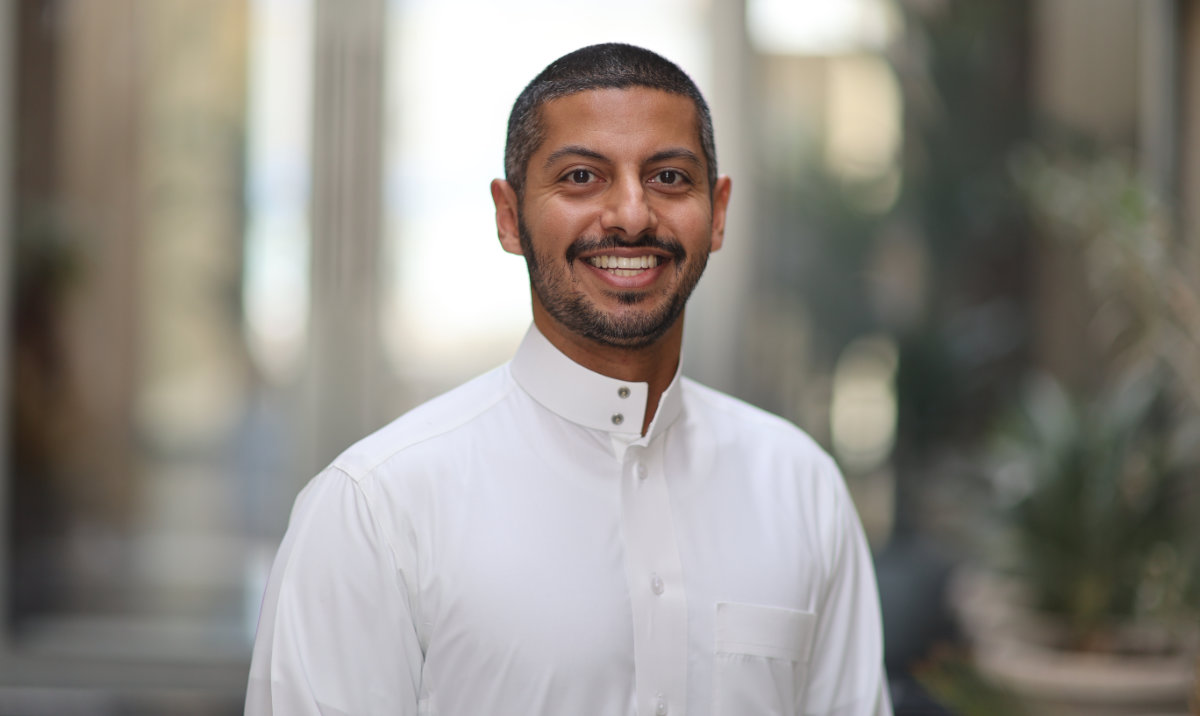
Tabby is aiming to empower in-store users using the virtual card in addition to a huge focus of the company’s operations going into providing payment solutions for all users, not just online.

Abdulaziz Saja, general manager of Tabby Saudi Arabia

Users can activate the card using the Tabby app, add it to their preferred digital wallets and tap the payment terminal at checkout to divide their payments into installments.

“After the successful launch of the Tabby Virtual Card in UAE, we want to bring it to Saudi Arabia,” said Saja.

He added that Tabby is aiming to empower in-store users using the virtual card in addition to a huge focus of the company’s operations going into providing payment solutions for all users, not just online.

The company will also use its recently raised funding to sustain its balance sheet as BNPL requires very high capital.

“Some of that funding will also invest in young Saudi talent. Because as we grow the company, we’ll also be looking into hiring locally for product managers and software engineers,” Saja added.

Tabby currently operates in the UAE, Saudi Arabia, Kuwait and Egypt, with 85 percent of its sales volume happening in the Kingdom, Saja stated.

He attributed the company’s growth in the Kingdom primarily to the rise in the adoption of e-commerce during the COVID-19 pandemic.

“An additional factor is the effect of a 15 percent value-added tax that has also put a bit of stress on customer disposable incomes here,” he added.

Saja also said that the Saudi market has a huge population compared to the UAE, in addition to the booming last-mile delivery services in the Kingdom.

The Saudi Central Bank’s Sandbox program also nurtured the company, closely monitoring its challenges and performance.

“We’ve also given back to the community by mentoring young companies participating in the Saudi fintech accelerated program,” Saja said.

“Our main stakeholder in Saudi Arabia is the central bank, but we’ve also engaged with several other entities that have helped us either source talent or connect with investors,” he added.

Tabby has raised $275 million since its launch in the UAE in late 2019. Its latest $150 million round was from US-based venture capital firms Atalaya Capital Management and Partners for Growth.

Tabby currently has over 4,000 global brands and small businesses, with over 2 million active users on its platform.

The company also experienced 10 times growth in revenue, eight times in active users, and three times in active retailer partners in just the first half of 2022 compared to the same period last year.


Saudi investment pipeline active as reforms advance, says Pakistan minister

Updated 08 February 2026
Follow

Saudi investment pipeline active as reforms advance, says Pakistan minister

ALULA: Pakistan’s Finance Minister Mohammed Aurangzeb described Saudi Arabia as a “longstanding partner” and emphasized the importance of sustainable, mutually beneficial cooperation, particularly in key economic sectors.

Speaking to Arab News on the sidelines of the AlUla Conference for Emerging Market Economies, Aurangzeb said the relationship between Pakistan and Saudi Arabia remains resilient despite global geopolitical tensions.

“The Kingdom has been a longstanding partner of Pakistan for the longest time, and we are very grateful for how we have been supported through thick and thin, through rough patches and, even now that we have achieved macroeconomic stability, I think we are now well positioned for growth.”

Aurangzeb said the partnership has facilitated investment across several sectors, including minerals and mining, information technology, agriculture, and tourism. He cited an active pipeline of Saudi investments, including Wafi’s entry into Pakistan’s downstream oil and gas sector.

“The Kingdom has been very public about their appetite for the country, and the sectors are minerals and mining, IT, agriculture, tourism; and there are already investments which have come in. For example, Wafi came in (in terms of downstream oil and gas stations). There’s a very active pipeline.”

He said private sector activity is driving growth in these areas, while government-to-government cooperation is focused mainly on infrastructure development.

Acknowledging longstanding investor concerns related to bureaucracy and delays, Aurangzeb said Pakistan has made progress over the past two years through structural reforms and fiscal discipline, alongside efforts to improve the business environment.

“The last two years we have worked very hard in terms of structural reforms, in terms of what I call getting the basic hygiene right, in terms of the fiscal situation, the current economic situation (…) in terms of all those areas of getting the basic hygiene in a good place.”

Aurangzeb highlighted mining and refining as key areas of engagement, including discussions around the Reko Diq project, while stressing that talks with Saudi investors extend beyond individual ventures.

“From my perspective, it’s not just about one mine, the discussions will continue with the Saudi investors on a number of these areas.”

He also pointed to growing cooperation in the IT sector, particularly in artificial intelligence, noting that several Pakistani tech firms are already in discussions with Saudi counterparts or have established offices in the Kingdom.

Referring to recent talks with Saudi Minister of Economy and Planning Faisal Alibrahim, Aurangzeb said Pakistan’s large freelance workforce presents opportunities for deeper collaboration, provided skills development keeps pace with demand.

“I was just with (Saudi) minister of economy and planning, and he was specifically referring to the Pakistani tech talent, and he is absolutely right. We have the third-largest freelancer population in the world, and what we need to do is to ensure that we upscale, rescale, upgrade them.”

Aurangzeb also cited opportunities to benefit from Saudi Arabia’s experience in the energy sector and noted continued cooperation in defense production.

Looking ahead, he said Pakistan aims to recalibrate its relationship with Saudi Arabia toward trade and investment rather than reliance on aid.

“Our prime minister has been very clear that we want to move this entire discussion as we go forward from aid and support to trade and investment.”