



KARACHI: When Atia Naqvi and her husband spoke to their son Emad on May 18, 2018, he sounded “cheerful.”
The family was scheduled to leave for Boston the next morning to attend Emad’s upcoming graduation from the University of Massachusetts.
Within a few hours, however, the Naqvis’ world turned upside down. An American police official called the family and said Emad had died after hanging himself at a local train station. He was two months short of his 25th birthday.
One in every 100 deaths worldwide is the result of suicide. Between 1999 and 2019, the suicide death rate in the United States increased 33 percent. In Pakistan, where Emad grew up, the World Health Organization estimated there were 19,331 suicides in 2019, with a rate of 8.9 percent per 100,000.
The WHO also estimates that, globally, for one death there are between 10 and 20 attempts. Based on these numbers, there may be between 130,000 and 260,000 suicide attempts annually in Pakistan, a rising trend. Suicide is also illegal in Pakistan and there is no access to prevention programs and little attention paid to mental illnesses such as depression.
To this day, Emad’s parents say they saw “nothing on the radar” to reveal that their son, a football enthusiast and engaged member of the community, was struggling with mental illness. But a two-hour long video recorded by the young man to explain his reasons convinced the parents otherwise.
“He was peaceful, he was very loving, but he had a warped theory that he had been born into privilege,” Naqvi, a clinical psychologist herself, told Arab News in a Zoom interview earlier this month ahead of World Suicide Prevention Day on September 10.
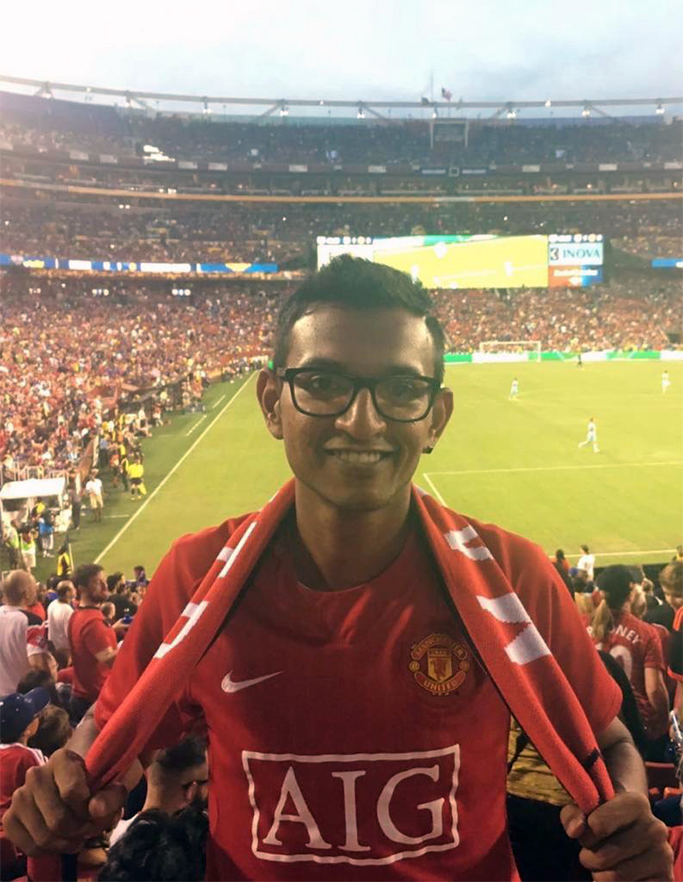
Emad is pictured during a soccer match in Boston, US, in 2017. (Photo Courtesy: Atia Naqvi)
Her son, she said, had come to believe he was “not worthy” of the opportunities life had afforded him.
“Then, he came up with anecdotes from his past that ‘I had lied, and I’m not worthy of this, and I’m not good enough’,” Naqvi said, sharing details of Emad’s video message.
“It didn’t seem that [anything big] happened in those few hours [after Emad’s phone conversation with parents],” she said. “It seemed that it was a well thought-out [action]. He had been struggling … for months. In that video, he says that ‘I wanted to speak to you guys, but I didn’t want to make you unhappy’.”
The eldest among the Naqvi children, Emad was born in New York, but grew up in Karachi where he attended the elite Karachi Grammar School and the Lyceum School before moving to the United States for a bachelor’s degree. His greatest passion was football and he was among the first members of the now highly-acclaimed Karachi United Football Club (KUFC).
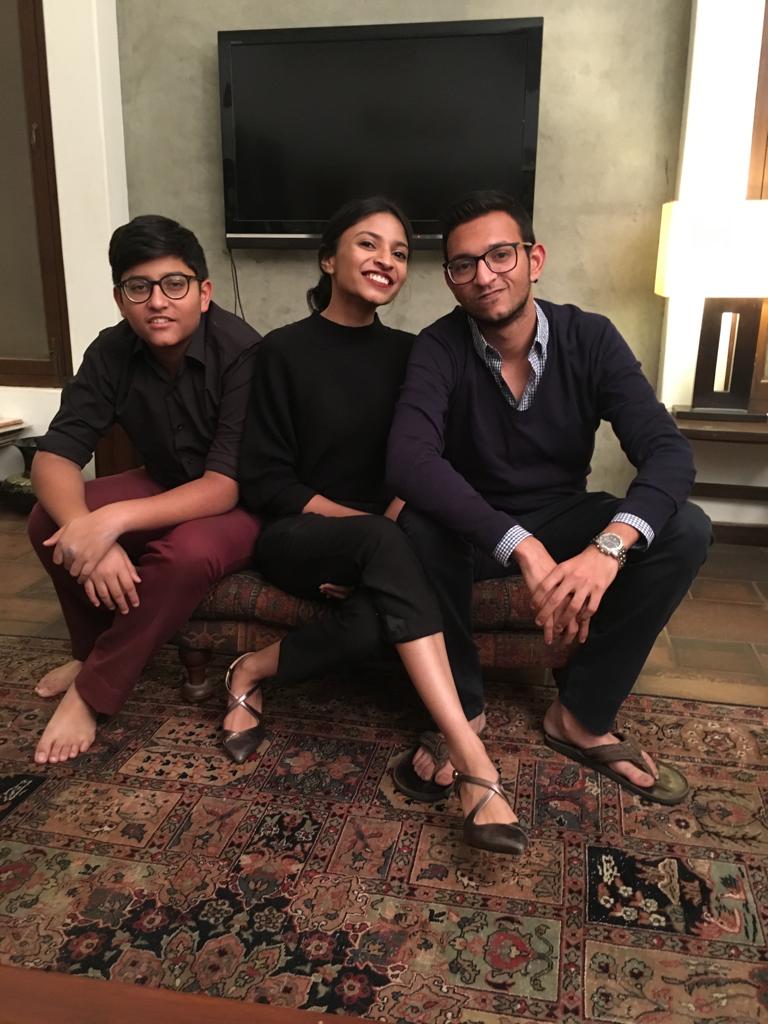
In this undated photo, Emad Naqvi (right) is seen with his younger siblings. (Photo courtesy: Atia Naqvi )
After moving to Boston for college, Emad began working as a football coach for children at Super Soccer Stars. He also taught disabled students at Ivy Street School, and went on to get two FIFA licenses. His dream — after he became an established FIFA Coach with all six licenses — was to start a football academy in Lyari, a Karachi neighborhood where football has for years been a big hit.
Though Emad could not fulfill his dream, his parents have set up the Coach Emad Foundation (CEF) to carry forward Emad’s “legacy of love for football and service to the community.”
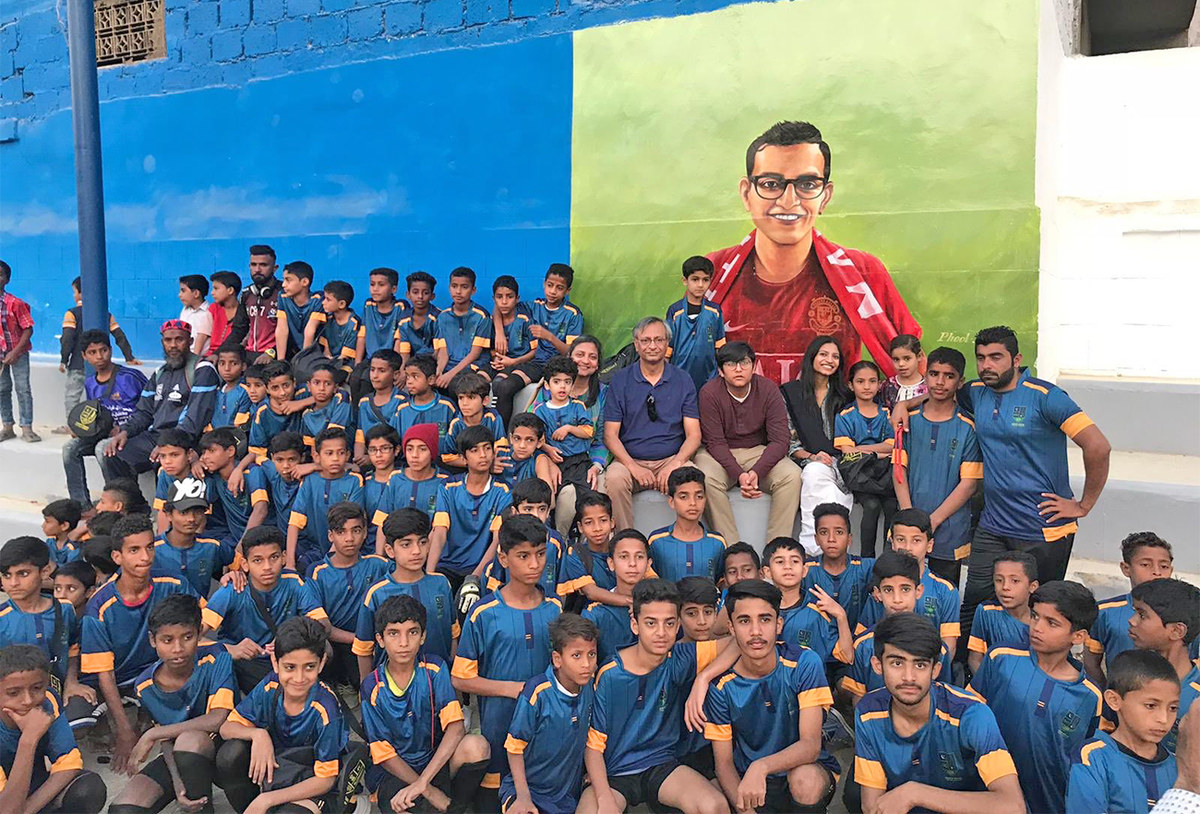
A picture posted by Emad's father, Azfar Naqvi, on January 1, 2019 shows his family posing with the students at Coach Emad Foundation (CEF) in Lyari, Karachi. (@azfarnaqvi16/Twitter)
But while the Naqvis’ have embraced Emad’s story, there is widespread social stigma attached to suicides in Pakistan, where it is a criminal offense under the Pakistan Penal Code. Many doctors and academics say the criminalization of suicide makes it difficult to get a clear picture of its prevalence and of wider incidences of mental illness.
Naqvi said a Muslim prayer leader advised her family to cover up the true nature of her son’s death or else he would not perform his last rites, but she and her husband decided against it.
“I didn’t want to lie, I wanted to be truthful,” Emad’s mother added. “This was my last service to my child.”
Sindh Mental Health Authority chairman Dr. Karim Ahmed Khawaja, who is also a senator and presented a private member’s bill in 2017 to decriminalize suicide, described the existing law as a colonial hangover.
“The UK has scrapped it, India also got rid of it a few years back, but we still have not ended it,” he told Arab News. “Instead of such laws, we need to work toward ending depression, which is an illness.”
Naqvi also said she believed suicides were preventable with the right kind of familial and medical attention, lamenting that her family had been “just so focused on being happy and healthy and functional and successful” that they were not able to recognuze Emad’s struggles.
“Let us create a world where no child feels hopeless enough to end their life, where every child realizes how wonderful, how beautiful, how worthy they are,” Naqvi. “Each one of us can do it.”


