


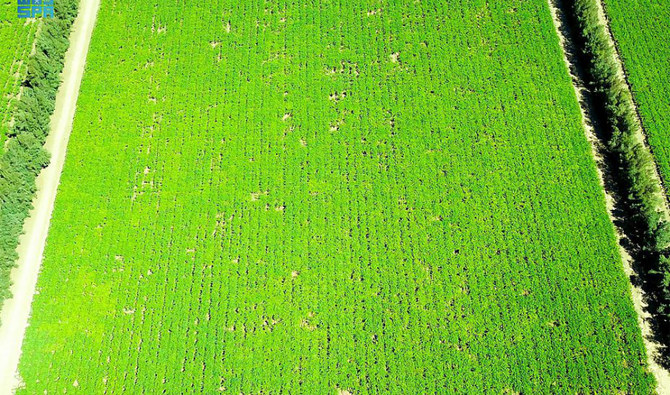
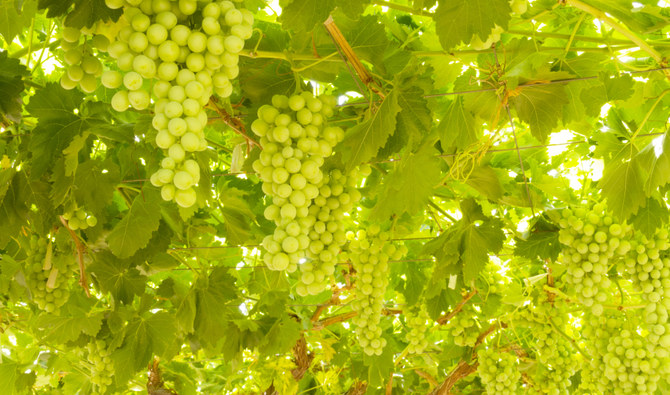
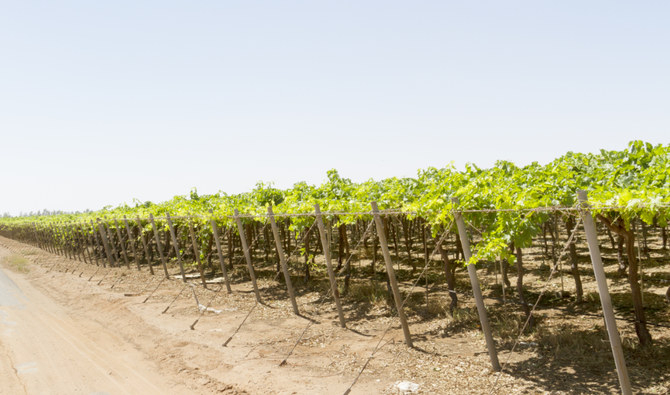

MAKKAH: Tabuk has been ranked first in the Kingdom for grape production.
The region produces more than 43,750 tons of grape annually and has cultivated 1,580,575 grape trees, according to the Saudi Ministry of Environment, Water and Agriculture.
“The cultivation and harvesting processes of grapes are professionally and systematically carried out in Tabuk by the largest companies in the region, Astra Food Company Ltd. and Tabuk Agriculture Development Co., as well as the owners of the agricultural areas,” Nasser Al-Atwi, head of the ministry’s Tabuk Agriculture Department, told Arab News.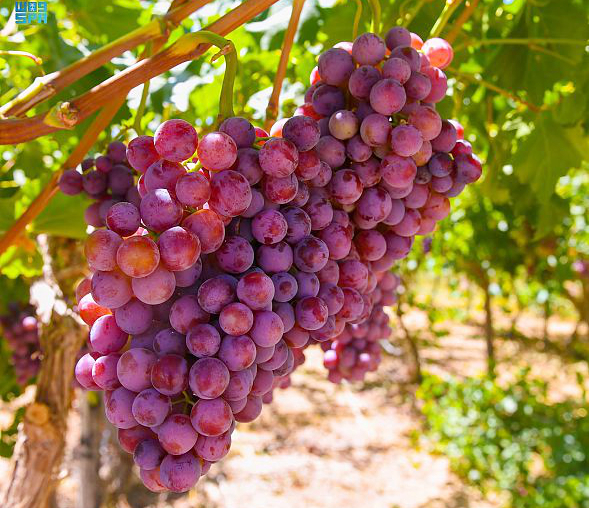
He explained that the ministry is encouraging farmers, guiding them through the cultivation process and providing them with outlets, such as agricultural festivals, through which they may sell their produce.
The ministry is also offering financial support to farmers through loans provided by the Agricultural Development Fund.
FASTFACTS
• The region produces more than 43,750 tons of grape annually and has cultivated 1,580,575 grape trees, according to the Saudi Ministry of Environment, Water and Agriculture.
• The ministry is encouraging farmers, guiding them through the cultivation process and providing them with outlets, such as agricultural festivals, through which they may sell their produce, says official.
It is also organizing seminars, training courses, lectures and workshops to enhance farmers’ knowledge and expertise.
Speaking about the grape industry in Tabuk, Al-Atwi said: “Grape tree cultivation was introduced to Tabuk through previous experiences in neighboring areas, along with the efforts of the ministry to encourage farmers to use modern agricultural and irrigation methods.” 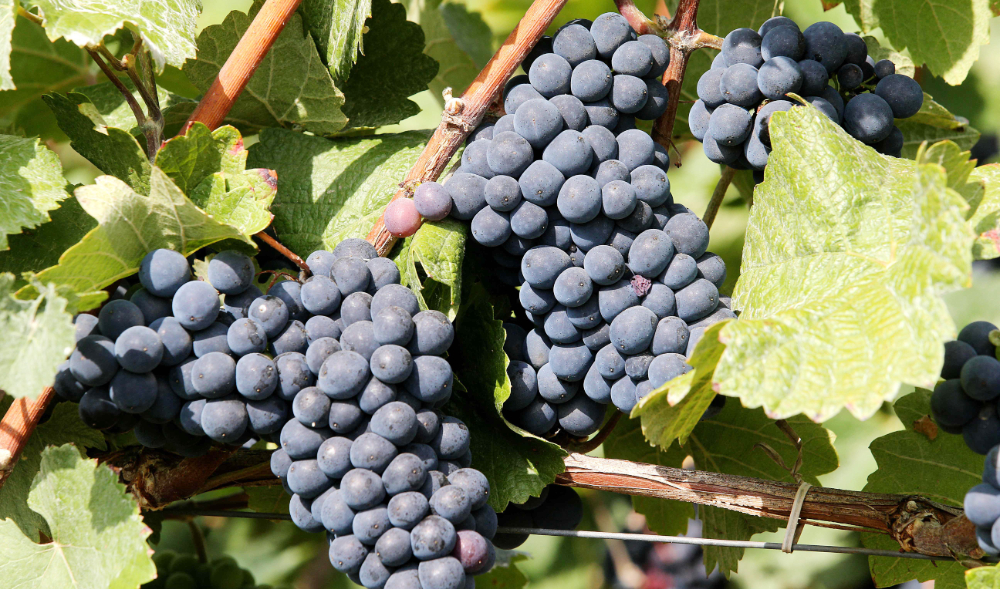
With Tabuk successfully producing the fruit, it now supplies other regions with its grapes.
Farmers use pesticides and fertilizers as per required norms to keep their products safe and of good quality and employ techniques such as the EnviroSCAN system to control irrigation water and electrostatic spraying to reduce the use of high-efficiency pesticides.
Al-Atwi praised the support provided by Prince Fahd bin Sultan of Tabuk to the agricultural sector in the region, which has been continuously prospering.
“Tabuk has appropriate cultivation areas for growing grapes thanks to the research of agricultural companies,” Yahya Al-Mubaraki, the executive vice president at the Tabuk Agriculture Development Co., told Arab News.
“The success of grape cultivation is related to the selection of seedlings, which must be collected from reliable sources so that they can grow in the climate of the region.
“The origin of the seedling must match the taste of the variety as well as the quality of the soil.
In addition, the selected variety must match the local market needs. It must also be able to undergo post-harvest processes, such as sorting, grading, storage and transportation, provided that it is disease and pesticide resistant,” Al-Mubaraki explained.


