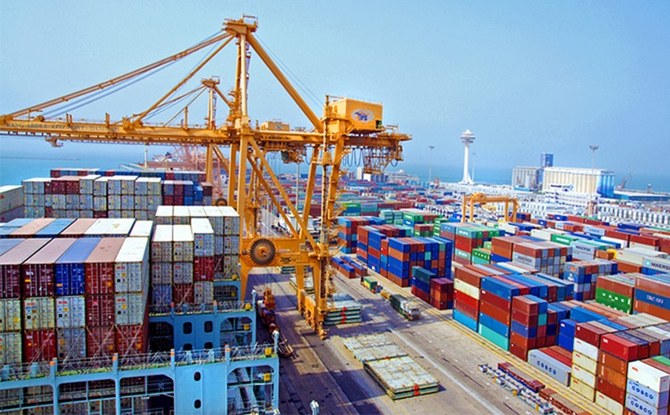
Saudi Arabia’s Dammam port sets new record of handling containers in August

The record-breaking performance of the port is attributed to the rise in export and import volumes.
Short Url
Updated 06 September 2022
Follow

Saudi Arabia’s Dammam port sets new record of handling containers in August

RIYADH: Saudi Arabia’s King Abdulaziz Port in Dammam sets a new record by handling 199,609 TEUs (twenty-foot equivalent units) of containers in August 2022, according to an official press release.

The record-breaking performance of the port is attributed to the rise in export and import volumes, as the Kingdom moves in line with the National Transport and Logistics Strategy aimed at turning Saudi Arabia into a global logistics hub.

In 2021, the port had re-engineered its transshipment handling processes, along with launching new transhipment services to connect with ports in the Gulf Cooperation Council countries and East Asia. 

Mawani is currently working on upgrading the port to make it capable of receiving giant vessels and handling up to 105 million tons annually. 


World faces largest-ever oil supply disruption on Middle East war, IEA says

Updated 12 March 2026
Follow

World faces largest-ever oil supply disruption on Middle East war, IEA says

LONDON: The war in the Middle East is creating the biggest oil supply disruption in history, the International Energy Agency said on Thursday, a day after the agency agreed to release a record volume of oil from strategic stockpiles.

Global supply is expected to drop by 8 million barrels per day in March due to the blocking of the Strait of Hormuz, a narrow channel along the Iranian coast, since the US and Israel began a campaign of airstrikes on Iran on Feb. 28.

Middle East Gulf countries have cut total oil production by at least 10 million bpd — a volume equal to almost 10 percent of world demand — as a result of the conflict, the IEA said in its latest monthly oil market report, adding that without a rapid restart of shipping flows these losses were set to increase.

“Shut-in upstream production will take weeks and, in some cases, months to return to pre-crisis levels depending on the degree of field complexity and the timing for workers, equipment and resources to return to the region,” the agency said.