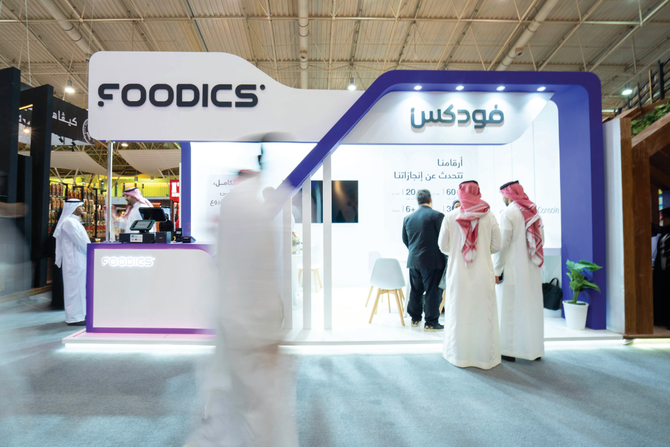

CAIRO: Foodics, one of Saudi Arabia’s leading restaurant management startups, is planning its initial public offering in the Kingdom’s stock market soon, even as it is rolling out new services in a couple of months, said a senior company official.
In an exclusive interview with Arab News, Djamel Mohand, chief operating officer of Foodics, said that the company has the capability and resources to go public at any time, but it wants to do it the right way.
“We’re getting ready from a company and governance perspective because going public is not an easy thing. But we are getting ready,” Mohand said.
He added that the time frame had not been decided yet as the company is not in a rush, but stated that it will “definitely explore in the short term.”
Founded in 2014, the company offers a wide range of products for the food and beverage sector, ranging from point-of-sale services to payment solutions. It currently has over 22,000 clients in over 40 countries.
Foodics secured $170 million in its series C round of funding in April, which was its pre-IPO round and is not planning to raise any additional funds.
The company is using the proceeds of the last round to support the launch of its micro-lending services which will go live in the Kingdom in two months after a successful pilot test.
“We’re going to have a full-fledged launch of a Foodics Capital product in the next two months. We have a $200 million fund to do that. So, we’re going to do something massive to help food and beverage businesses to finance themselves,” he added.
The company provides POS services for its clients, so it can better determine the business’ health when applying for a credit loan.
“We created our credit scoring and qualification criteria to provide restaurants with loans that can go up to $150,000,” Mohand said.
HIGHLIGHTS
Founded in 2014, the company offers a wide range of products for the food and beverage sector, ranging from point-of-sale services to payment solutions.
Foodics secured $170 million in its series C round of funding in April, which was its pre-IPO round and is not planning to raise any additional funds.
The company is using the proceeds of the last round to support the launch of its microlending services which will go live in the Kingdom in two months after a successful pilot test.
Simplifying the process further, Mohand explained that after six months of onboarding a Foodics client, the business owner can apply for a loan. That is not all; the repayment process is even more straightforward.
“The repayment is very easy as we also provide clients with a payment terminal, so daily we settle their money of the credit card transactions by deducting the loan amount. It’s going to be automatically collected through the credit card transaction settlement,” he explained.
The company is now adding payment capabilities into every customer facing touchpoint to speed up checkouts and enhance customer experience.
For the fintech companies in the F&B space, Foodics offers table payment, online payment for online orders, and a server app that allows them to collect payments and print receipts through their tablet device.
“Foodics can give restaurants an innovative experience to accept digital payments and to have smoother operations,” Mohand added.
Mohand believes that the company’s payment solutions will amount to almost 50 percent of total revenue and increase annual earnings by up to three times.
The company is also planning to get at least 70 percent of its current customers to use its payment solutions within the next six months to one year.
“The biggest competitive advantage is not only capturing the payment on all the touch points, but it’s the post-payment and the settlement experience where we are launching instant settlement as merchants are settled immediately for the trans- action,” said Mohand.
“Integrating the payment solutions and the POS allows our customers to have a seamless reconciliation. So they have a dashboard where they see every- thing. They don’t even need accountants anymore,” Mohand explained.
Foodics has been focusing on the Kingdom ever since its inception. However, with the company’s current growth rate, he said it could become a global player by getting a big chunk of market share in Africa and Southeast Asia.