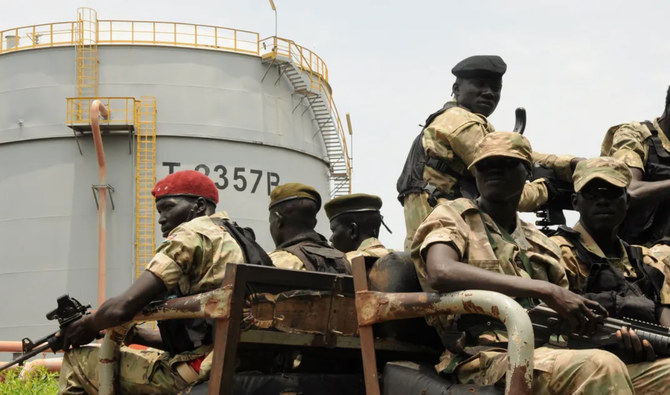
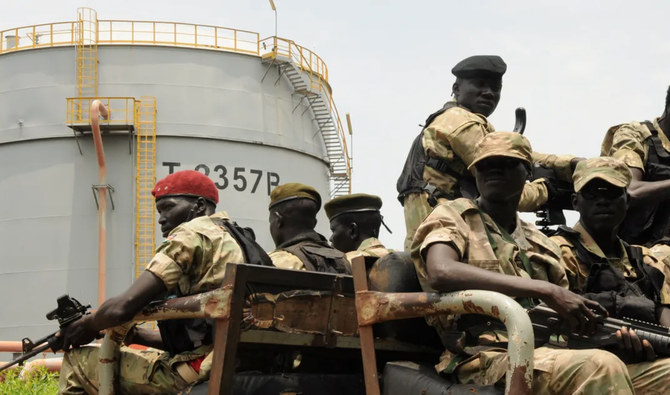
JUBA: More than 50,000 fighters including former rebels from rival camps in South Sudan’s civil war were set to be integrated into the country’s army in a long-overdue graduation ceremony on Tuesday.
The unification of forces loyal to President Salva Kiir and his rival, Vice President Riek Machar, was a key condition of the 2018 peace deal that ended the brutal five-year conflict in which nearly 40,000 people died.
Since achieving independence in 2011 from Sudan, the world’s youngest nation has lurched from crisis to crisis, battling flooding, hunger, ethnic violence and political turmoil.
The ceremony in the capital Juba, held under tight security, comes against a backdrop of growing frustration in the international community over delays in implementing the peace deal, as explosions of violence threaten to undo even fragile gains.
Earlier this month, South Sudan’s leaders — appointed to run a transitional government — announced that they would remain in power two years beyond an agreed deadline, sparking international concern.
The transition period was meant to conclude with elections in December this year, but the government has so far failed to meet core provisions of the agreement, including drafting a constitution.
According to the peace deal, the troops’ graduation ceremony was supposed to take place in 2019.
But the two leaders remained deadlocked over the division of senior posts in the unified armed forces command, only inking an agreement in April this year.
Over 52,000 men and women — drawn from Kiir and Machar’s parties as well as the South Sudan Opposition Alliance — will take part in Tuesday’s proceedings to officially join the army, police and other bodies responsible for national security.
The government has invited representatives from neighboring nations including Ugandan President Yoweri Museveni and Sudanese coup leader General Abdel Fattah Al-Burhan to attend the ceremony.
The addition of tens of thousands of former rebels to the government’s payroll will add to already crushing economic challenges — civil servants have been unpaid for months.
But the move was nevertheless met with optimism in some quarters, with one former rebel saying he was excited to join the police force.
“I am looking forward to serving my people. I just want to tell our people that finally peace has come after a long struggle,” said the former rebel who only identified himself as John.
Many of the new graduates will carry sticks instead of guns at the ceremony, because of a years-long arms embargo imposed by the UN Security Council.
The UN has repeatedly criticized South Sudan’s leadership for its role in stoking violence, cracking down on political freedoms and plundering public coffers.
The US last month pulled out of two peace process monitoring organizations in South Sudan due to the government’s failure to meet reform milestones, citing a “lack of sustained progress.”