



PESHAWAR: Nearly 600 mud houses built by Afghan refugees in Pakistan’s northwestern Khyber Pakhtunkhwa province have been washed away in recent flood, officials said on Monday, as members of the displaced community from the neighboring country said they were desperate for food and medicines.
According to official statistics, about 1.2 million documented Afghan refugees reside in different parts of the province and are entitled to various facilities, such as visiting government hospitals healthcare or opening bank accounts.
“About 600 houses of Afghan refugees have been fully damaged in recent floods,” Haider Ali, a senior official at the Afghan Commissionerate in Peshawar, told Arab News. “Much of the destruction has taken place at Kheshgi Camp in Nowshera. The refugees will be given food, tents and medicines once we come out of the state of emergency and complete the damage assessment drive.”
However, Afghan refugees maintained they required immediate assistance since they were facing tough circumstances.
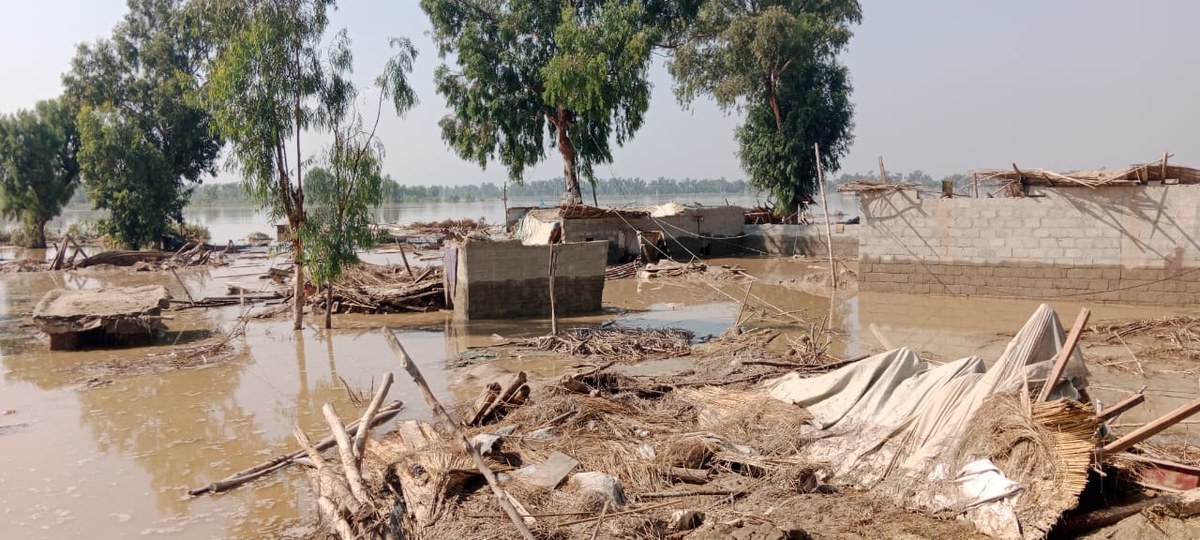
This picture taken on August 28, 2022, shows the place where Afghan refugees lived in Nowshera, Pakistan, before their homes were destroyed by heavy rains and floods. (Photo Courtesy: Khan Muhammad an Afghan refugee)
Ahmad Gul, a refugee at Khazana Refugee Camp in Peshawar, told Arab News that flood had destroyed his house completely, forcing him to take shelter at the residence of his friend along with three children.
“My mud house was the only asset of my refugee life,” he said. “Now it has been swept away by floods. It was a natural calamity and God’s will. But what haunts me is that Afghans are living under constant trouble and challenges.”
Gul acknowledged that local people had extended support to his community members and given them food and shelter, though he noted that Afghans did not get any assistance from the provincial administration or other donors.
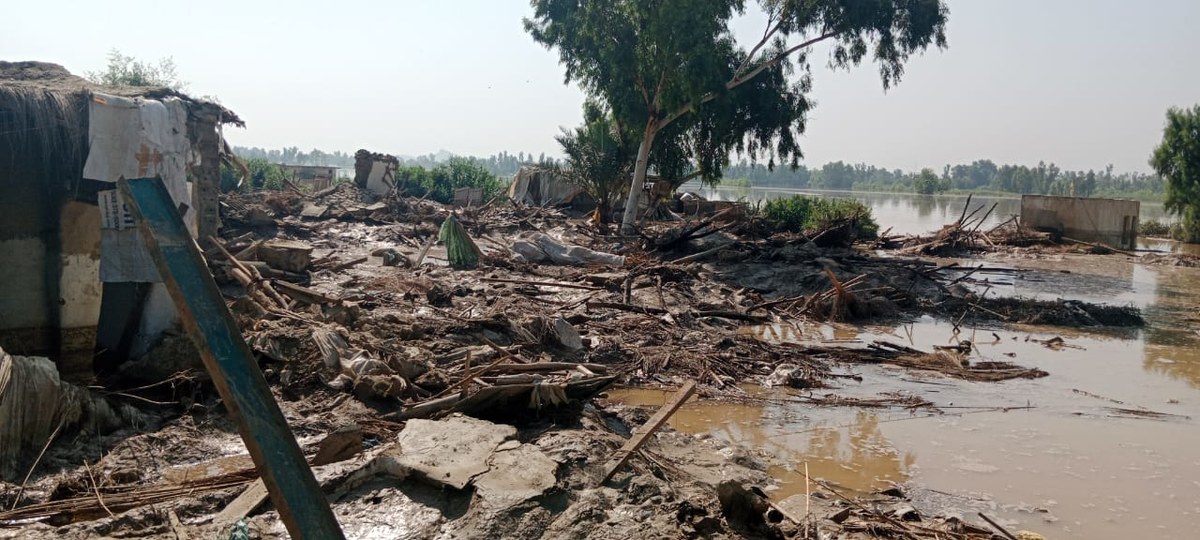
This picture taken on August 28, 2022, shows the place where Afghan refugees lived in Nowshera, Pakistan, before their homes were destroyed by heavy rains and floods. (Photo Courtesy: Khan Muhammad an Afghan refugee)
Ismail Khan, focal person of the camp, said about 1,300 Afghan families had been living in the refugee settlement in Peshawar where 380 houses had been “completely destroyed.”
“We demand the KP government, the UN refugee agency and other donors to provide us cash assistance so we can rebuild homes,” he said. “We need food on an urgent basis to feed our kids because we cannot go to work [under the circumstances].”
Malak Ghulam Sakhi, a carpenter and resident of the camp, said he was living in a guesthouse with his nine children since his home had been destroyed in floods.
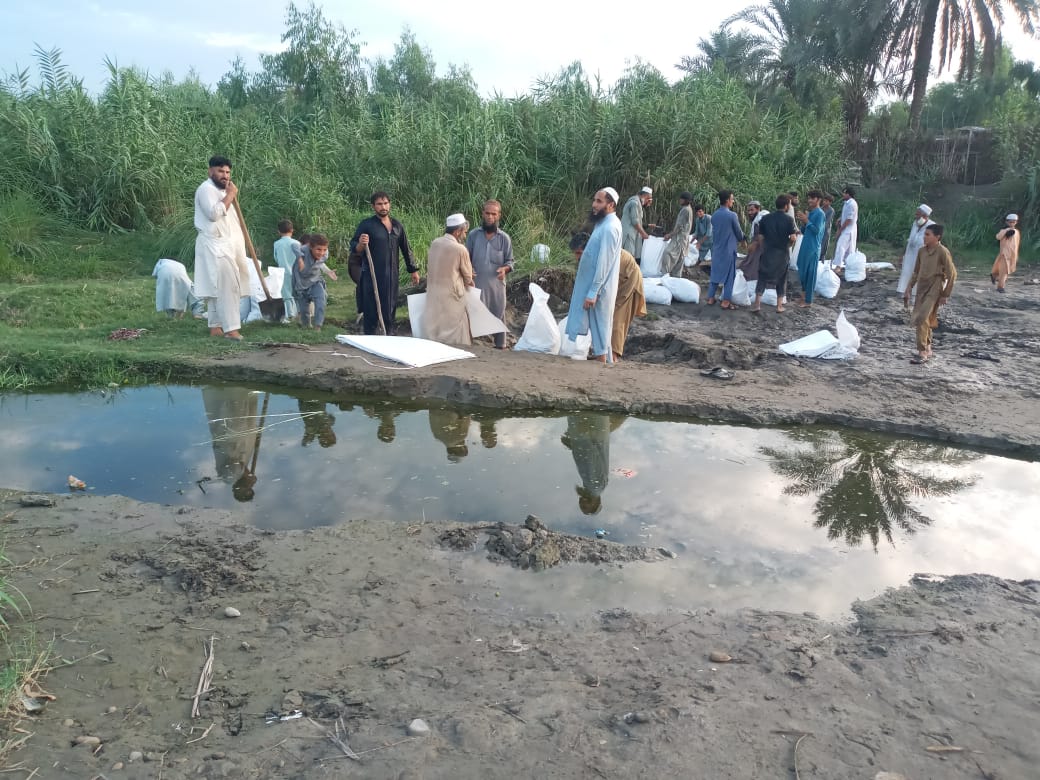
Afghan refugees fill sandbags to protect Hajizai Refugees Camp from flood waters in Charsaddah, Pakistan, on August 28, 2022. (Photo Courtesy: Ismail Khan Afghan refugee)
“I have no cash to rebuild my house or feed my children,” he said. “It is more than enough if I can get a tent where I can shift my children. We are living on aid, using shelters provided by locals. We are still waiting for assistance from the government and donors.”
Provincial authorities said they had provided tents to accommodate the displaced Afghans.
Kamran Bangash, the KP administration’s spokesperson, told Arab News the situation was gradually getting better, adding that officials were now assessing the extent of damage caused by the unprecedented monsoon rains and floods.
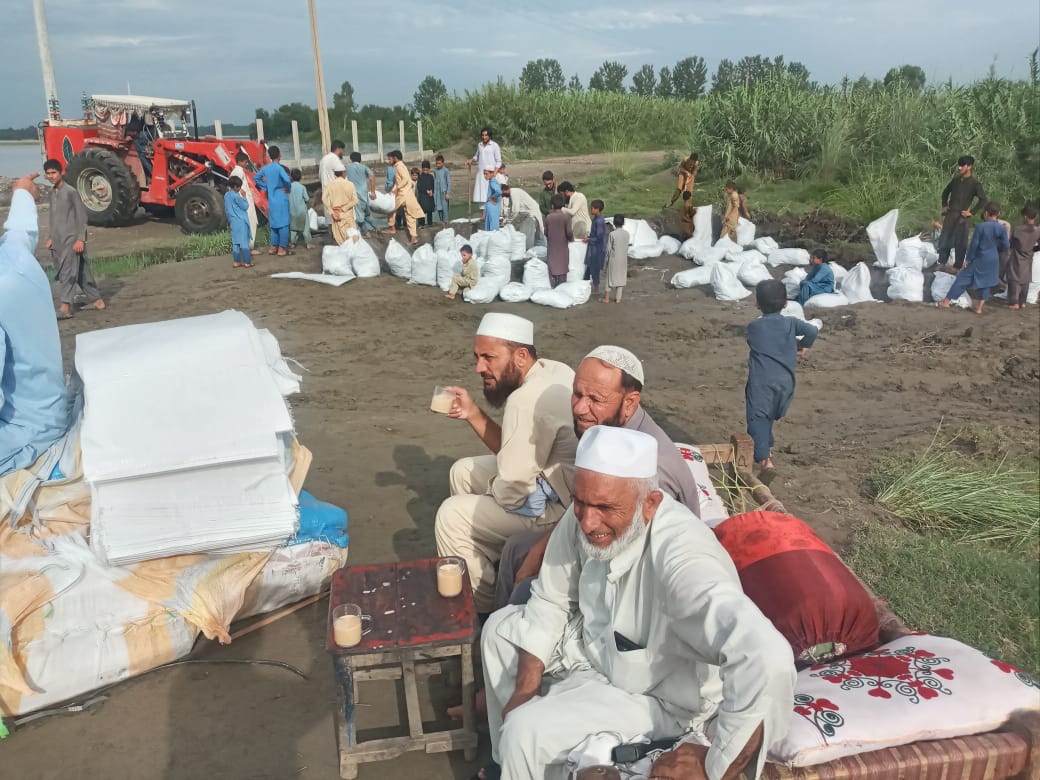
Some elderly Afghan refugees oversee efforts to stop flood water from entering Hajizai Refugee Camp in Charsaddah, Pakistan, on August 28, 2022 (Photo Courtesy: Ismail Khan Afghan refugee)
“Relief activities have already been underway since the beginning of the floods, but our chief minister has now directed us to assess damage to roads, bridges, houses and other infrastructure,” he said.
Bangash said 17 districts in the province had been devastated by recent floods, adding the provincial authorities had already imposed emergency in these areas.
“After making our assessment, we will equally facilitate Afghan refugees living in the province,” he added.


