

Seera Group to capture lost ground this year as tourism improves

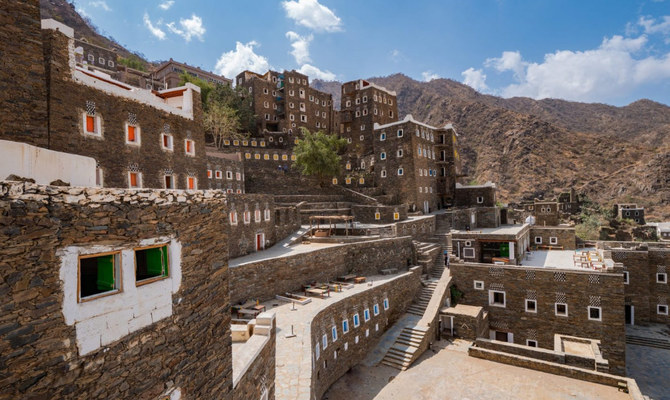
With the continuous growth of domestic tourism and the trips around various parts of Saudi Arabia, Seera’s growth will be fueled by its car rental unit Lumi. (File)
Short Url
Updated 27 August 2022
Follow

Seera Group to capture lost ground this year as tourism improves

  • As part of its business, the group integrates data and digital, and it believes that it is a key differentiator that will allow travel to scale across the Kingdom and around the globe

RIYADH: Seera Group Holding is on track to wipe out its losses and register growth, buoyed by its car rentals business and improving domestic tourism, Muzzammil Ahussain, the group’s vice president, told Arab News.

During the first half of 2022, the group narrowed its losses by 43 percent to SR131 million ($34.85 million) from SR230 million in the year-ago period.

But the ground realities are changing. For instance, the Saudi travel and tourism agency is expected to generate SR4 billion in booking value exclusively from its travel brand, Almosafer, exceeding the SR3.8 billion recorded in 2019.

This number will be achieved through the upcoming annual entertainment and sports festival backed by the government, known as Riyadh Season, which is expected to attract an increasing number of tourists, stated Ahussain.

With the continuous growth of domestic tourism and the trips around various parts of Saudi Arabia, Seera’s growth will also be fueled by its car rental unit Lumi, which is projected to achieve close to SR1 billion in sales by 2023 with a fleet of over 18,500 vehicles.

“We’re very excited to be part of the tourism journey of Saudi Arabia and the Vision 2030. We believe that tourism is a critical element of the Saudi economy and industry, from inbound, domestic and international tourism,” said Ahussain.

As part of its business, the group integrates data and digital, and it believes that it is a key differentiator that will allow travel to scale across the Kingdom and around the globe, the group’s vice president said.

Earlier this year, Almosafer announced that it invested SR116 million to establish a joint venture with Hong Kong’s Klook Travel Technology, a developer of travel activities and services booking platform designed to connect travelers with experiences.

With this venture, the group is planning to create a one-stop digital platforms with end-to-end content and inventory management solutions that will support tourism and leisure activity providers in the Kingdom.

Ahussain revealed that the joint venture’s first product is scheduled to be introduced by the end of the year.

With the new partnership, activity providers in the Kingdom will be able to connect with global marketplaces and tour distributors, enabling them to build their business and elevate the Kingdom’s footprint on the global tourism map.

“We’re very excited to use data and technology and digital to transform the travel experience,” he said.


Jordan spends nearly $500 million on water projects in 2025 

Updated 4 sec ago
Follow

Jordan spends nearly $500 million on water projects in 2025 

RIYADH: Jordan spent nearly $500 million on water-related projects and programs in 2025, stepping up investment in supply infrastructure, wastewater treatment and renewable energy, according to official data.

Spending during the year covered large-scale strategic projects as well as upgrades to water networks, wastewater facilities, water harvesting systems and digital infrastructure, the Jordan News Agency, or Petra, reported, citing data from the Ministry of Water and Irrigation. 

The scale of investment reflects the government’s focus on strengthening national water security, improving service quality, and advancing sustainable solutions to address water scarcity and climate change challenges. 

The spending aligns with Jordan’s National Water Strategy 2023–2040, which aims to achieve water security through integrated resource management, reduce water losses from about 50 percent to less than 25 percent by 2040, expand non-conventional water sources, improve irrigation efficiency, and develop major infrastructure projects such as the National Water Carrier to meet rising demand. 

“The ministry’s achievements in 2025 marked a qualitative shift in the management of the water sector through continued progress in implementing the National Carrier Project for desalination and water conveyance from Aqaba to Amman,” Petra stated. 

It added: “The project contract was signed, 11 annexes to the agreement were completed, and grants and international support were secured, most notably a Dutch grant of €31 million ($36.5 million) as part of a broader €100 million support package for the water sector.” 

To enhance water supply, the ministry and its affiliated entities implemented rehabilitation and upgrade projects across several governorates. These included the Bani Kinana District water system improvement project, valued at nearly $60 million, as well as network upgrades in Tafilah worth 6.1 million Jordanian dinars, Petra and Maan at 6.8 million dinars, and Ramtha at €21.36 million. 

To enhance water supply, the ministry and its affiliated bodies carried out rehabilitation and upgrade projects across various governorates. These included the Bani Kinana District water system improvement project, valued at nearly $60 million, along with network upgrades in Tafilah at 6.1 million Jordanian dinar ($8.6 million), Petra/Maan at 6.8 million dinars, and Ramtha at €21.36 million ($25.15 million). 

Other projects included upgrading the Mashtaba water networks in Jerash governorate at a cost of $10.34 million, rehabilitating seven wells in the Kafrein area for $1.19 million, and refurbishing the Abu Al-Zeighan wells desalination plant at a cost of $36 million. 

The ministry also intensified work on wastewater infrastructure, executing and signing agreements for several key projects. These included the Hakama–Irbid wastewater project, valued at 11.37 million dinars. Wastewater initiatives in northeast Balqa were worth €60 million. 

Additional projects in west Irbid and southwest Amman cost $27.7 million. The ministry also expanded the Samra wastewater treatment plant and improved water sources at a cost of $46 million. Upgrades to the Ain Ghazal plant were supported by a $3 million grant, along with an additional €708,700 grant. 

As part of efforts to reduce operational energy costs and improve sustainability, the ministry implemented renewable energy projects, including the operation of a 2-megawatt photovoltaic solar project for the Disi Water Project and solar installations at the Zara–Ma’in plant at a cost of 1.2 million dinars. One of these projects received a silver award for solar energy projects in the UAE in October. 

In the area of water harvesting and risk management, the ministry completed the design and implementation of 15 water harvesting facilities and received water harvesting structures and ponds with a combined storage capacity exceeding 2.1 million cubic meters. It also established 120 water harvesting units in Karak governorate, awarded a tender for ponds in Mafraq governorate with a capacity of 125,000 cubic meters, prepared national flood intensity maps, and launched dam risk assessment tools.  

Institutional and regional cooperation also expanded during the year. This included the signing of 10 investment agreements in the central and southern Jordan Valley, six agreements delegating water distribution management to water user associations, ongoing project discussions with international partners, a Jordanian-Syrian agreement on the fair allocation of Yarmouk Basin waters, and Jordan’s formal membership in the International Commission on Large Dams in May.