BEIRUT: A Russian cargo ship allegedly carrying stolen Ukrainian grain has reached Syria, Kyiv’s embassy in Beirut said Thursday, the latest in a series of contested shipments arriving in the war-torn country.
“According to our information, SV KONSTANTIN has docked in Syria,” the embassy said in a statement to AFP.
It said the ship was carrying “grains that were plundered and illegally transported by the Russian occupation authorities,” adding that the vessel was initially destined for the Lebanese port of Tripoli.
Ukraine has repeatedly accused Russian forces of ransacking its grain warehouses since they invaded the country in late February.
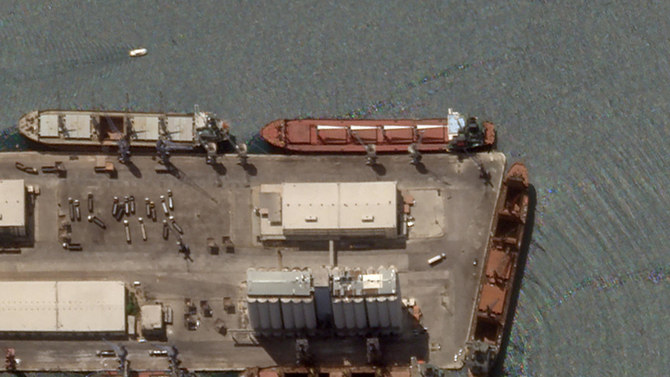
The embassy’s statement came as another cargo ship carrying the first shipment of grain allowed to leave Ukraine under a UN-backed deal reportedly unloaded its cargo at the Syrian port of Tartus, which is managed by a Russian firm.
The Sierra Leone-flagged vessel Razoni was expected to arrive in Lebanon, but the shipment’s five-month delay prompted the Lebanese buyer to cancel the deal once the ship was already at sea, Ukrainian officials had said.
According to Samir Madani, co-founder of oil shipping monitoring website TankerTrackers.com, the vessel docked in Tartus earlier this week.
Satellite imagery appeared to show that the ship — which was carrying 26,000 tons of corn — was unloading its cargo, Madani tweeted on Thursday.
Earlier this month, a Syrian-flagged ship was briefly seized by Lebanese authorities following similar claims by the Ukrainian embassy that it was laden with stolen cargo.
Lebanon later released the Laodicea vessel after investigations failed to prove it carried stolen goods, drawing criticism from Kyiv’s embassy.
The Laodicea started unloading its cargo at Tartus on August 8, according to Syrian state media.
Syria is a staunch ally of Russia, which intervened in the country’s civil war in 2015 to support President Bashar Assad’s government.
Moscow has lent Damascus very limited amounts of financial aid, but it has supplied Syria with wheat as a form of assistance.
The Syrian government relies on Moscow for the bulk of its wheat imports.


![]()

Russian ship carrying ‘plundered’ Ukraine grain reaches Syria: embassy
Short Url
https://arab.news/v4swt
Russian ship carrying ‘plundered’ Ukraine grain reaches Syria: embassy
- "According to our information, SV KONSTANTIN has docked in Syria," the embassy said
- It said the ship was carrying "grains that were plundered and illegally transported by the Russian occupation authorities"


Latest updates



© 2026 SAUDI RESEARCH & PUBLISHING COMPANY, All Rights Reserved And subject to Terms of Use Agreement.