

What We Are Reading Today: Work Matters by Maureen Perry-Jenkins

Short Url
Updated 17 August 2022
Follow

What We Are Reading Today: Work Matters by Maureen Perry-Jenkins

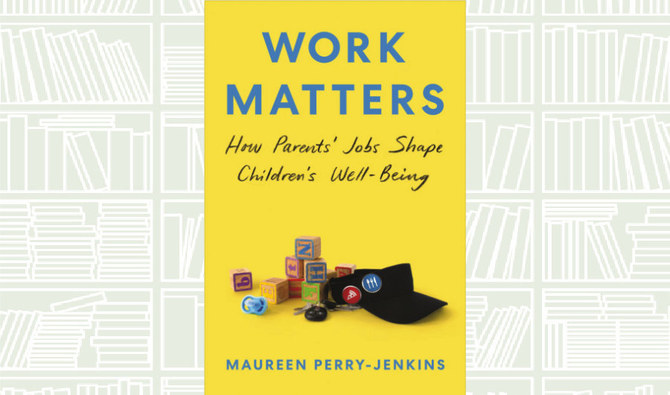
Low-wage workers make up the largest group of employed parents in the US, yet scant attention has been given to their experiences as new mothers and fathers. Work Matters brings the unique stories of these diverse individuals to light. Drawing on years of research and more than 1,500 family interviews, Maureen Perry-Jenkins describes how new parents cope with the demands of infant care while holding down low-wage, full-time jobs, and she considers how managing all of these responsibilities has long-term implications for child development. She examines why some parents and children thrive while others struggle, demonstrates how specific job conditions impact parental engagement and child well-being, and discusses common-sense and affordable ways that employers can provide support.

In the US, federal parental leave policy is unfunded. As a result, many new parents, particularly hourly workers, return to their jobs just weeks after the birth because they cannot afford not to.


What We Are Reading Today: A Capital’s Capital

Updated 16 February 2026
Follow

What We Are Reading Today: A Capital’s Capital

Authors: Gilles  Postel-Vinay and Jean-Laurent Rosenthal

Successful economies sustain capital accumulation across generations, and capital accumulation leads to large increases in private wealth. In this book, Gilles Postel-Vinay and Jean-Laurent Rosenthal map the fluctuations in wealth and its distribution in Paris between 1807 and 1977. 

Drawing on a unique dataset of the bequests of almost 800,000 Parisians, they show that real wealth per decedent varied immensely during this period while inequality began high and declined only slowly. 

Parisians’ portfolios document startling changes in the geography and types of wealth over time.

Postel-Vinay and Rosenthal’s account reveals the impact of economic factors (large shocks, technological changes, differential returns to wealth), political factors (changes in taxation), and demographic and social factors (age and gender) on wealth and inequality.

Before World War I, private wealth was highly predictive of other indicators of welfare, including different forms of human capital, age at death, and access to local public goods.