

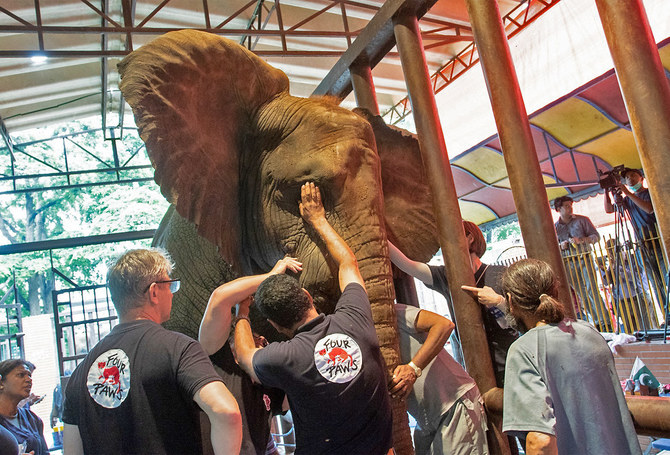

KARACHI: For the first time in Pakistani history, a technique called standing sedation was used to perform a root canal procedure on Pakistani elephant Madhubala at Karachi Zoo, with a team of international veterinarians carrying out the surgery to help rid one of the country’s four African elephants of toothache and infection.
The Sindh High Court granted permission to the head veterinarian at the Leibniz Institute for Zoo and Wildlife Research to visit Pakistan in September last year to evaluate the health of four African elephants in Karachi.
The decision was taken after animal rights activists went to court after a video went viral on social media showing cracks in the foot of one of the animals, Malika, who is housed at Karachi’s Safari Park.
Four Paws, a Vienna-based animal welfare organization, made its own assessment of the elephants’ health in November, suggesting immediate surgery since some of the animals had severe tusk infection.
“We are very glad the operation is done today on both sides of the tooth root of the elephant Madhubala. It is a special procedure, which we did,” Dr. Amir Khalil, director of Four PAWs, told Arab News after the procedure was concluded at Karachi Zoo.
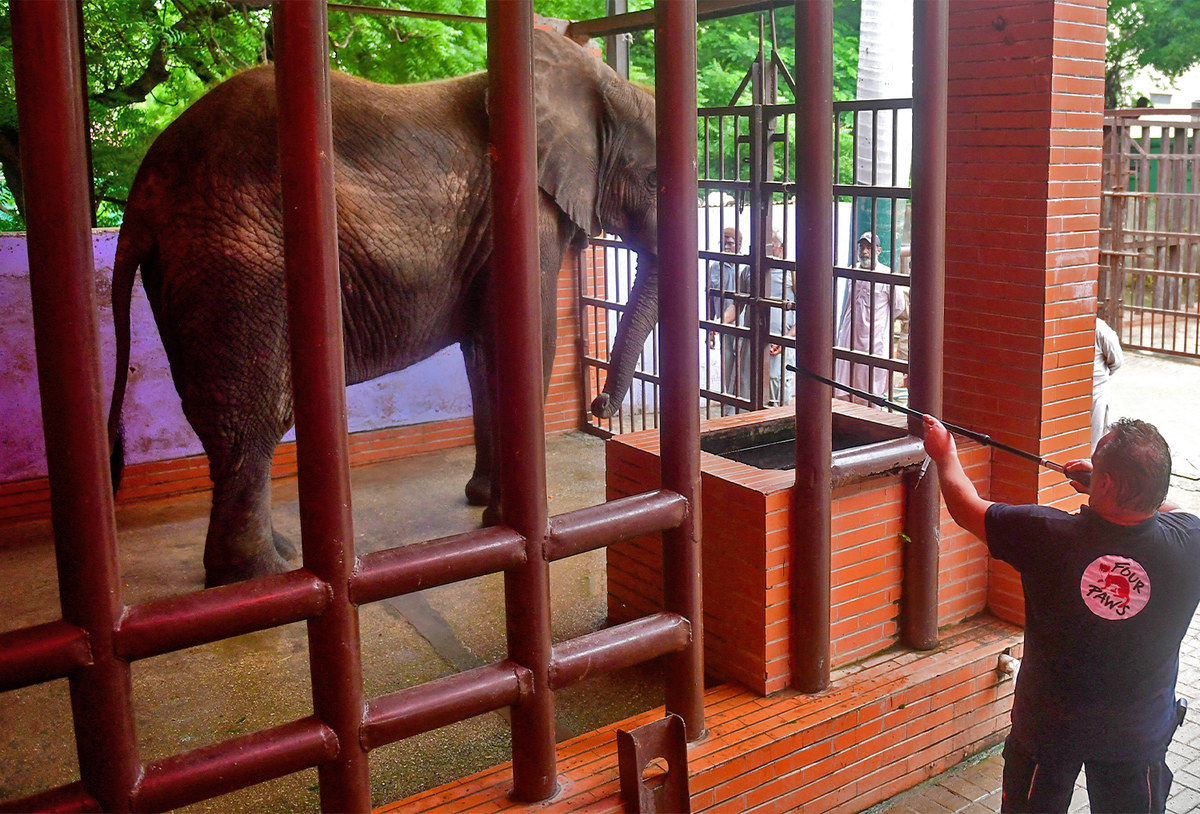
A veterinarain from Four Paws International shoots a tranquiliser to the elephant Madhu Bala before they begun her treatment at Karachi Zoological Garden in Karachi on August 17, 2022. (AFP)
Instead of a traditional approach, the Four Paws team used a less invasive, unique new technique that requires less complicated aftercare, given the conditions at the zoo. They used specially designed drills and endodontic burs along with other dental instruments.
“Their tusks were broken, and the tissue inside the wounds was inflamed and infected,” Dr. Khalil said.
“They are in a lot of pain and without treatment the inflammation could expand and cause blindness or even brain damage and death. We put the elephants under ‘standing sedation’, removed the dead tissue, cleaned the root canal, and taught the local caretakers how to conduct regular post-treatment flushing and how to clean the wounds to prevent further inflammation. We expect good results for the elephants’ recovery. This is a very important step to improve their wellbeing.”
He hoped that the treatment would give Madhubala, 17, a new lease on life.
“She will be able to eat normally and not have this chronic and very severe pain which affected the quality of her life in the last few years,” he said.
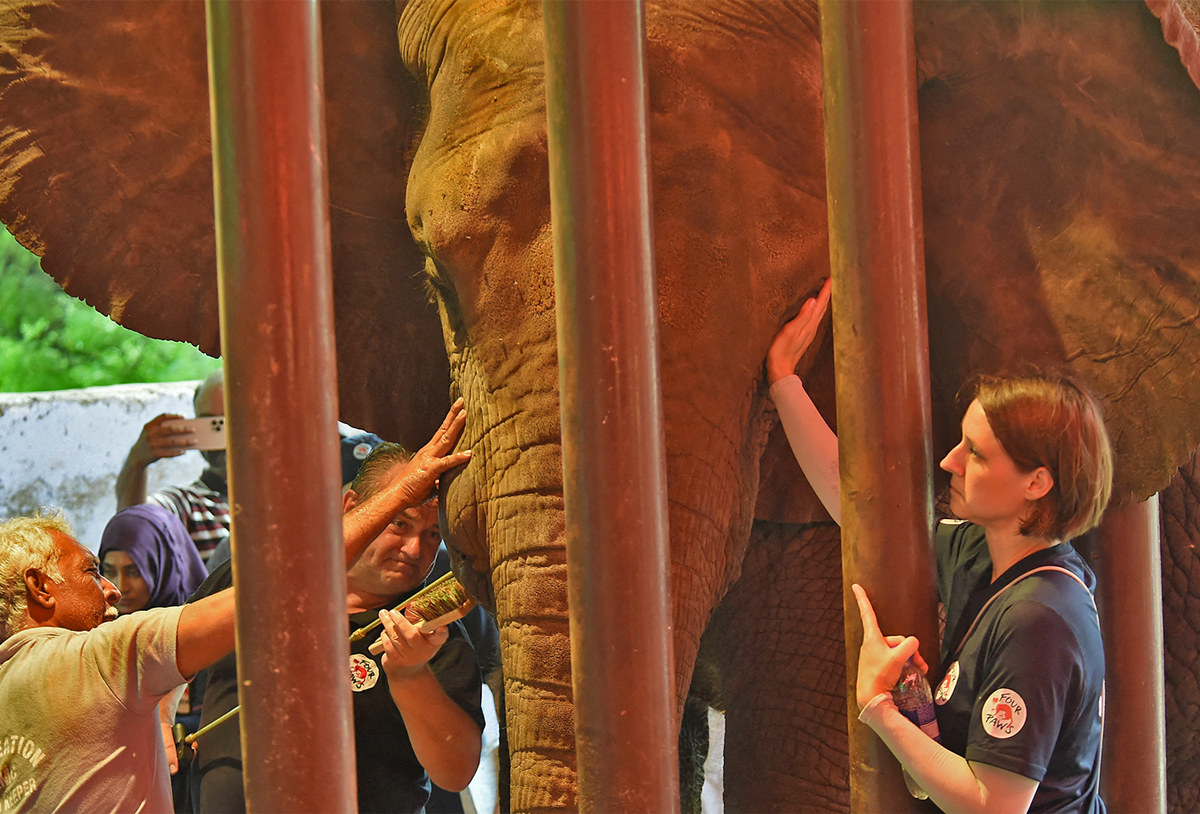
Veterinarians' team from Four Paws International treats the elephant Madhu Bala's swollen tusk at Karachi Zoological Garden in Karachi on August 17, 2022. (AFP)
Dr. Thomas Hildebrandt, a vet from the Leibniz Institute, who performed surgery along with Dr. Frank Göritzs, said standing sedation was a new approach.
“We think that it’s time to develop a new technique, standing sedation, and using a very specialized device which we developed over the last three months. We know exactly how the tusks look inside,” he told Arab News.
Dr. Khalil said he would recommend relocating Madhubala and Noor Jehan from the Zoo to Safari Park, where Malika and Suno reside.
“This place is not the optimum standard to keep elephants because there’s a smaller space. There is not enough shadow for the elephants, there is no enrichment,” he said, adding that elephants at the Safari Park were in a better condition.
“I think that [Safari Park] is a very nice example that in Pakistan, you can keep elephants in very good condition,” Dr. Hildebrandt added.


