



QUETTA: Students, clad in crisp white shalwar kameez, ambled into classrooms as the school bell rang, passing by a huge pine tree, its sprawling branches casting a shade over the children. Just a few feet away, prominently displayed on a wall in the principal’s office is a framed handwritten note.
Both the tree and the note owe their existence to Pakistan’s founder, Muhammad Ali Jinnah. And both are housed in the Government Pilot Secondary School in Mastung, famous for a visit by Jinnah 76 years ago.
The school was the first in the princely state of Kalat in British colonial India, constructed in 1903 on the orders of Mir Ahmed Yar Khan, the last Khan of Kalat, who also funded it. It was initially a primary school and in 1963 among 20 schools across Pakistan promoted to the status of high school after it started courses in technical skills, welding, car painting and electrical engineering.
In October 1945, Jinnah, who was then leading a political campaign for a separate homeland for the Indian subcontinent’s Muslims, accepted the Khan’s invitation to visit the school. Inspired by the school’s curriculum and the stellar results of its students, Jinnah wrote his praise for the institution on a piece of paper and planted a tree inside the premises.
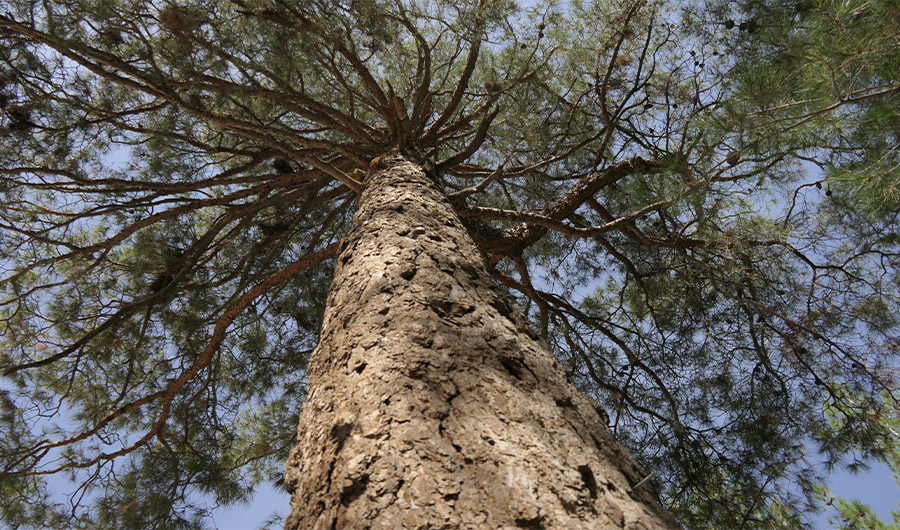
A pine tree planted by the founder of Pakistan, Muhammad Ali Jinnah, in 1945 seen at the Government Pilot Secondary School’s garden in Mastung, Pakistan, on August 3, 2022 (AN Photo)
Today, both the note and the tree help the 1,600 students at the school, as well as its staff, keep alive the memory of the visit by the country’s founding father.
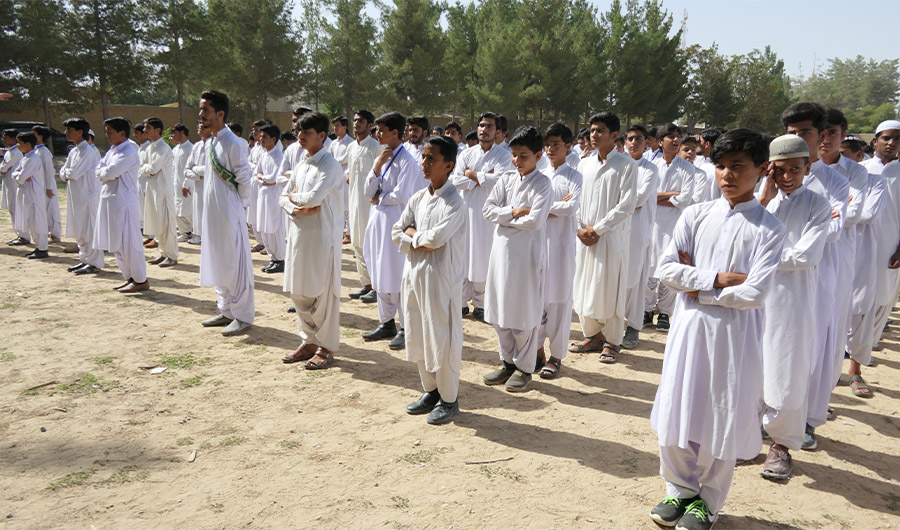
Students stand in lines to attend the morning assembly at the Government Pilot Secondary School in Mastung, Pakistan, on August 3, 2022 (AN Photo)
“Quaid-e-Azam Muhammad Ali Jinnah’s visit increased the popularity of this school when Pakistan emerged as an independent state,” Saleem Sarpara, the school’s principal, told Arab News. “The majority of people in Mastung and nearby cities and villages have enrolled their children in this school.”
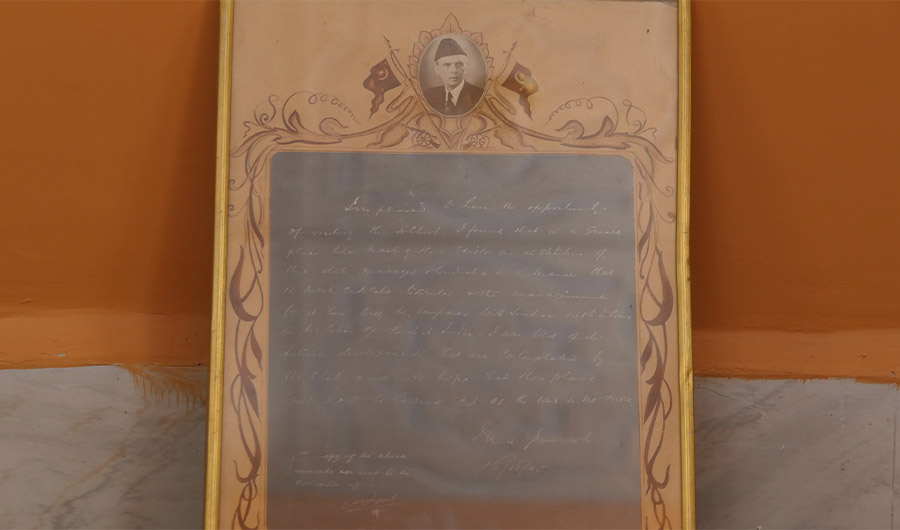
A note written by Muhammad Ali Jinnah, the founder of Pakistan, is on display inside the Government Pilot Secondary School in Mastung, Pakistan, on August 3, 2022 (AN Photo)
Sarpara, who has been supervising the school for the past two years, said Jinnah planted a sapling during his visit to the city, which over the course of seven decades, had blossomed into a full-grown pine tree that gave the school’s current student and alumni a reason to keep remembering the founding father.
Among notable alumni of the school are former Balochistan chief ministers Mir Ghous Buksh Bizenjo and Dr. Abdul Malik Baloch as well as chief secretary Ahmed Buksh Lehri and the University of Gwadar Vice Chancellor, Abdul Razzaq Sabir.
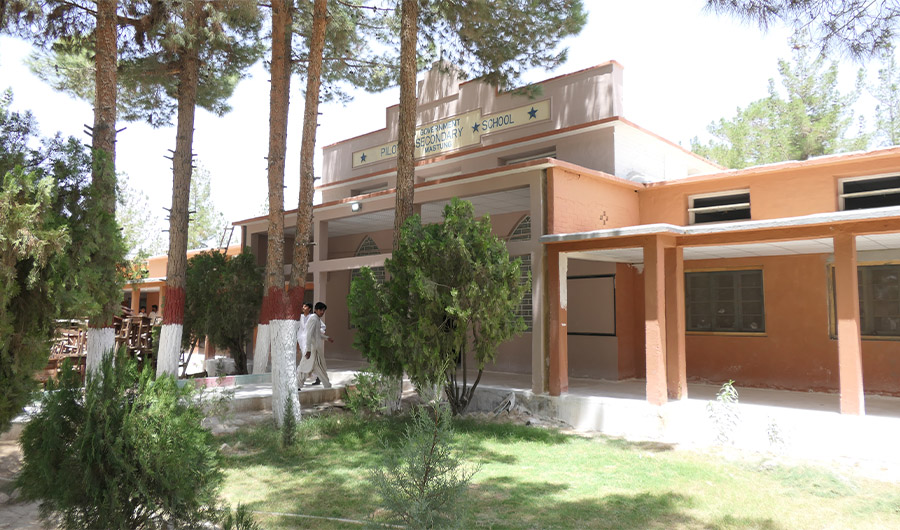
A viewof the Government Pilot Secondary School in Mastung, Pakistan, on August 3, 2022 (AN Photo)
“I remember our principal and other teachers used to share the story of Quaid e Azam’s visit and his speech to a local jirga in Mastung city during our regular classes in order to boost our morale and confidence,” Sabir told Arab News, saying Jinnah’s visit had for decades inspires people to travel from remote villages to study at the Government Pilot Secondary School.
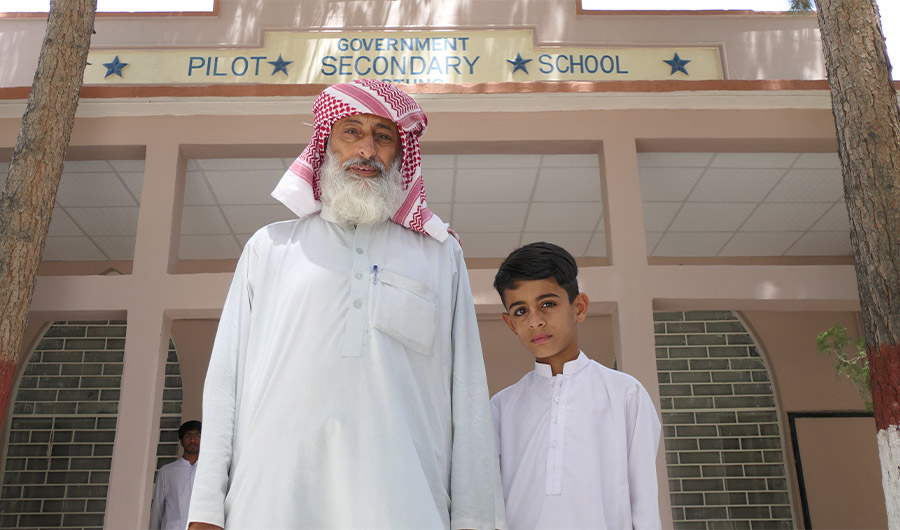
Hafiz Muhammad Munir (L), a teacher, poses with a student at the Government Pilot Secondary School Mastung, Pakistan, on August 03, 2022 (AN Photo)
Hafiz Munir Ahmed, 58, an English and General Science teacher at the school for the past 23 years, said students begin their day under the shade of the tree planted by Jinnah, reciting verses of the holy Qur’an. Senior students often visited the principal’s office to read Jinnah’s note, Munir said, and education department officials also frequently visited the school to review the note.
But though Jinnah’s name is often whispered in the storied halls of the school, it has not been enough to get the school’s maintenance the attention it deserves.
Today, the building is in bad shape. The doors paint a weary and battered look and the walls are covered in chalkings.
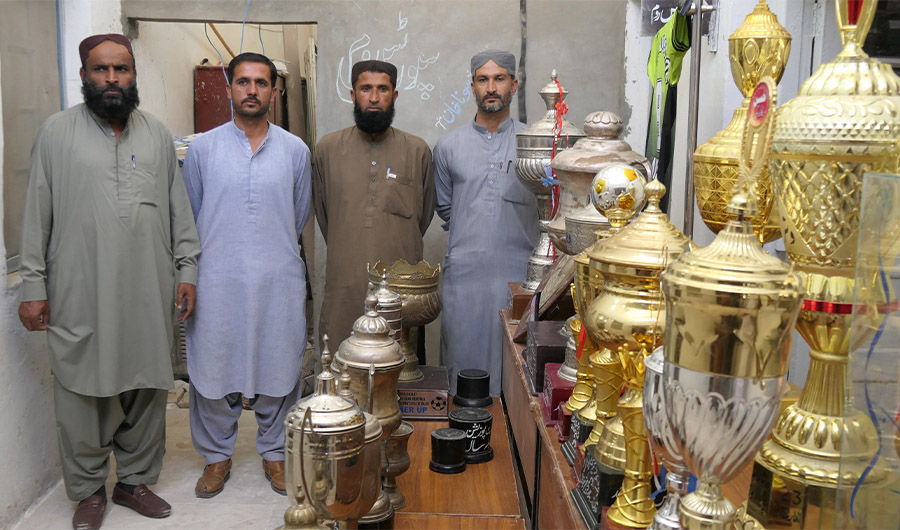
Teachers pose with trophies at the Government Pilot Secondary School in Mastung, Pakistan, on August 3, 2022 (AN Photo)
“The school is plagued by several issues, including the shortage of teachers and limited classrooms for students,” Rauf Baloch, the secretary of education in Balochistan, said. “I am aware of the issues pestering the school and staff and students. Their problems will be addressed on a priority.”
The official added that it was a shame that a school that was a heritage site and which had played an important role in the country’s education for over a century now was in a dilapidated state.
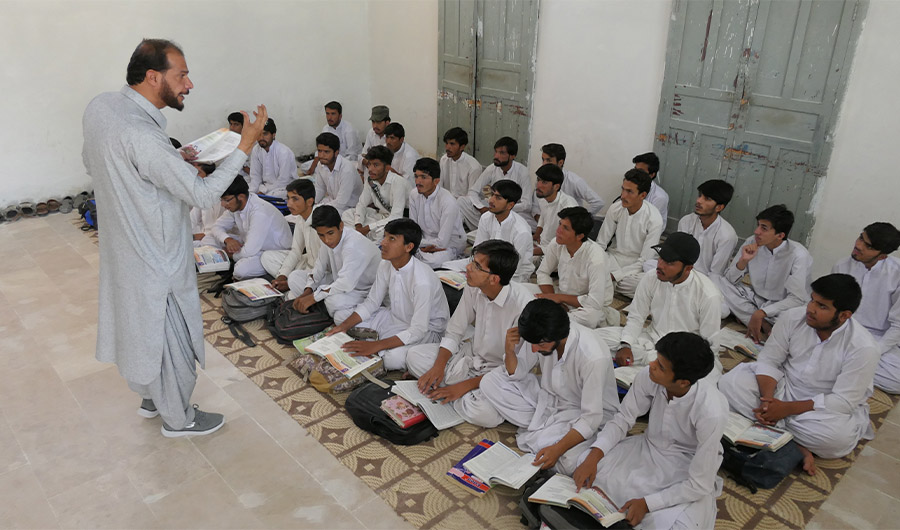
Aftab Ahmed, a science teacher at the Government Pilot Secondary School in Mastung, Pakistan, teaches students of class 9 on August 03, 2022 (AN Photo)
And yet, many students still wish to enroll at the school simply because of its connection to Jinnah.
One such student was Fazal ur Rehman, 19, who graduated from the school in 2018 and is now a student at Lasbela Agriculture University, the only boy in his family who completed his matriculation and intermediate qualifications and went on to attend university.
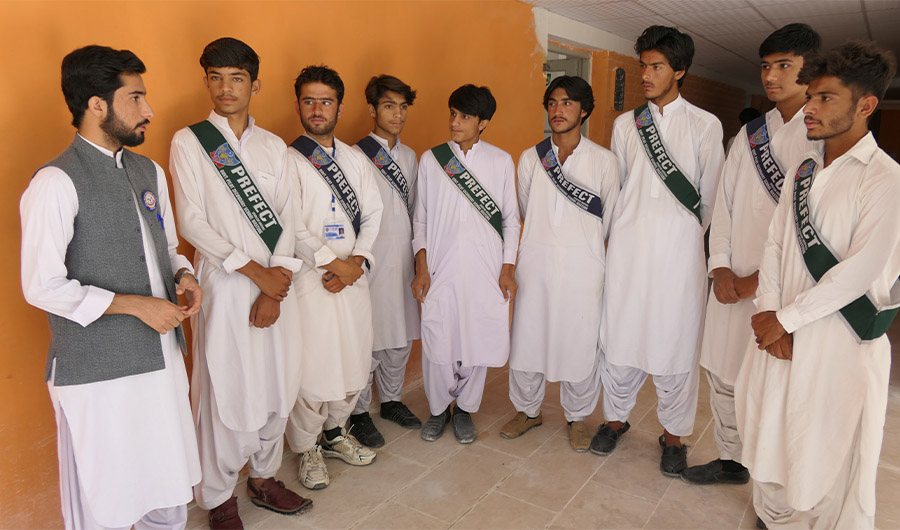
Fazal ur Rehman (L), a graduate of the Government Pilot Secondary School in Mastung, Pakistan, poses with other students on August 03, 2022 (AN Photo)
“After passing grade eight, I enrolled myself in the Government Pilot Secondary School,” Rehman said, “because I came to know through friends that Quaid e Azam Muhammad Ali Jinnah once visited the school and praised its education system.”


