Meta tracks users across websites, research reveals

Meta said that the injected tracking code respected users' preferences. (Shutterstock/File)
Short Url
Updated 12 August 2022
Follow

Meta tracks users across websites, research reveals

  • Although there is no indication the tech giant uses the feature to collect sensitive data, it does not make this information known to users

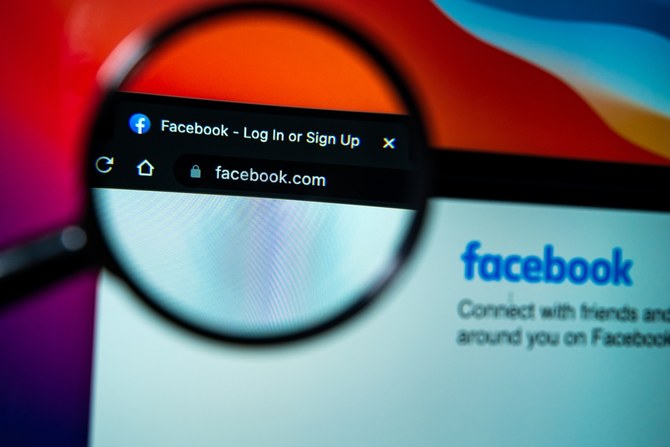
LONDON: Meta is accused of altering website codes its users view, enabling the tech giant to follow them throughout the web after they click links in its apps, new research revealed on Thursday.

Felix Krause, a former Google employee who conducted the research, said that Meta exploits the “in-app browser” — a feature that allows Facebook and Instagram users to visit a third-party website without leaving the platform — to “inject” the tracking code.

“The iOS Instagram and Facebook app render all third-party links and ads within their app using a custom in-app browser. This causes various risks for the user, with the host app being able to track every single interaction with external websites, from all form inputs like passwords and addresses to every single tap,” Krause said.

“Injecting custom scripts into third-party websites allows them to monitor all user interactions, like every button & link tapped, text selections, screenshots, as well as any form inputs, like passwords, addresses and credit card numbers,” he added.

This practice of adding extra code to a webpage before it is displayed to a user is called “Javascript injection,” and in most cases is considered a type of malicious attack, Krause said.

His investigation concentrated on Facebook and Instagram for iOS, after he discovered the code injection by chance while developing a tool that could list all the extra commands added to a website by the browser.

Starting with iOS 14.5, Apple introduced App Monitoring Transparency, which enables users to choose whether or not to enable app tracking when they first open an app. The feature, according to Meta, could impact the company’s revenue by more than $10 billion.

Meta said that the injected tracking code respected users' preferences on ATT.

“The code allows us to aggregate user data before using it for targeted advertising or measurement purposes,” a spokesperson said.

“We do not add any pixels. Code is injected so that we can aggregate conversion events from pixels. For purchases made through the in-app browser, we seek user consent to save payment information for the purposes of autofill.”

Although there is no indication that Meta employed Javascript injection to gather sensitive data, the company does not make this information known to users. 

Krause also said that WhatsApp’s in-app browser does not have the code. As a result, he advised that Meta should do the same with Facebook and Instagram, or redirect users to another browser to open links.

“It’s what’s best for the user, and the right thing to do,” he said.


Israel arrests 2 Turkish CNN journalists over live broadcast outside IDF HQ

Updated 03 March 2026
Follow

Israel arrests 2 Turkish CNN journalists over live broadcast outside IDF HQ

  • Police said reporter Emrah Cakmak and cameraman Halil Kahraman were detained on suspicion of filming a sensitive security facility
  • Since the Gaza war began, restrictions have expanded significantly, including tighter limits on filming soldiers on duty and sensitive or strategic sites

LONDON: Israeli police have arrested two Turkish CNN journalists who were broadcasting live outside the Israel Defense Forces’ headquarters in Tel Aviv.

Police said the pair were detained on suspicion of filming a sensitive security facility, according to the Israel Police Spokesperson’s Unit.

Reporter Emrah Cakmak and cameraman Halil Kahraman, from the network’s Turkish-language channel, had been reporting near the IDF’s Kirya military headquarters on Tuesday after Iran launched another missile barrage at Tel Aviv and other parts of central Israel.

During the live broadcast, two men believed to be soldiers approached the crew and seized the reporter’s phone, according to initial reports and a video circulating online that could not be independently verified.

Police said officers were dispatched after receiving reports of two people carrying cameras and allegedly broadcasting in real time for a foreign outlet.

Israel’s long-standing military censorship system, overseen by the IDF Military Censor, has long barred journalists and civilians from publishing material deemed harmful to national security.

Since the Gaza war began, restrictions have expanded significantly, including tighter limits on filming soldiers on duty and sensitive or strategic sites.

After a series of similar incidents involving foreign media — most of them Palestinian citizens of Israel working for Arab-language and international media, along with foreign journalists — during the 12-Day War, Israeli police halted live international broadcasts from missile impact sites, citing concerns that exact locations were being revealed.

The Government Press Office later imposed a blanket ban on live coverage from crash and impact areas.

Communications Minister Shlomo Karhi and National Security Minister Itamar Ben-Gvir subsequently ordered that all foreign journalists obtain prior written approval from the military censor before broadcasting — live or recorded — from combat zones or missile strike locations.

Police said that when officers asked the CNN Turk crew to identify themselves, they presented expired press cards and were taken in for questioning.

Burhanettin Duran, head of Turkiye’s Directorate of Communications, condemned the arrests as an attack on the press and said Ankara is working to secure the journalists’ release.