In Pakistan’s southwest, Royal Palace of Kalat where Jinnah was weighed in gems

Agha Muhammad Azam stands with the pictures of head of Kalat state displayed inside the Royal Palace of Kalat, Pakistan, on August 5, 2022 (AN Photo)
Short Url
Updated 13 August 2022
Follow

In Pakistan’s southwest, Royal Palace of Kalat where Jinnah was weighed in gems

  • Jinnah visited the Khan of Kalat for the first time in 1945 while the independence movement was at its peak
  • Second visit was after partition to collect donations so Bank of England could print currency for the new nation

QUETTA: A sprawling palace in Pakistan’s southwest, hemmed in by scenic mountains and apple orchards, has a special connection to the country’s founding father, Quaid-e-Azam Muhammad Ali Jinnah.

The princely state of Kalat is in Pakistan’s largest but most impoverished province of Balochistan, and acceded to the dominion of Pakistan on March 27, 1948, after having declared independence earlier on August 15, 1947. The accession was a stormy affair, and insurgencies continue in Balochistan to this day against the state of Pakistan.

But before partition, Jinnah twice visited the Royal Palace of Kalat, built over 8,000 square feet of land, and home to the ruler of the princely state, the Khan of Kalat. The building’s design is inspired by the upper deck of a ship on which the Khan went for the first time on a Hajj pilgrimage. Before the royal residence was built, the rulers of the area had lived in the ancient Mirri Fort which was flattened in a devastating earthquake that shook the region in 1935.

“Quaid-e-Azam Muhammad Ali Jinnah visited the Royal Palace of Kalat in 1945 and 1948,” Prince Agha Umar Jan Ahmedzai, the Khan’s grandson, told Arab News in Kalat. “During Mr. Jinnah’s two visits, he was welcomed by the people of Balochistan because we knew he was leading a sacred cause for the Muslims of the British-ruled Subcontinent.”
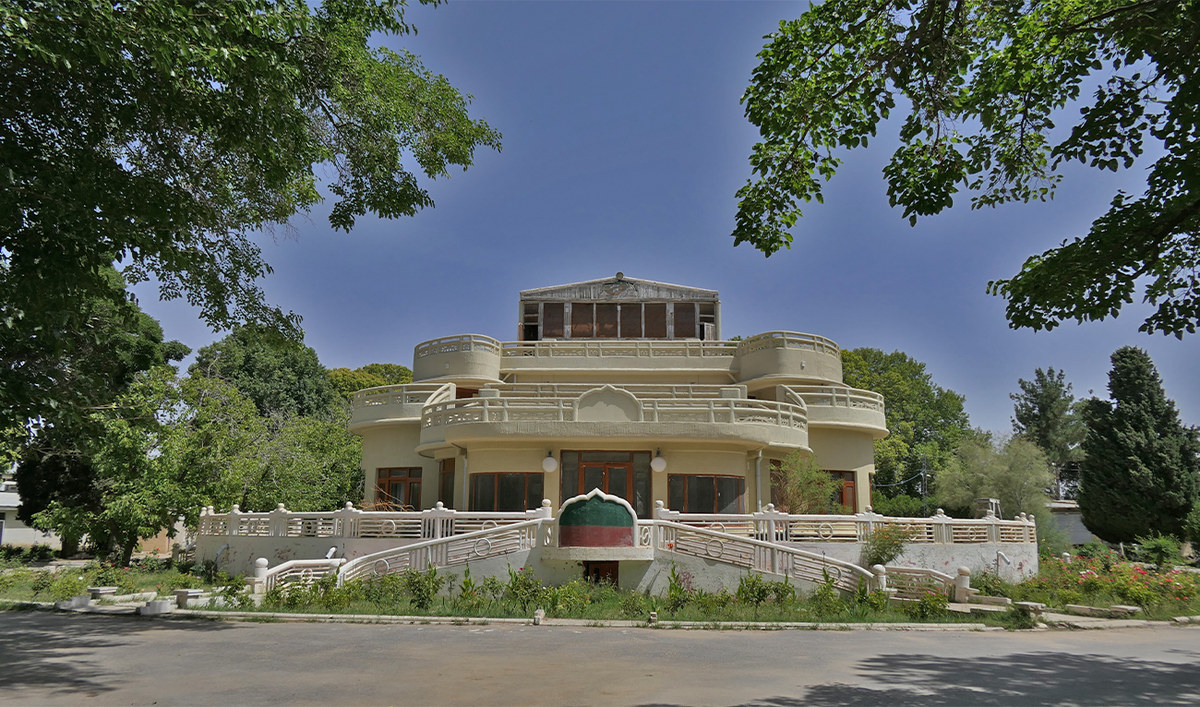


The image shows the exterior view of the Royal Palace of Kalat in Pakistan's Balochistan province on August 5, 2022 (AN Photo)

Ahmedzai said Kalat had played a major role in strengthening the country and was instrumental in getting Pakistan over 40 percent of its land in the shape of the resource-rich province of Balochistan, Pakistan’s largest province by area.

According to the prince, Jinnah spent two days in the newly constructed palace during his first visit, and returned three years later for an entire week.

The Khan of Kalat had designated two of the most luxurious rooms on the top floor of the palace for Jinnah and his sister, Fatima Jinnah, and offered them expensive gifts of gold and gemstones when they visited.

“Mr. Jinnah came with his sister Fatima Jinnah to the Royal Palace of Kalat [in 1945] where my grandfather weighed [him] and donated him gems according to his weight,” Ahmedzai said. To Fatima, the Khan gave an expensive necklace. 
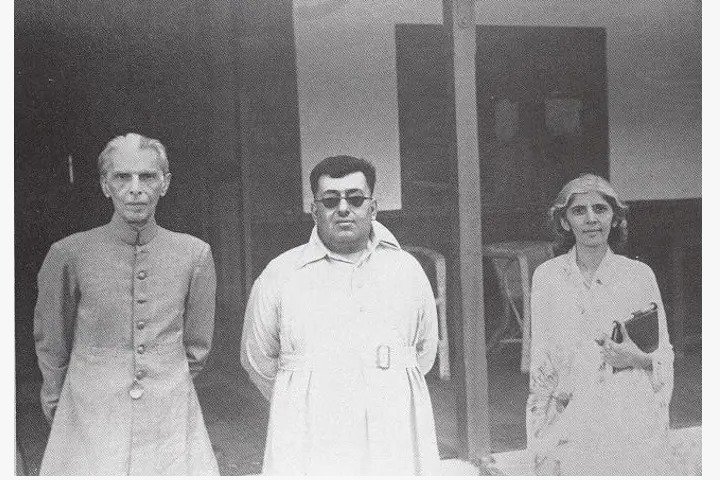


Pakistan's founder Muhammad Ali Jinnah (left) and his sister Fatima Jinnah (right) are pictured with the Khan of Kalat in Pakistan's Balocistan province. (AN Photo)

He added that the founder of Pakistan also sought donations during his second visit to the palace in 1948 since the Bank of England had inquired about gold reserves before printing currency notes for the new nation.

“There was a currency problem when Pakistan came into existence and Quaid-e-Azam came here in distress, saying he had gone to businessmen of Karachi but could not gather the gold which was required for currency deposits [with the British],” Jan said.

“So, almost 1,360 kilograms of gold was given by Khan Ahmed Yar Khan [the Khan] for the printing of currency.”

“This house has overall a lot of importance. In Pakistan’s existence … definitely there is a big role of the Baloch people and this house.”

In Jinnah’s memory, the royal family has preserved all the items Jinnah used during his stay in the palace.

Saeed Ahmed Naichari, whose family has served the palace for four generations, said his job was to brief tourists about the history of the place.

“Even the overcoats worn by Muhammad Ali Jinnah still hang in the wardrobe,” he said as he gave Arab News a tour of the palace.
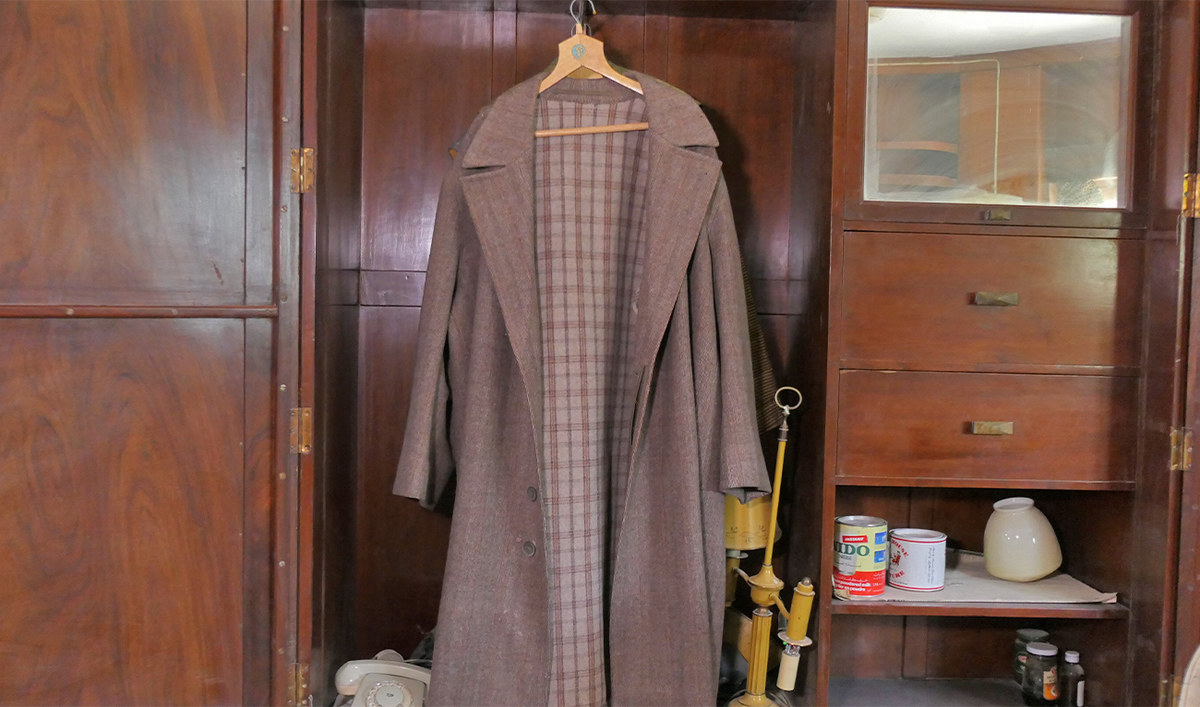


The picture taken on August 5, 2022 shows an overcoat worn by the founder of Pakistan, Muhmmad Ali Jinnah, during his visit to the Royal Palace in 1948, in Kalat, Pakistan, on August 5, 2022 (AN Photo)

“Our family looks after this house,” Ahmedzai added. “This is not just our house but this is a house of the Baloch nation. When you go to someone’s house, you cannot enter the gate but this house is open for everyone. And it is open for all Balochis, Pakistanis and for everyone who wants to visit it.”
Pakistan arrests Daesh suspects, including Afghan ‘mastermind,’ after Islamabad mosque attack

Updated 6 sec ago
Follow

Pakistan arrests Daesh suspects, including Afghan ‘mastermind,’ after Islamabad mosque attack

  • Interior minister says attack was planned and suicide bomber trained in neighboring Afghanistan
  • Suicide bombing targeted worshippers on Islamabad’s outskirts, killing 32 and wounding over 150

ISLAMABAD: A police officer was killed and four suspects, including an Afghan national who worked for Daesh and masterminded a deadly suicide bombing in the Pakistani capital a day earlier, were arrested in overnight raids, according to Pakistan’s Interior Minister Mohsin Naqvi, who addressed a news conference on Saturday.

Officials have confirmed 32 deaths from Friday’s blast at the Qasr-e-Khadijatul Kubra mosque and imambargah in the Tarlai Kallan area on Islamabad’s outskirts, with more than 150 others injured.

The blast occurred during Friday prayers, when mosques around the country are packed with worshippers. A regional Daesh affiliate said one of its members had targeted the congregation by detonating an explosive vest.

“Immediately after the explosion, raids were carried out in Peshawar and Nowshera, and four of the facilitators [of the suicide bomber] were arrested,” Naqvi told the media in Islamabad. “The best thing that happened was that their mastermind, who is an Afghan affiliated with Daesh, was also apprehended.”

He confirmed that a Khyber Pakhtunkhwa police officer lost his life during a raid carried out at night, while a few others were also injured.

“The main mastermind is related to Daesh, and he is now under our custody,” he continued. “All the planning and training of this incident had been done by Daesh inside Afghanistan. These people are now with us, telling us all the details of how he [the bomber] was taken [to the neighboring country] and how he was trained there.”

Naqvi’s ministry also shared a brief statement on social media, saying that a breakthrough in the case was made through “technical and human intelligence” before coordinated raids were conducted to arrest the suspects.

“The nexus of terrorism under Afghan Taliban patronage remains a serious threat to regional peace,” it added.

The interior minister echoed the same concern while accusing India of bankrolling the militant operations against Pakistan.

“Now, you are taking the name of Daesh, or you are taking the name of Taliban,” he said while talking to journalists.

“They [the militants] are getting this funding from somewhere, someone is giving them this target.”

“I again want to tell you with clarity that all their funding is being given by India,” he added. “All their targets are being given by India.”

Islamabad has long accused Kabul of allowing its soil to be used by militant groups and New Delhi of backing their cross-border attacks against Pakistani civilians and security forces. However, the Afghan and Indian governments have consistently denied the allegations.

The police officer, who was killed in the shootout with militants in the northwestern district of Nowshera, was identified as Assistant Sub-Inspector Ejaz Khattak, Nowshera police spokesperson Turk Ali Shah told Arab News.

Friday’s mosque blast was the deadliest in Islamabad since a 2008 suicide bombing at the Marriott Hotel that killed 63 people and wounded more than 250. Last year in November, a suicide bomber struck outside a court in the capital, killing 12 people.

The latest attack comes as Prime Minister Shehbaz Sharif’s government deals with a surge in militancy across Pakistan. Pakistani officials have said the attacker was a Pakistani national who had recently traveled to Afghanistan.