QUETTA: A sprawling palace in Pakistan’s southwest, hemmed in by scenic mountains and apple orchards, has a special connection to the country’s founding father, Quaid-e-Azam Muhammad Ali Jinnah.
The princely state of Kalat is in Pakistan’s largest but most impoverished province of Balochistan, and acceded to the dominion of Pakistan on March 27, 1948, after having declared independence earlier on August 15, 1947. The accession was a stormy affair, and insurgencies continue in Balochistan to this day against the state of Pakistan.
But before partition, Jinnah twice visited the Royal Palace of Kalat, built over 8,000 square feet of land, and home to the ruler of the princely state, the Khan of Kalat. The building’s design is inspired by the upper deck of a ship on which the Khan went for the first time on a Hajj pilgrimage. Before the royal residence was built, the rulers of the area had lived in the ancient Mirri Fort which was flattened in a devastating earthquake that shook the region in 1935.
“Quaid-e-Azam Muhammad Ali Jinnah visited the Royal Palace of Kalat in 1945 and 1948,” Prince Agha Umar Jan Ahmedzai, the Khan’s grandson, told Arab News in Kalat. “During Mr. Jinnah’s two visits, he was welcomed by the people of Balochistan because we knew he was leading a sacred cause for the Muslims of the British-ruled Subcontinent.”
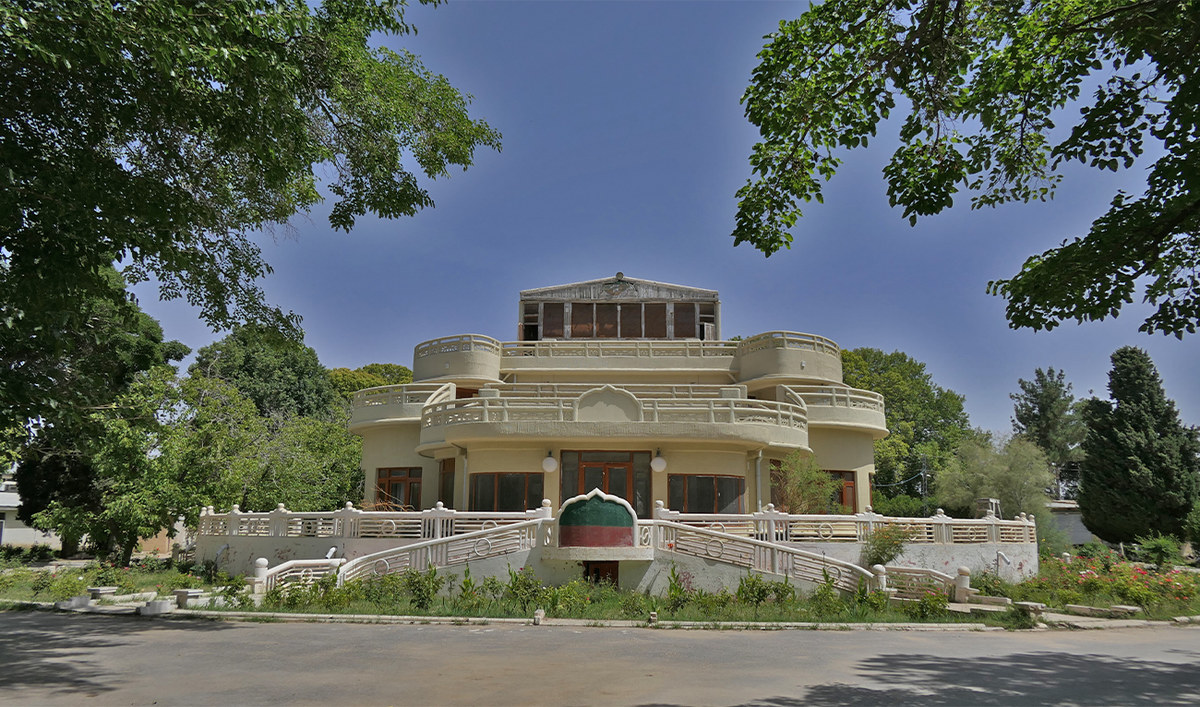
The image shows the exterior view of the Royal Palace of Kalat in Pakistan's Balochistan province on August 5, 2022 (AN Photo)
Ahmedzai said Kalat had played a major role in strengthening the country and was instrumental in getting Pakistan over 40 percent of its land in the shape of the resource-rich province of Balochistan, Pakistan’s largest province by area.
According to the prince, Jinnah spent two days in the newly constructed palace during his first visit, and returned three years later for an entire week.
The Khan of Kalat had designated two of the most luxurious rooms on the top floor of the palace for Jinnah and his sister, Fatima Jinnah, and offered them expensive gifts of gold and gemstones when they visited.
“Mr. Jinnah came with his sister Fatima Jinnah to the Royal Palace of Kalat [in 1945] where my grandfather weighed [him] and donated him gems according to his weight,” Ahmedzai said. To Fatima, the Khan gave an expensive necklace.
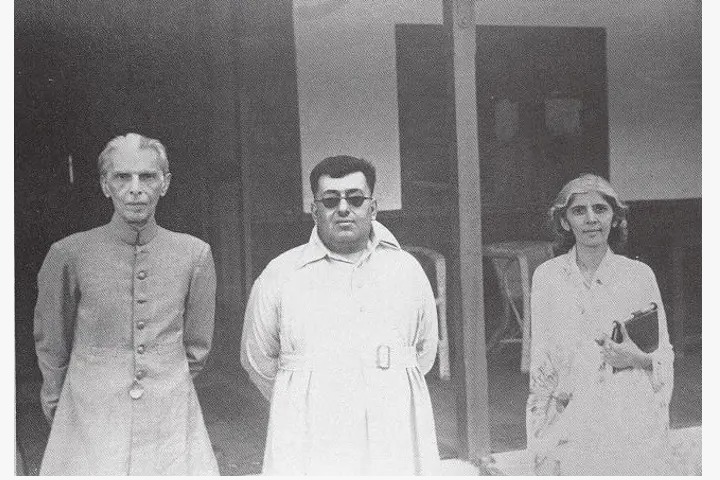
Pakistan's founder Muhammad Ali Jinnah (left) and his sister Fatima Jinnah (right) are pictured with the Khan of Kalat in Pakistan's Balocistan province. (AN Photo)
He added that the founder of Pakistan also sought donations during his second visit to the palace in 1948 since the Bank of England had inquired about gold reserves before printing currency notes for the new nation.
“There was a currency problem when Pakistan came into existence and Quaid-e-Azam came here in distress, saying he had gone to businessmen of Karachi but could not gather the gold which was required for currency deposits [with the British],” Jan said.
“So, almost 1,360 kilograms of gold was given by Khan Ahmed Yar Khan [the Khan] for the printing of currency.”
“This house has overall a lot of importance. In Pakistan’s existence … definitely there is a big role of the Baloch people and this house.”
In Jinnah’s memory, the royal family has preserved all the items Jinnah used during his stay in the palace.
Saeed Ahmed Naichari, whose family has served the palace for four generations, said his job was to brief tourists about the history of the place.
“Even the overcoats worn by Muhammad Ali Jinnah still hang in the wardrobe,” he said as he gave Arab News a tour of the palace.
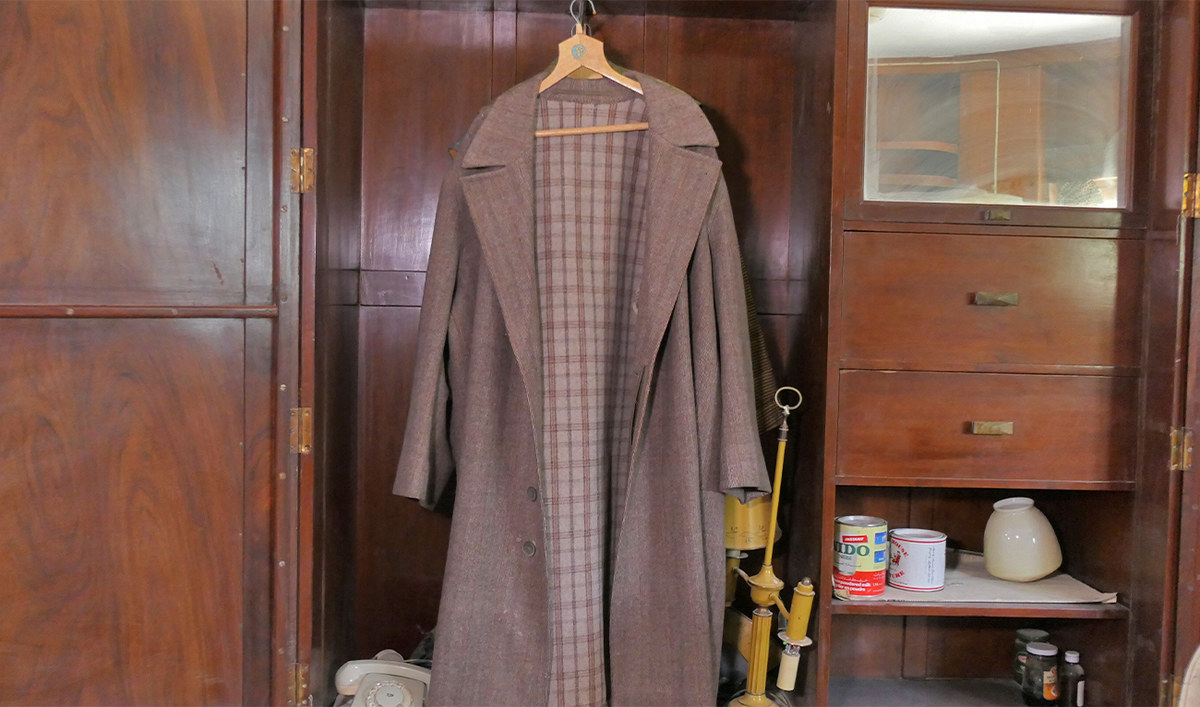
The picture taken on August 5, 2022 shows an overcoat worn by the founder of Pakistan, Muhmmad Ali Jinnah, during his visit to the Royal Palace in 1948, in Kalat, Pakistan, on August 5, 2022 (AN Photo)
“Our family looks after this house,” Ahmedzai added. “This is not just our house but this is a house of the Baloch nation. When you go to someone’s house, you cannot enter the gate but this house is open for everyone. And it is open for all Balochis, Pakistanis and for everyone who wants to visit it.”