TEHRAN: Iran plans to commission three more versions of a satellite launched this week by Russia, Tehran’s government spokesman said Friday.
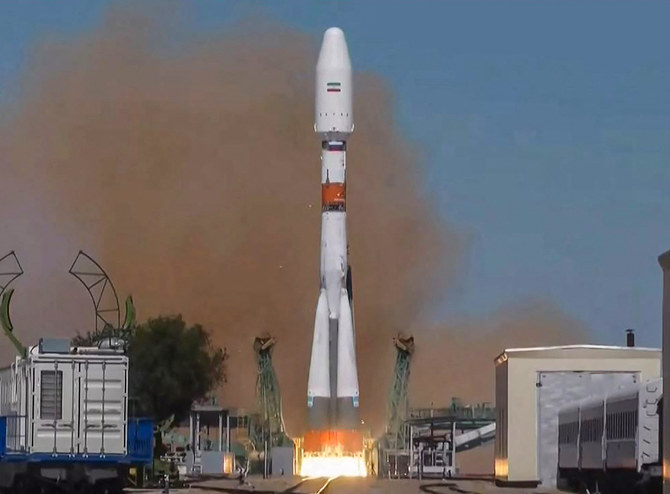
The Khayyam blasted into orbit on Tuesday, prompting US accusations that it is intended for spying. Iran dismissed Washington’s claim as “childish.”
“The construction of three other Khayyam satellites with the participation of Iranian scientists is on the government’s agenda,” its spokesman Ali Bahadori-Jahromi said on Twitter.
A Soyuz-2.1b rocket sent the satellite into orbit from the Moscow-controlled Baikonur Cosmodrome in Kazakhstan.
Responding to the launch, Washington said Russia’s growing cooperation with Iran should be viewed as a “profound threat,” but the head of Iran’s Space Agency, Hassan Salarieh, dismissed the accusation.
He said the Khayyam is designed to meet Iran’s needs for “crisis and urban management, natural resources, mines, agriculture and so on.”
The Khayyam was built by the Russians under Iran’s supervision, Salarieh said at a press conference on Wednesday.
Ahead of the launch, The Washington Post quoted anonymous Western intelligence officials as saying that Russia “plans to use the satellite for several months or longer” to assist its war effort before allowing Iran to take control.
Iran’s space agency stressed on Sunday that it would control the satellite “from day one,” in an apparent reaction to the Post’s report.
Khayyam, apparently named after the 11th-century Persian polymath Omar Khayyam, will not be the first Iranian satellite that Russia has put into space.
In 2005, Iran’s Sina-1 satellite was deployed from Russia’s Plesetsk Cosmodrome.
The new satellite launch came a day after the European Union submitted a “final text” at talks to salvage a 2015 deal aimed at reining in Iran’s nuclear ambitions, and which Tehran said it was reviewing.
The United States has accused Iran of effectively supporting Russia’s war against Ukraine while adopting a “veil of neutrality.”
Iran insists its space program is for civilian and defense purposes only, and does not breach the 2015 nuclear deal, or any other international agreement.
Western governments worry that satellite launch systems incorporate technologies interchangeable with those used in ballistic missiles capable of delivering a nuclear warhead, something Iran has always denied wanting to build.


![]()

Iran seeks 3 more Khayyam satellites
Short Url
https://arab.news/5g5nw
Iran seeks 3 more Khayyam satellites
- The Khayyam earlier blasted into orbit, prompting US accusations that it is intended for spying
- Washington said Russia’s growing cooperation with Iran should be viewed as a threat


Latest updates


Recommended


© 2026 SAUDI RESEARCH & PUBLISHING COMPANY, All Rights Reserved And subject to Terms of Use Agreement.