

Saudi water safety body launches new training programs

1 / 5
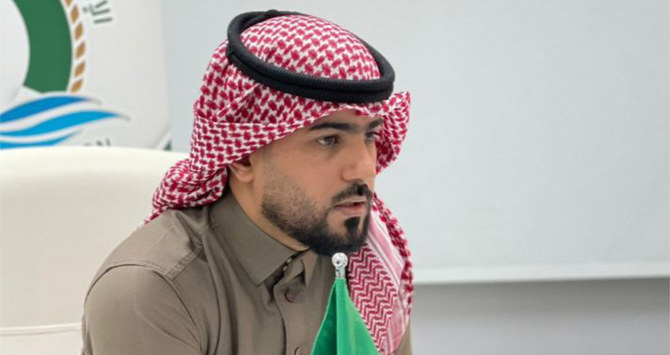
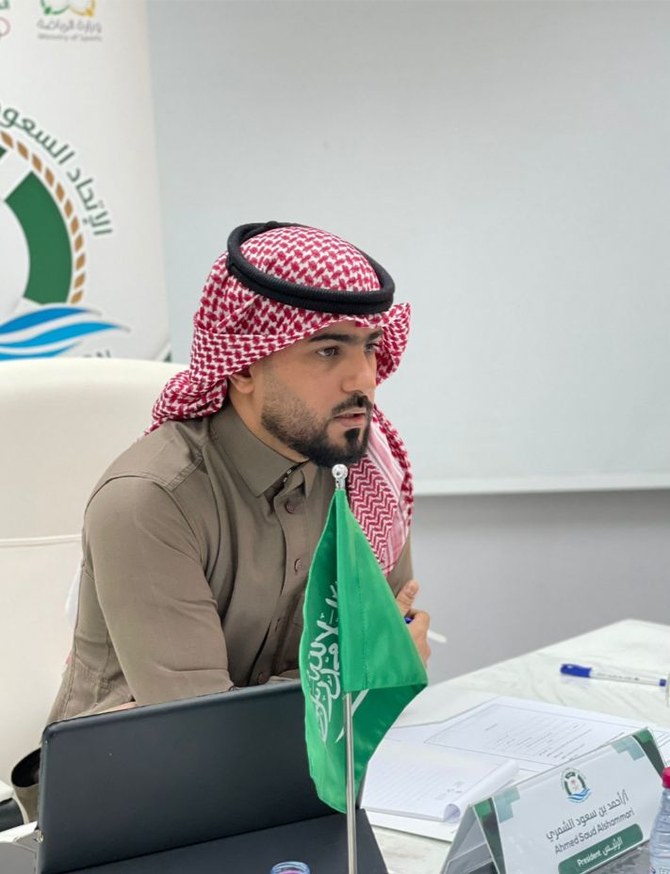
The federation’s chief, Ahmed Al-Shammari, said that the programs will focus on training and qualification. (Supplied)
2 / 5
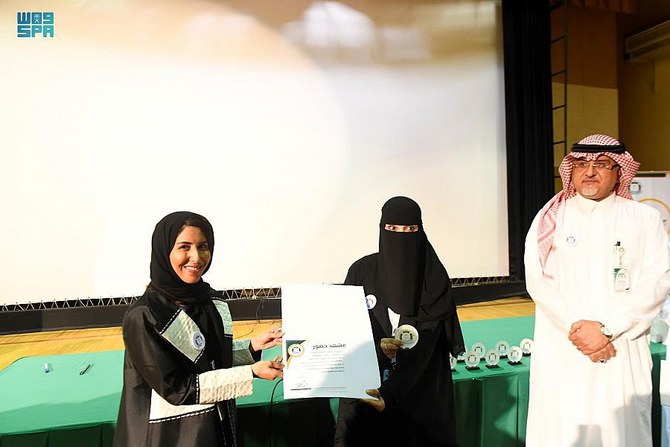
The federation’s chief, Ahmed Al-Shammari, said that the programs will focus on training and qualification. (SPA)
3 / 5
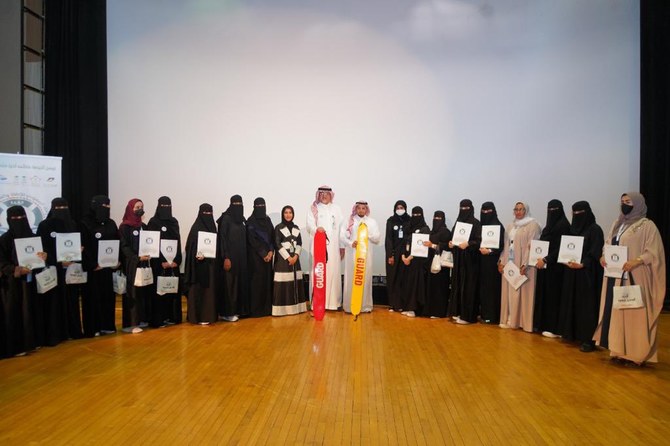
The federation’s chief, Ahmed Al-Shammari, said that the programs will focus on training and qualification. (SPA)
4 / 5
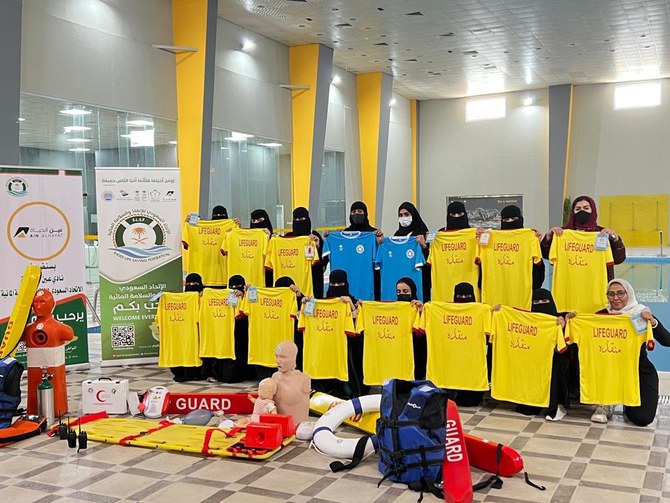
The federation’s chief, Ahmed Al-Shammari, said that the programs will focus on training and qualification. (SPA)
5 / 5
The federation’s chief, Ahmed Al-Shammari, said that the programs will focus on training and qualification. (SPA)
Short Url
Updated 10 August 2022
Follow

Saudi water safety body launches new training programs

  • Water safety is a global concern, with one person drowning every two minutes around the world

MAKKAH: The Saudi Life Saving Federation has introduced two initiatives to help reduce drowning cases in the Kingdom.

The federation’s chief, Ahmed Al-Shammari, said that the programs will focus on training and qualification.

He said that the federation will introduce a six-day, 50-hour training program for men and women, after which trainees obtain an international rescuer certificate through which they can work in Saudi Arabia and in all member states of the International Life Saving Federation (ILS).

He added that another program will allow Saudis who qualify in international courses to submit them through the federation’s “rescuer” platform. A theoretical and practical evaluation process is then carried out. Once cleared, rescuers will obtain official certificates.

Al-Shammari said that the Saudi Life Saving Federation has provided its services to over 500 beneficiaries and works to increase community awareness on water safety through social and traditional media.

Water safety is a global concern, with one person drowning every two minutes around the world.

Al-Shammari told Arab News: “We regret the drowning cases occurring in several Saudi cities,” adding that avoiding these incidents is an integrated societal responsibility and everyone must join hands to prevent drowning cases.

He said that a society-wide response is what the federation works for through training, rehabilitation and a legislative calendar that benefits every rescuer, citizen, and resident, allowing them to obtain official certificates when they are available to train.

Al-Shammari said that the federation, established in 2019 by Sports Minister Prince Abdulaziz bin Turki Al-Faisal, was certified by the ILS in 2020.

“We need a wide media mobilization to raise awareness about the importance of rescue and water safety. We aim to train the largest number of qualified lifeguards,” he said, noting that the federation has recently been granted seven seats at the ILS in Belgium.

Al-Shammari noted: “We focus on providing theoretical and practical qualifications by offering a range of courses for beginners working in water bodies, swimming pools and beaches, and contributing to the development of technical standards and regulations with all relevant authorities. We are currently working with the relevant authorities on forming a national committee to set national policies to prevent drowning cases.”

He stressed that work is currently underway to develop rescue sports competitions in various regions to prepare for the Kingdom’s representation in upcoming international forums.


Experimental farm in Al-Lith looks into future of Saudi Arabian agriculture

Updated 02 February 2026
Follow

Experimental farm in Al-Lith looks into future of Saudi Arabian agriculture

  • Research initiative reflects strategic transformation

JEDDAH: An experimental farm in Saudi Arabia’s Al-Lith Governorate is one of the research initiatives reflecting the strategic transformation taking place in the Kingdom’s agricultural sector.

The farm uses highly efficient, sustainable production models that combine scientific research with commercial application, contributing to strengthening the country’s food security system and the sustainability of water resources.

Located in the Ghumaiqa Center on an area of about 10 hectares, the cutting-edge farm is a testing platform for modern agricultural technologies that tackle the challenge of water scarcity.

The farm includes developed open fields and modern greenhouses, supported by smart irrigation encompassing drip and sprinkler irrigation alongside surface and subsurface technologies.

All the systems operate via smart controls that enable the monitoring of water consumption and ensure improved efficiency, thereby achieving a balance between agricultural production and water conservation.

The farm also uses treated and diluted low-salinity seawater.

It aims to diversify agricultural water sources, reduce reliance on freshwater, and open new horizons for agriculture in coastal and semi-arid environments.

A view of the experimental farm in Al-Lith. (SPA)

The project represents a promising investment opportunity in the field of smart agriculture, enabling the development of commercially scalable production models, particularly for high-value vegetables and fruits, while reducing operational costs associated with water and energy, enhancing the economic feasibility of future agricultural projects.

In addition, the project contributes to transferring and localizing agricultural expertise, supporting local food supply chains, and creating an attractive environment for agricultural investment.

This aligns with Sustainable Development Goals and enhances the efficiency of the private sector in adopting innovative agricultural solutions.

Yahya bin Abdulrahman Al-Mahabi, the director of the Ministry of Environment, Water and Agriculture office in Al-Lith Governorate, told the Saudi Press Agency that the project represented the future of agriculture in the Kingdom.

He explained that the vision was based on investing in technology, enhancing the return on water per unit, and integrating scientific research with investment opportunities.

Al-Mahabi spoke of the experimental farm as a modern, scalable and replicable model applicable in several regions of the Kingdom, particularly in coastal environments.

Al-Mahabi highlighted the Ministry of Environment, Water and Agriculture’s commitment to supporting distinctive projects that contributed to achieving food security while developing rural areas and enhancing agricultural production efficiency, in line with the objectives of the Kingdom’s Vision 2030.