

Pakistan zoo cancels lion auction, plans expansion instead 

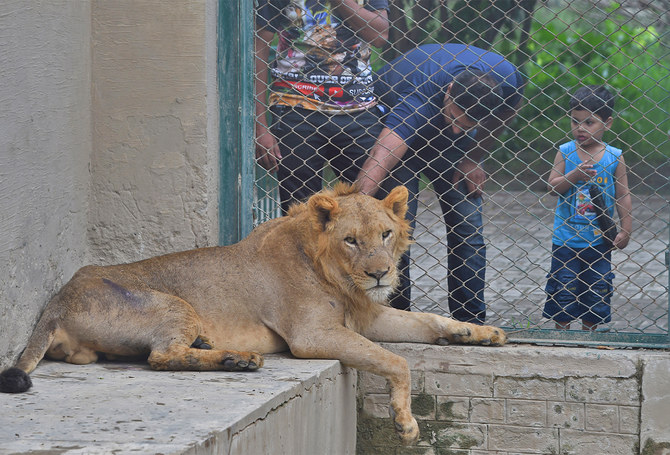
Visitors look at a lion at the Lahore Safari Zoo in Lahore, Pakistan, on August 3, 2022. (AFP)
Short Url
Updated 10 August 2022
Follow

Pakistan zoo cancels lion auction, plans expansion instead 

  • Lahore facility is currently home to 29 lions, six resident tigers and two jaguars
  • The auction planned for Thursday had drawn condemnation from the WWF 

LAHORE: A Pakistan zoo has called off plans to auction 12 lions from its ever-growing pride to private buyers, saying it would instead create new enclosures for the big cats.

The auction planned for Thursday had drawn condemnation from the WWF, which urged authorities at Lahore Safari Zoo to instead rehome them with other government wildlife facilities.

“The main reason behind the auction was the lack of space,” deputy director Tanvir Ahmed Janjua told AFP, adding officials had decided to speed up work building two new enclosures.

“Now that this issue is to be resolved soon, there is no need for the auction to take place.”

Set over 200 acres, Lahore Safari Zoo is considered one of the best in the country — where zoos are known for disregarding animal welfare.

The Lahore facility is currently home to 29 lions, six resident tigers and two jaguars.

Zoo officials had set a reserve of 150,000 Pakistan rupees ($700) per cat — about the same price as a cow — but hoped each would fetch around two million rupees at auction.

Keeping lions, tigers and other exotic wildlife as pets is not uncommon in Pakistan, and is seen as a status symbol.

Wealthy owners post images and video clips of their big cats on social media, and rent them out as props for movies and photoshoots.

Janjua denied opposition from animal rights activists had led to the decision to cancel the auction.

“Should the lions breed more, and we see we are running out of space once again, then we can easily hold another auction,” he said. 


After mosque bombing, Islamabad intensifies patrols, surveillance during Ramadan prayers, iftar

Updated 7 sec ago
Follow

After mosque bombing, Islamabad intensifies patrols, surveillance during Ramadan prayers, iftar

  • Police chief orders enhanced screening at capital city’s entry and exit points after Feb. 6 blast
  • Safe City cameras to monitor Islamabad round the clock as special pre-iftar traffic plan enforced

ISLAMABAD: Police in the federal capital have been instructed to step up patrols, surveillance and checkpoint inspections during Ramadan prayers and iftar hours, an official statement said on Wednesday, as the city’s police chief chaired a security meeting following a deadly mosque bombing earlier this month.

Inspector General of Police Syed Ali Nasir Rizvi directed senior officers to ensure “foolproof security” across the city, with special focus on mosques during peak congregational times.

The meeting comes after a suicide bombing at a mosque on the outskirts of Islamabad on Feb. 6 that killed at least 32 people. The blast targeted the Qasr-e-Khadijatul Kubra mosque and imambargah during Friday prayers and was claimed by Daesh that said one of its militants detonated an explosive vest inside the congregation.

“All officers must ensure their presence in the field and properly brief personnel about their duties,” Rizvi said, according to a statement issued by the police.

“Strict security arrangements should be ensured at mosques, imambargahs and Ramadan bazaars,” he continued. “Special patrols should be conducted during Fajr, iftar and Taraweeh hours.”

The police chief said Safe City cameras would be used for round-the-clock effective monitoring across the capital.

In addition to security measures, he reviewed traffic arrangements and directed strict implementation of a special traffic plan during pre-iftar rush hours, calling for additional deployment on major roads and at commercial centers.

Islamabad, which has generally seen fewer large-scale militant attacks than some other parts of Pakistan, has faced sporadic security incidents in the past, prompting authorities to tighten monitoring during religious gatherings and other high-risk events.