SEOUL: North Korea reported zero fever cases Friday for a seventh straight day, state media said, adding that everyone who had fallen sick since the country confirmed its first COVID-19 infections had recovered.
The isolated country, which has maintained a rigid coronavirus blockade since the start of the pandemic, announced an omicron outbreak in the capital Pyongyang in May and activated a “maximum emergency epidemic prevention system.”
State media have meticulously reported the official number of cases, deaths, treatments and recoveries every day since, with leader Kim Jong Un putting himself front and center of the government’s response.
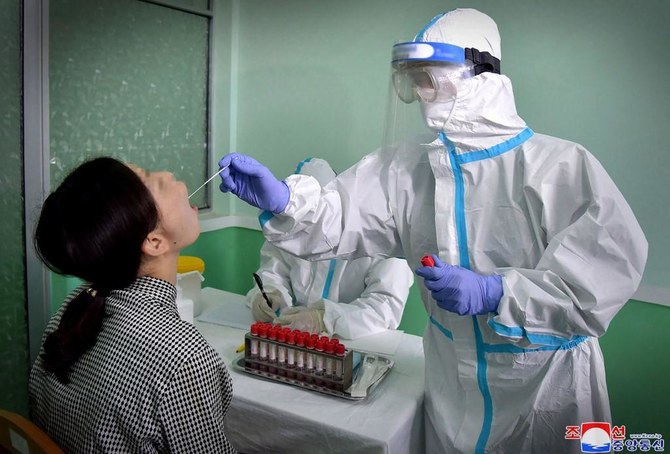
North Korea refers to “fever patients” rather than “COVID-19 patients” in case reports, apparently due to a lack of testing capacity.
“No new fever cases were reported during the past week and all those receiving treatment have recovered across the country,” the official KCNA reported Friday.
“The overall anti-epidemic situation of the DPRK has entered a definite phase of stability,” the report added.
The country will continue to strengthen its monitoring of “new COVID-19 sub-variants and various diseases” and can still mobilize medical workers “in case of a crisis,” it added.
North Korea has recorded nearly 4.8 million infections since late April with just 74 deaths for an official fatality rate of 0.002 percent, KCNA has reported.
The country has one of the world’s worst health care systems, with poorly equipped hospitals, few intensive care units, and no COVID-19 treatment drugs or vaccines, experts say.
In contrast, South Korea — with its advanced health care systems and highly vaccinated population — has a reported COVID-19 fatality rate of 0.12 percent, according to official data.
“It is hard to believe any country if they say that the confirmed number of patients has suddenly gone to zero,” Ahn Chan-il, a North Korean studies scholar, said.
“Like its military weapons and nuclear programs, it seems right to say that COVID is also being used to highlight Kim Jong Un’s leadership and shore up loyalty, regardless of what the truth is.”
Pyongyang said in late May it had started seeing “progress” in controlling the outbreak but experts, including the World Health Organization, have repeatedly cast doubt on the claim.
North Korea is not believed to have vaccinated any of its roughly 25 million people, having rejected jabs offered by the WHO’s Covax program.
The Seoul-based specialist site NK News reported that North Korea imported 3,554 invasive ventilators from China in June, sharply up from April, despite an overall decrease in trade.
But Yang Moo-jin, a professor at the University of North Korean Studies, said that Pyongyang’s claim to have brought the epidemic under control seemed “somewhat reliable.”
Things could be getting back to normal as “there are no signs of tighter border control, no official request has been made to Beijing for medical aid or equipment, and Pyongyang-based diplomats remain in place,” he said.


![]()

North Korea: ‘All recovered’ after COVID-19 outbreak
Short Url
https://arab.news/494mj
North Korea: ‘All recovered’ after COVID-19 outbreak
- Isolated country has maintained a rigid coronavirus blockade since the start of the pandemic
- North Korea refers to ‘fever patients’ rather than ‘COVID-19 patients’ in case reports


Latest updates


© 2026 SAUDI RESEARCH & PUBLISHING COMPANY, All Rights Reserved And subject to Terms of Use Agreement.