

More rains, urban flooding next week as deadly monsoons kill 549 in Pakistan

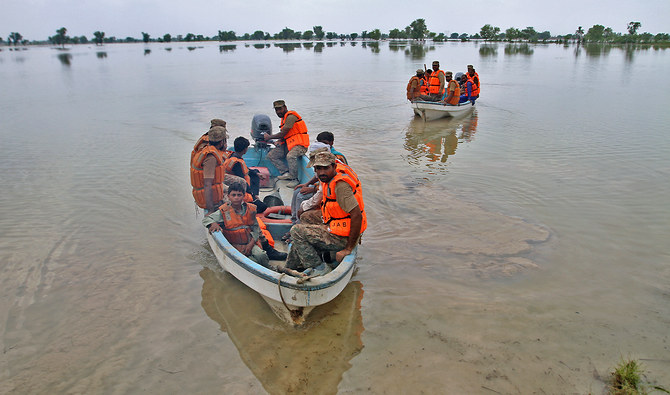
Pakistan army soldiers evacuate villagers from flooded area, in Rajanpur, a district in the central Pakistan, on August 2, 2022. (AP)
Short Url
Updated 25 September 2022
Follow

More rains, urban flooding next week as deadly monsoons kill 549 in Pakistan

  • Pakistan received 133 percent more rainfall this monsoon season than 30-year average
  • Balochistan province is the worst hit by rain and floods, with around 164 dead

ISLAMABAD: The Meteorological Department said on Friday Pakistan would be hit with more rains next week which could trigger flash flooding in several regions, including the financial hub of Karachi, as the death toll from rains and floods across the country reached 549 since mid-June.
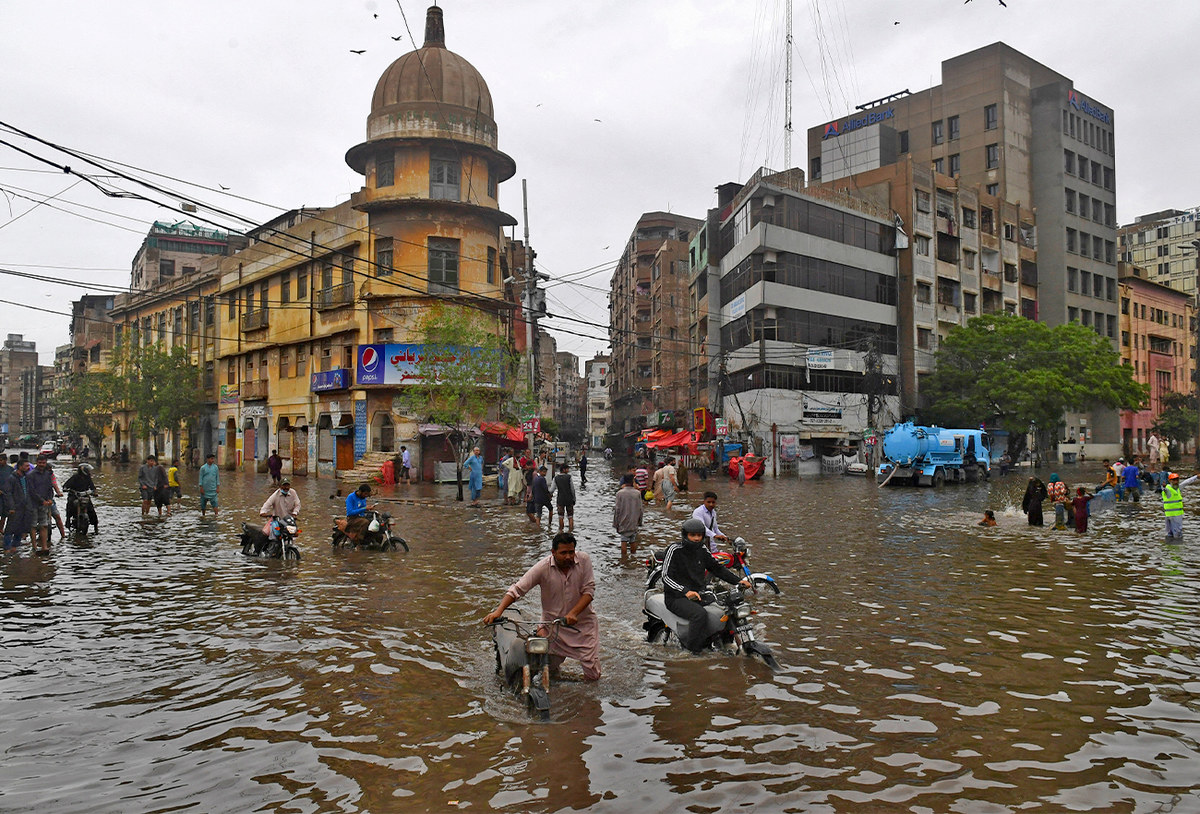


People wade across a flooded street after heavy monsoon rainfall in Karachi, Pakistan, on July 25, 2022. (AFP/File)

According to the National Disaster Management Authority (NDMA) of Pakistan, the country received 133 percent more rainfall this monsoon season than the 30-year average.

“Met Office informed that monsoon currents are continuously penetrating in the country likely to become stronger from 10th August (Wednesday),” the Met Department said in a statement on Friday.

“Heavy Rains may generate urban flooding in Rawalpindi/Islamabad, Peshawar, Nowshera, Mardan, Faisalabad, Lahore and Gujranwala on 08th and from 10th to 12th August,” the statement said. "Flash flooding is expected in local Nullahs of Islamabad/Rawalpindi, Shakargarh, Sialkot, Narowal, Abbottabad, Mansehra, Dir, Karak, Lakki Marwat, Bannu and Kashmir on 08th and from 10th to 12th August."

The statement said heavy eains could generate urban flooding in Karachi, Thatta, Badin, Hyderabad, Dadu, Jamshoro, Sukkur, Larkana, Shaheed Benazirabad and Mirpurkhas between August 11-13. Rainfall can also trigger landslides in Kashmir, hilly areas of Khyber Pakhtunkhwa, Galiyat, Murree, Chillas, Diamir, Gilgit, Hunza, Astore, Ghizer and Skardu during the forecast period, the notice said.

“Travelers and tourists are advised to remain more cautious during the forecast period,” it added.
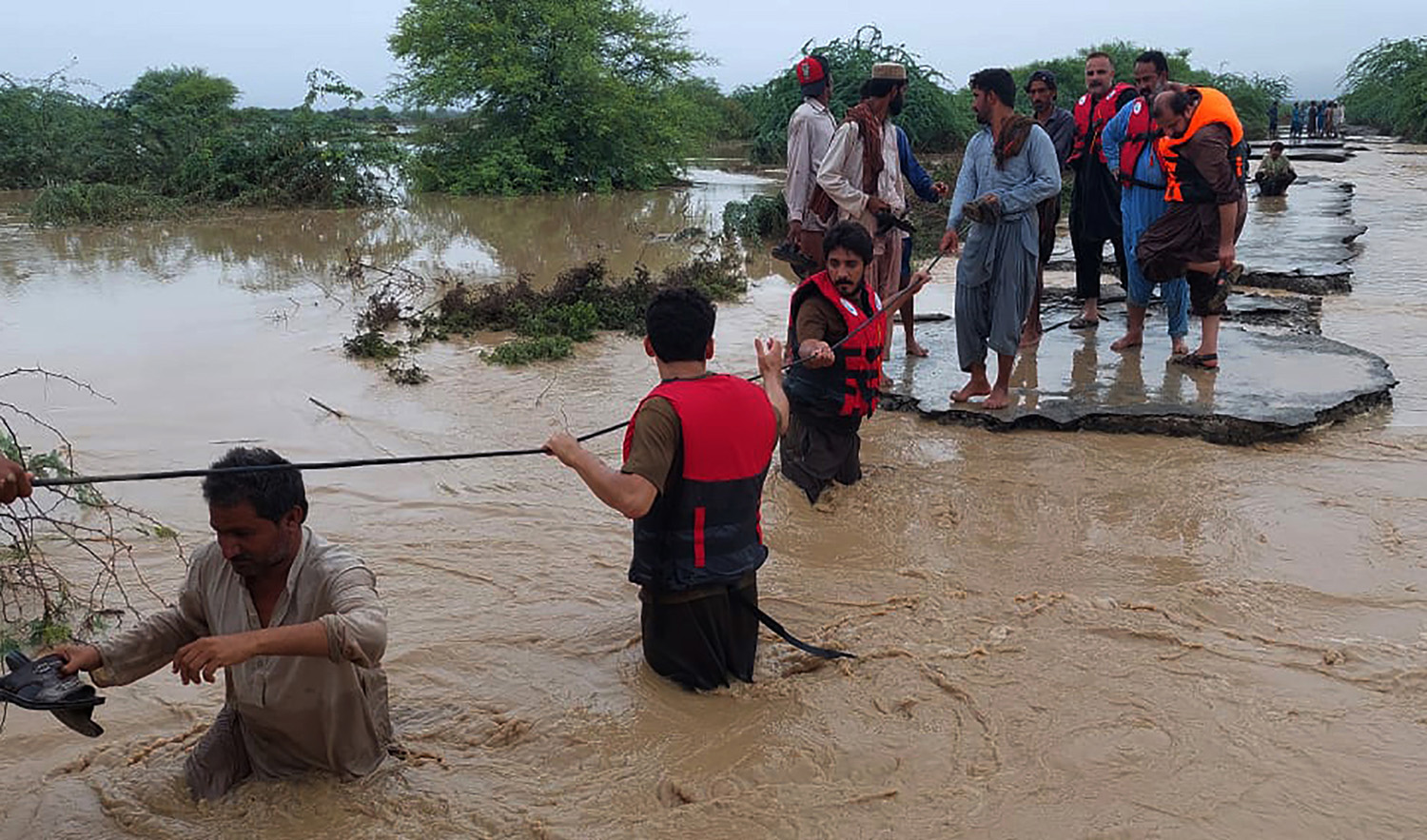


Rescue workers help villagers evacuate from floods after heavy rains in Lasbella, a district in Pakistan's southwest Balochistan province, on July 26, 2022. (AP/File)

On Monday, a Pakistani military helicopter carrying a top general and five others crashed on a mountain during a flood relief operation and all on board were killed. The helicopter was helping with flood relief work in Balochistan province, which has been worst hit by rains and flooding, with 164 dead.

“133 percent more rainfall across the country than the 30-year average record,” NDMA said on Twitter on Friday, reporting 305 percent more rains in Balochistan, 218 percent in Sindh, 101 percent in Punjab, 26 percent in Khyber Pakhtunkhwa, 68 percent in Gilgit-Baltistan and 9 percent in Azad Jammu and Kashmir.

It said 11 more people had died in floods and rains in Pakistan in the last 24 hours.

“The total number of deaths due to floods/rains across the country is 549 while the number of injured is 628,” NDMA said. “46,219 houses were damaged due to floods and rains.”

Heavy rains have lashed the country since June, leaving large swathes of Pakistan inundated with water and thousands of people homeless.

In 2010, the worst floods in memory affected 20 million people in Pakistan, with damage to infrastructure running into billions of dollars and huge swathes of crops destroyed as one fifth of the country was inundated.


Pakistan army chief tells Kabul to choose Islamabad or Taliban militants amid strained ties

Updated 9 sec ago
Follow

Pakistan army chief tells Kabul to choose Islamabad or Taliban militants amid strained ties

  • Pakistan blames Afghanistan for facilitating cross-border attacks in its territory, allegations that Kabul denies 
  • Ties remain strained since October, when deadly border clashes left dozens dead on both sides of the border

ISLAMABAD: Pakistan’s Chief of Defense Forces Field Marshal Syed Asim Munir has told Afghanistan to choose between Islamabad and the outlawed Tehreek-e-Taliban Pakistan (TTP) militants, state media reported on Sunday as ties between both neighbors remain strained. 

Pakistan’s army and civilian government have both blamed the Afghan Taliban recently for facilitating cross-border attacks in Pakistan, a charge Kabul denies. Afghanistan says it does not allow its territory to be used for attacks against Pakistan and cannot be held responsible for Islamabad’s security challenges. 

Both countries were involved in deadly border clashes in October that saw dozens of soldiers killed and wounded on both sides. Officials from Afghanistan and Pakistan have held peace talks in Qatar, Türkiye and Saudi Arabia over the past few months but failed to reach an agreement. 

“Chief of Army Staff and Chief of Defense Forces Field Marshal Syed Asim Munir has said Afghanistan will have to choose between Fitna Al-Khawarij and Pakistan,” state broadcaster Radio Pakistan reported. 

Munir was addressing the National Ulema and Mashaikh Conference held in Islamabad earlier this month, the state media said.

“Fitna Al-Khawarij” is a term the Pakistan military frequently uses for the TTP. 

Munir highlighted that 70 percent of the TTP’s formations that enter Pakistan from Afghanistan comprise Afghan nationals. 

“He said innocent citizens, including children, are being targeted through terrorism with the backing of the Afghan Taliban,” Radio Pakistan reported. 

While Pakistan and Afghanistan have agreed to a temporary ceasefire, tensions persist between the two nations as militant attacks persist in Pakistan. 

Pakistan summoned Afghanistan’s deputy head of mission on Friday and demanded “decisive action” against TTP militants after four Pakistani soldiers were killed in an attack on a military camp in northwest Pakistan. 

The foreign office said the Afghan government had been informed that Pakistan “reserves the right to defend its sovereignty and protect its citizens” and would take all necessary measures to respond to attacks originating from Afghan territory.

Afghanistan has warned Pakistan in the past against attacking its territory, saying it reserves the right to respond to such provocations.