Fifth endangered Bengal tiger born in Cuban zoo

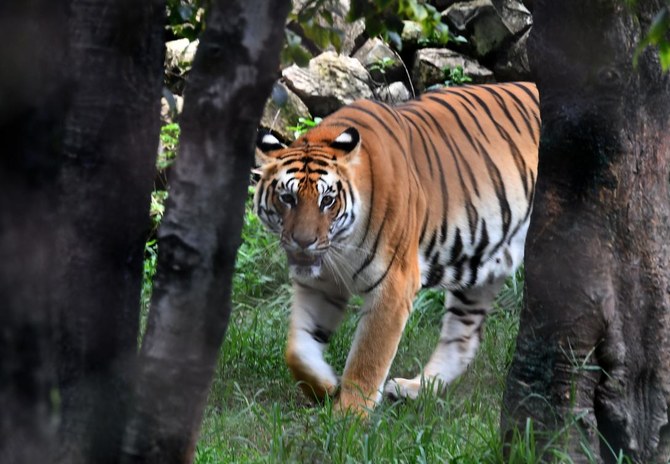
A Royal Bengal tiger roams in its enclosure at the central zoo in Lalitpur, on the outskirts of Katmandu, on Friday. (AFP)
Short Url
Updated 29 July 2022
Follow

Fifth endangered Bengal tiger born in Cuban zoo

  • The birth of all the cubs comes after trying for 20 years to breed the endangered felines
  • Sadly, the new cub is the sole survivor of a litter of four born two weeks ago, as his siblings suffered from severe neurological problems and perished

HAVANA: Another rare Bengal tiger cub was born at Cuba’s National Zoo in Havana, zookeepers said on Friday, just over a year after four of the striped and adorable baby beasts — among them a rare white tiger — graced the grounds.
The birth of all the cubs comes after trying for 20 years to breed the endangered felines.
All the cubs were born to Fiona and her mate, Garfield.
Sadly, the new cub is the sole survivor of a litter of four born two weeks ago, as his siblings suffered from severe neurological problems and perished.
Born underweight, the newcomer, who has yet to be named, is being cared for in the artificial breeding department of the zoo where he is reported to be “frisky.”
“The birth of the cub was a joy. It was so small and we have been feeding it milk and caring for it in other ways,” 21-year-old Maria Karla Gutierrez, one of its care givers, said as she cuddled the small cat.
Thousands of the Bengal tigers, known for their orange coats, once roamed the forests in Bangladesh, India and Nepal. But their numbers have plummeted to about 2,500, wildlife experts say. Poaching, deforestation and over-hunting have all taken their toll.
Three of the world’s nine tiger sub-species became extinct last century, and many scientists believe a fourth, the South China tiger, is already functionally extinct.
The National Zoo, a wildlife park, is a favorite attraction for Cubans, with 1,473 specimens of more than 120 species, including large animals such as elephants and rhinos.
“For the park, for the country and for the world it is a very beautiful thing since tigers are in danger of extinction,” zoological veterinarian Angel Cordero said.
“It makes us proud. We are very happy and we are going to continue reproducing the animals,” he said.


Thai coffee chains cut default sugar content in coffee and tea drinks in a new health push

Updated 11 February 2026
Follow

Thai coffee chains cut default sugar content in coffee and tea drinks in a new health push

  • The Health Department says Thais consume 21 teaspoons of sugar daily, far exceeding the World Health Organization’s recommended six teaspoons
  • Officials warn this increases obesity and diabetes risks. A survey found iced coffee and bubble tea contain high sugar levels

BANGKOK: For many Thais, a meal doesn’t feel complete without an iced coffee or tea so sugary it could pass for dessert. The government, concerned about the health consequences, wants them to dial it back.
Starting Wednesday, nine major coffee chains across the country have pledged to cut the default sugar content in some of their drinks by half in a government initiative aimed at tackling excessive sugar consumption.
According to the Health Department, Thais consume an average of 21 teaspoons of sugar per day, more than three times the World Health Organization’s recommended limit of six teaspoons. Health officials warn that such high intake increases the risk of obesity, diabetes and other diseases.
The initiative is the first significant step to change consumers’ sugar consumption behavior, said Amporn Benjaponpitak, the director general of the department.
Pakorn Tungkasereerak, the department’s deputy, said 2025 data show that about 45 percent of Thais aged 15 and older are obese, while 10 percent of the population has diabetes.
A survey by the Bureau of Nutrition found that a 22-ounce (650-milliliter) iced coffee contains an average of nine teaspoons of sugar, while a 10-ounce (300-milliliter) serving of bubble milk tea — an iced milk tea with tapioca pearls known as boba — can contain as much as 12 teaspoons.
Sirinya Kuiklang, an office worker, said she approves of the changes. She already orders her drinks at just 25 percent of the standard sugar level, but she is aware that many others consume too much sugar.
“It’s good for Thai people,” she said.
Another office worker, Porwares Tantikanpanit, said he has enjoyed his non-coffee beverages at their current sugar levels but is willing to adjust if shops reduce the sweetness.
However, putting the policy into practice may prove challenging. Officials have said each brand can apply the initiative as they see fit.
Some customers have expressed confusion in response to social media posts promoting the initiative, asking how to order drinks with the level of sweetness that they prefer. Several brands said that the reduction applies only to certain menu items.