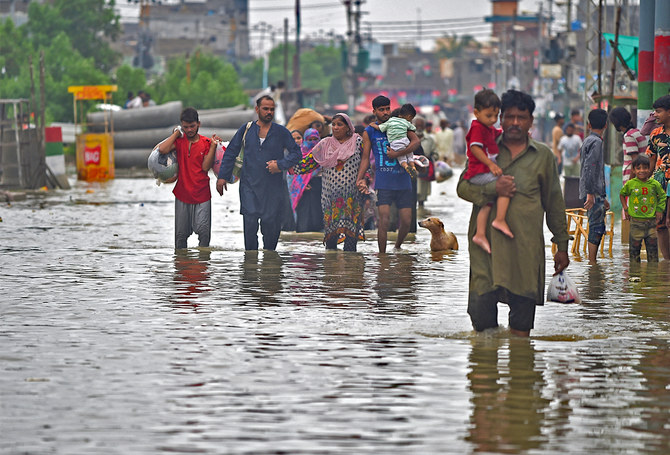

KARACHI: Muhammad Danish Khan left his house with his wife and children to attend a dinner hosted by his maternal aunt earlier this month when his motorbike skidded into a drain amid unusually heavy rainfall in the city, killing his wife and infant son.
“I didn’t know that rain was going to claim the lives of my family,” the 23-year-old carpenter told Arab News on Thursday. “I wish no one faces the tragedy I have gone through.”
Only a week after the incident, Karachi witnessed yet another cloudburst in which 15 people either drowned or died of electrocution.
According to statistics compiled by the National Disaster Management Authority (NDMA), 357 people have been killed in Pakistan and 408 injured since the beginning of the season in mid-June.
Over a hundred casualties have been reported in Balochistan alone, the country’s impoverished southwestern province, while 93 people, including 47 children, also lost their lives in three monsoon spells that lashed Sindh in July.
Speaking to Arab News, Dr. Sardar Sarfaraz, chief meteorologist in Karachi, said the downpours across the country in the ongoing month had been about 200 percent more than the average, with the southern parts of Pakistan bearing the brunt of the rainy season.
“Sindh saw some very intense rainfall events in July,” he added. “Karachi, Badin, Sukkur and Padidan [in Naushahro Feroze district] received the highest rainfall which broke all previous records.”
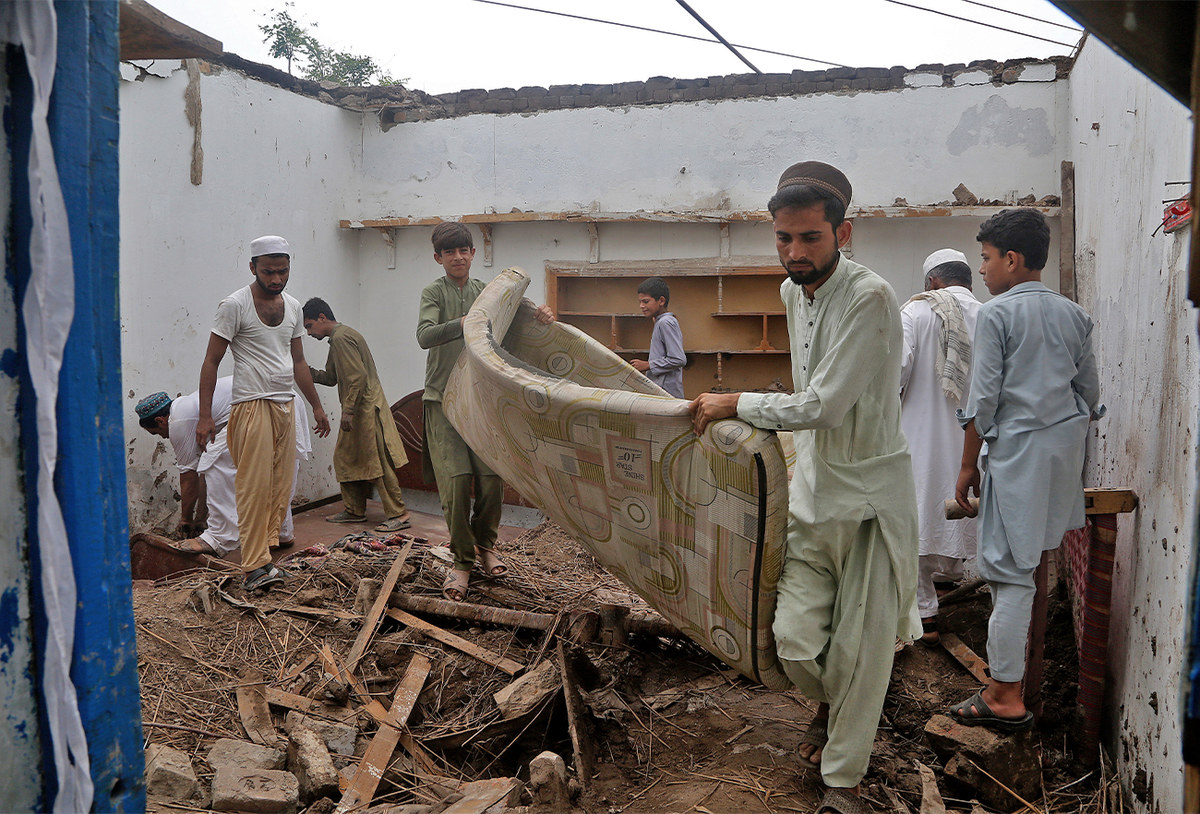
People salvage usable items from their house, after the roof collapsed due to heavy rains, in Peshawar, Pakistan, on July 28, 2022. (AP)
According to the World Bank, Pakistan is the fifth most climate vulnerable nation in the world. It is estimated to have lost nearly 10,000 lives to climate-related disasters between 1998 and 2018, said the Global Climate Risk Index, and suffered losses amounting to $4 billion from 152 extreme weather events during the same period.
Five years after about 2,000 people died of dehydration and heat stroke in the first heatwave of Karachi in June 2015, heavy rains killed 44 people and disrupted the lives of the city’s 15 million people due to urban flooding in August 2020.
The Sindh administration said it mobilized human resources and all necessary equipment in time to deal with the monsoon season this year.
“We ensured that all the main arteries of the city were clear and no major disruption happened,” Sindh Chief Minister Murad Ali Shah told Arab News in a written interview. “All of the government machinery worked round-the-clock and is still working to mitigate the after-effects of the record-breaking rain.”
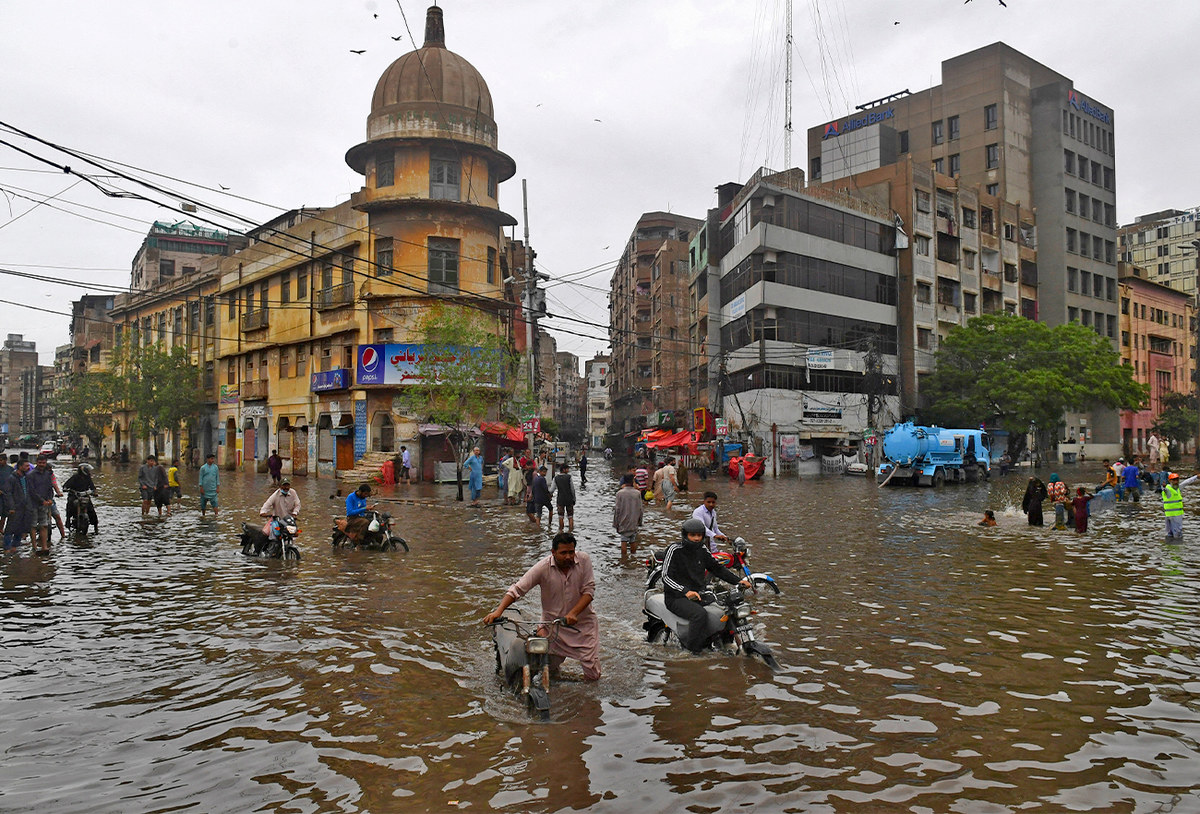
People wade across a flooded street after heavy monsoon rainfall in Karachi, Pakistan, on July 25, 2022. (AFP)
Mashail Malik, who teaches at Harvard and is currently writing a book about Karachi’s political landscape, said the perennial problem of the Pakistani port city with rain was partly traceable to the same factors behind the dismal provision of public services.
“Aside from these failures in governance, another reason heavy rainfall is so devastating is simply because so much of the population lives in informal settlements – a reality that is often unavoidable in major urban centers in much of the global south,” she told Arab News.
However, the chief minister said he was trying to address the problem without creating greater challenges for the impoverished communities.
“We are working to reconstruct and rehabilitate the dilapidated infrastructure of Karachi that has worsened due to ill-conceived planning, illegal constructions, widespread encroachments, and no proactive planning to transform this city into a more competitive and livable place,” he said.
“Even with all these challenges, we keep upgrading our preparedness and response systems to tackle the weather unpredictability and avert urban rain flooding,” he said. “Although we do not contribute significantly to the global emissions that pollute the environment, Pakistan is among the worst-affected countries due to climate change.”
He said his administration was trying to improve the green cover throughout the province, including Karachi, to improve the ecosystem.
Dr. Ghulam Rasul, a climate change expert and vice president of the Asia-Pacific region of the World Meteorological Organization, said climate change had made the monsoon highly erratic in terms of its onset, intensity and area of coverage.
“This year’s monsoon is among the special ones as its onset was 10 days earlier than its normal beginning in Pakistan,” he told Arab News. “It attained its peak in July which normally occurs in August and heavily penetrated monsoon shadow zones, including Balochistan and high mountains of Khyber Pakhtunkhwa and Gilgit-Baltistan, where it usually doesn’t not reach.”
“Due to global warming, the frequency of such intense monsoons will increase,” he added. “Climate change will also pose a challenge to policymakers regarding how best to manage heatwaves, droughts and floods which will be occurring simultaneously.”