In new music video, K-pop meets Pakistan’s best-known cultural export: Truck art

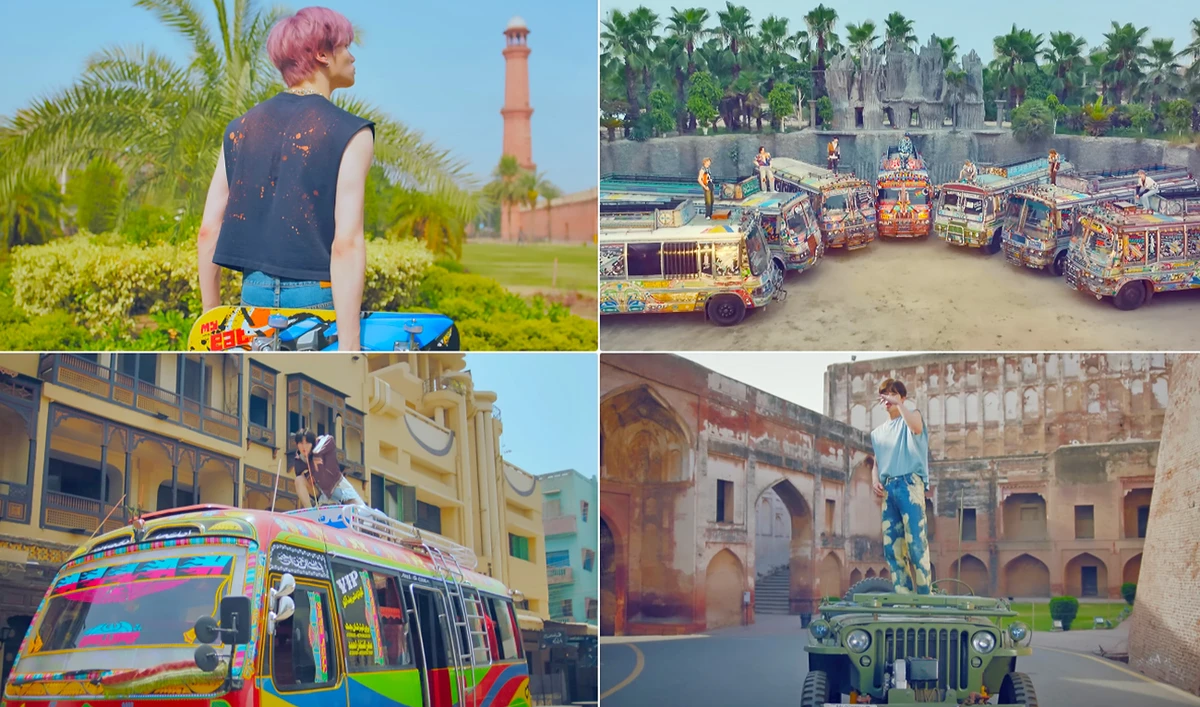
The collage shows screengrabs from the music video of Korean pop band Blitzers, shot partly in Lahore, Pakistan. (BLITZERS/YouTube)
Short Url
Updated 27 July 2022
Follow

In new music video, K-pop meets Pakistan’s best-known cultural export: Truck art

  • New video by Blitzers, “Hit the Bass,” features Lahore’s iconic Badshahi Mosque and Food Street as well as truck art
  • The popular form of art has inspired gallery exhibitions abroad and prompted stores in Western cities to sell miniatures

KARACHI: A new video by Korean pop band Blitzers, shot partly in Lahore’s ancient Walled City and featuring its iconic Badshahi Mosque and Food Street, as well as truck art, has shone the spotlight on the potential of Pakistani culture to go global, artists and cultural commentators have said.

Lorries in Pakistan are renowned for truck art — candy-colored murals depicting animals, celebrities, religious icons and sayings indigenous to the South Asian country. The popular form of art has inspired gallery exhibitions abroad and prompted stores in Western cities to sell miniatures, becoming one of Pakistan’s best-known cultural exports.

In recent years, UNESCO has used truck art, blended with indigenous themes, to promote girls’ education in Pakistan’s northwestern Khyber Pakhtunkhwa province. A popular campaign, the Truck Art Child Finder, uses the popular art medium to spread awareness on how to report and find missing children.

Pakistan’s best known truck artist, Haider Ali, has gone viral for using truck art to paint a mural of the slain African American, George Floyd, on a wall of his home, and for transposing the technique on sneakers.

Commenting on the K-pop video ‘Hit the Bass,’ which has garnered over 5 million views in less than a week and which features landmark Pakistani buildings and truck art, Ali told Arab News the country’s cultural exports had been making their way around the globe “for a long time.”

“It is great to see truck art becoming a part of other cultures and people in various parts of the world accepting it wholeheartedly,” he said. “People are spreading peace through different means.”
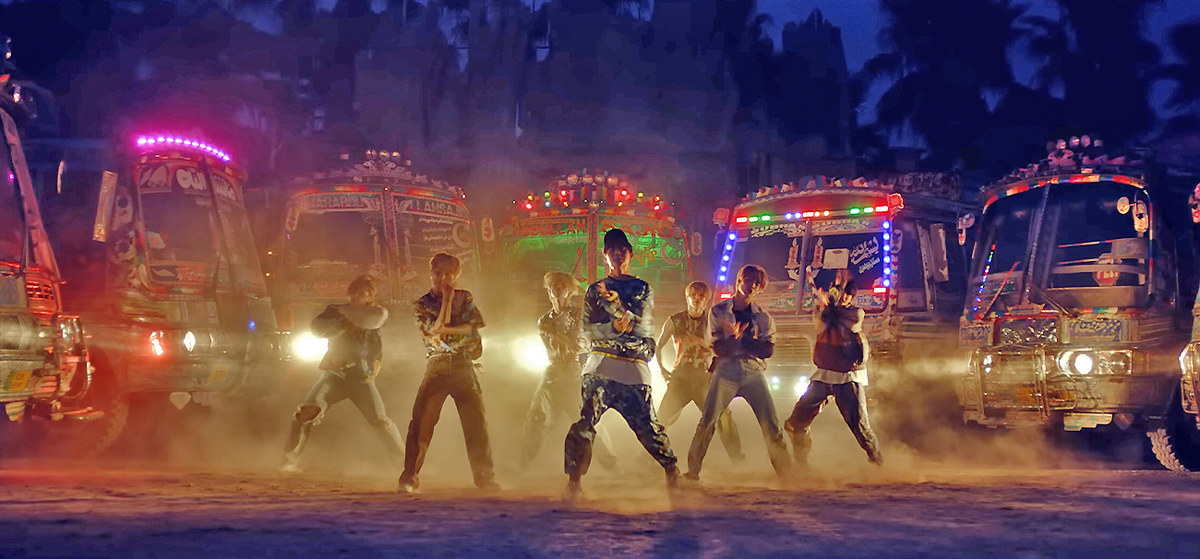


Band members of a Korean pop band, Blitzers, can be seen during the shoot of 'Hit The Bass' in Lahore, Pakistan. (Screengrab from the music video of 'Hit the Bass')

“Fan groups of Korean bands and performers are actually really active across the country,” culture writer and content creator Ahmer Naqvi said.

Indeed, the K-pop trend has caught on in Pakistan in recent years, with young Pakistanis organizing K-pop themed hangouts and parties and feverishly posting on social media accounts dedicated to the Korean boy bands.

“This video becomes very interesting because it’s the first moment that I know of where Korean creators are sort of interacting and engaging with Pakistani culture,” Naqvi said.
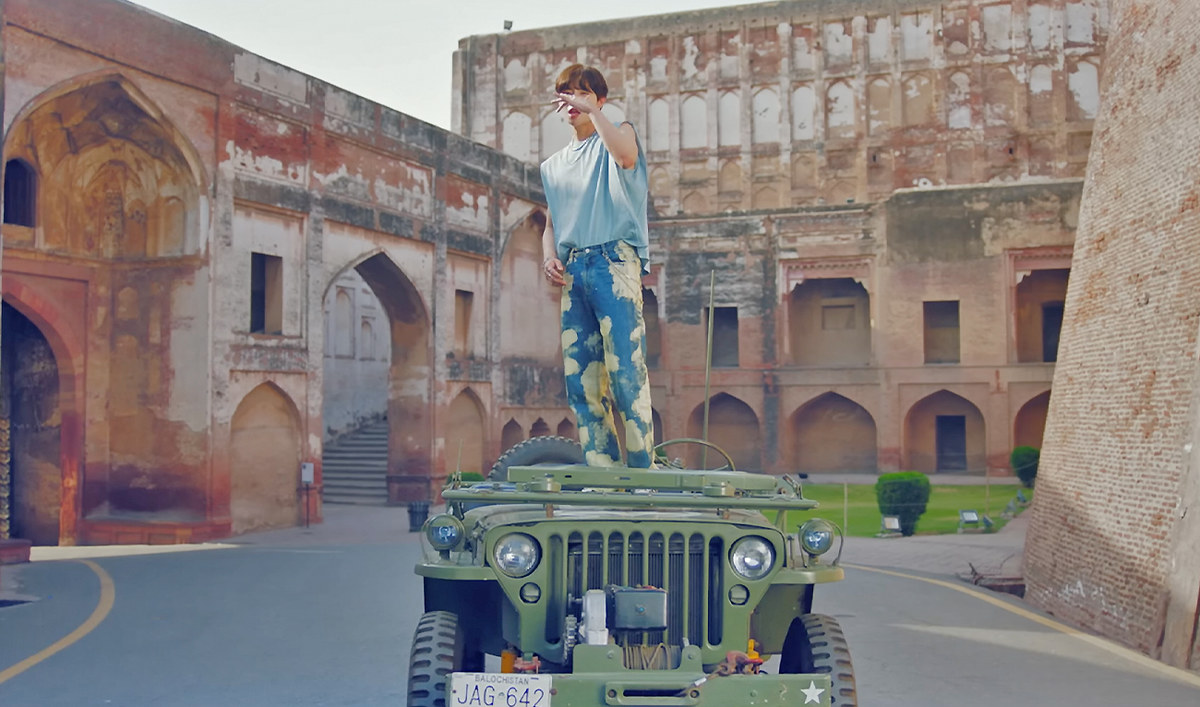


Band member of a Korean pop band, Blitzers, can be seen during the shoot of 'Hit The Bass' at Lahore Fort in Lahore, Pakistan. (Screengrab from the music video of 'Hit the Bass')

“And truck art has long been Pakistan’s most successful and digestible pop culture export ... We have seen it come to symbolize Pakistani culture in lots of places. It’s been used in all sorts of popular culture, particularly those that engage with a global audience … For truck art to enter that conversation is a significant thing.”

Journalist and social activist Afia Salam said people around the world were interested in truck art as it was “something exclusive to us.”

“Culturally, it sort of places Pakistan in a unique position,” he told Arab News. “This is something visual and has been creatively adapted to other merchandise such as khussas, coasters, travel bags, accessories, etc. I really don’t know of any other country that uses the kind of truck art we have. So, anything that brings something positive for Pakistan, I am all for it.”
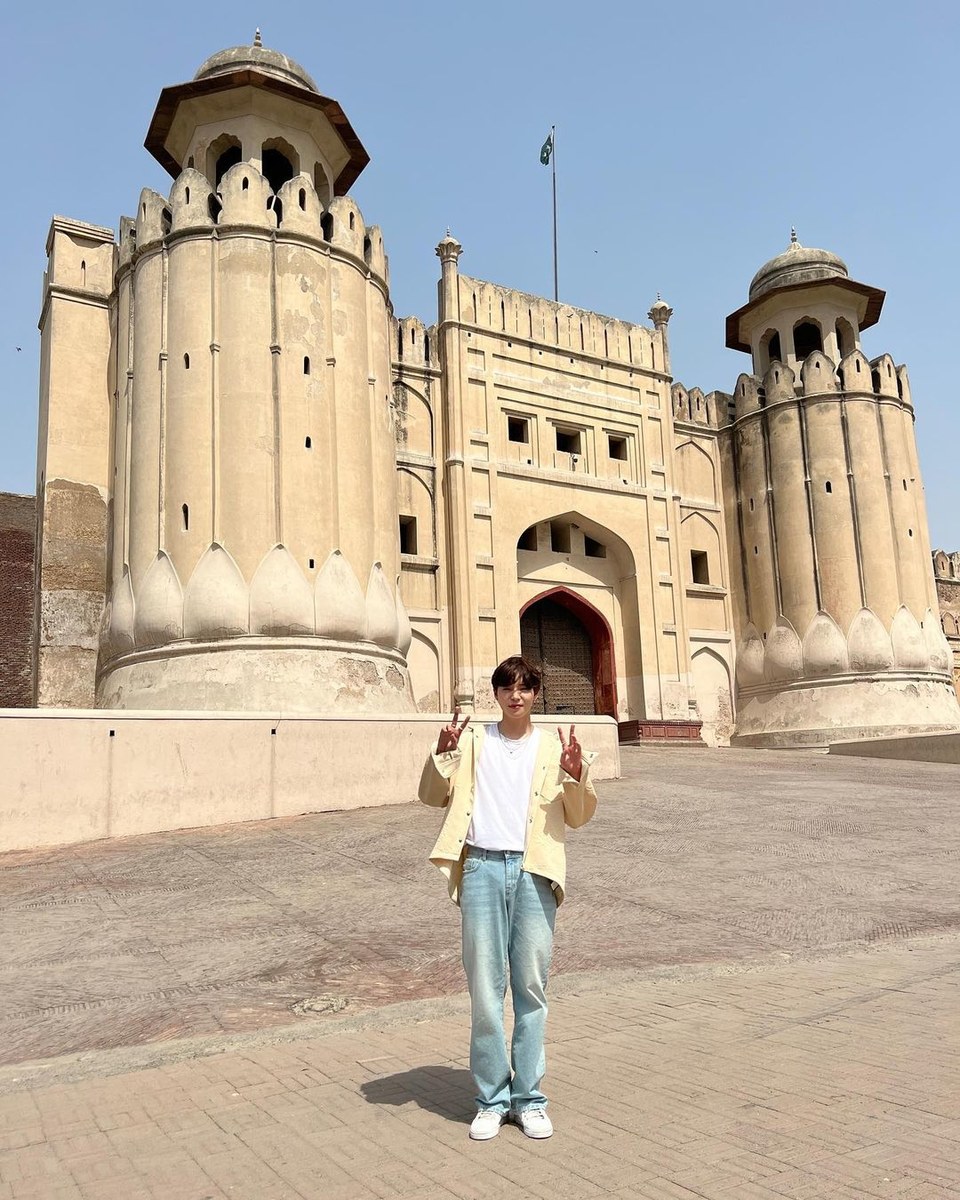


Jinhwa, one of the band members of a Korean pop band Blitzers, poses for a picture in Lahore, Pakistan, on June 15, 2022. (official_blitzers/instagram)

Blitzers arrived in Pakistan with the help of agriculturalist Muhammad Qamar Hayat Tiwana and his wife Anna Tim, a Korean-Pakistani who regularly represents Pakistan on South Korean TV.

Tim, her husband said, was the one to convince the band to shoot in Pakistan instead of neighboring India, where they were originally scheduled to go.

“On their way back, I presented them small gifts,” Tiwana said, “including our national dress, the shalwar kameez.”


IMF warns against policy slippage amid weak recovery as it clears $1.2 billion for Pakistan

Updated 11 December 2025
Follow

IMF warns against policy slippage amid weak recovery as it clears $1.2 billion for Pakistan

  • Pakistan rebuilt reserves, cut its deficit and slowed inflation sharply over the past one year
  • Fund says climate shocks, energy debt, stalled reforms threaten stability despite recent gains

ISLAMABAD: Pakistan’s economic recovery remains fragile despite a year of painful stabilization measures that helped pull the country back from the brink of default, the International Monetary Fund (IMF) warned on Thursday, after it approved a fresh $1.2 billion disbursement under its ongoing loan program.

The approval covers the second review of Pakistan’s Extended Fund Facility (EFF) and the first review of its climate-focused Resilience and Sustainability Facility (RSF), bringing total disbursements since last year to about $3.3 billion.

Pakistan entered the IMF program in September 2024 after years of weak revenues, soaring fiscal deficits, import controls, currency depletion and repeated climate shocks left the economy close to external default. A smaller stopgap arrangement earlier that year helped avert immediate default, but the current 37-month program was designed to restore macroeconomic stability through strict monetary tightening, currency adjustments, subsidy rationalization and aggressive revenue measures.

The IMF’s new review shows that Pakistan has delivered significant gains since then. Growth recovered to 3 percent last year after shrinking the year before. Inflation fell from over 23 percent to low single digits before rising again after this year’s floods. The current account posted its first surplus in 14 years, helped by stronger remittances and a sharp reduction in imports. And the government delivered a primary budget surplus of 1.3 percent of GDP, a key program requirement. Foreign exchange reserves, which had dropped dangerously low in 2023, rose from US$9.4 billion to US$14.5 billion by June.

“Pakistan’s reform implementation under the EFF arrangement has helped preserve macroeconomic stability in the face of several recent shocks,” IMF Deputy Managing Director Nigel Clarke said in a statement after the Board meeting.

But he warned that Islamabad must “maintain prudent policies” and accelerate reforms needed for private-sector-led and sustainable growth.

The Fund noted that the 2025 monsoon floods, affecting nearly seven million people, damaging housing, livestock and key crops, and displacing more than four million, have set back the recovery. The IMF now expects GDP growth in FY26 to be slightly lower and forecasts inflation to rise to 8–10 percent in the coming months as food prices adjust.

The review warns Pakistan against relaxing monetary or fiscal discipline prematurely. It urges the State Bank to keep policy “appropriately tight,” allow exchange-rate flexibility and improve communication. Islamabad must also continue raising revenues, broadening the tax base and protecting social spending, the Fund said.

Despite the progress, Pakistan’s structural weaknesses remain severe.

Power-sector circular debt stands at about $5.7 billion, and gas-sector arrears have climbed to $11.3 billion despite tariff adjustments. Reform of state-owned enterprises has slowed, including delays in privatizing loss-making electricity distributors and Pakistan International Airlines. Key governance and anti-corruption reforms have also been pushed back.

The IMF welcomed Pakistan’s expansion of its flagship Benazir Income Support Program, which raises cash transfers for low-income families and expands coverage, saying social protection is essential as climate shocks intensify. But it warned that high public debt, about 72 percent of GDP, thin external buffers and climate exposure leave the country vulnerable if reform momentum weakens.

The Fund said Pakistan’s challenge now is to convert short-term stabilization into sustained recovery after years of economic volatility, with its ability to maintain discipline, rather than the size of external financing alone, determining the durability of its gains.