




RIYADH: With some 56 percent of the world’s population now living in cities, urban sustainability and public well-being have become a growing concern for governments worldwide.
To address these challenges, Saudi Arabia is boldly experimenting with how urban spaces are designed with its revolutionary NEOM smart city and its flagship development — The Line.
On Monday, Saudi Arabia’s Crown Prince Mohammed bin Salman announced plans for The Line — one of several mega-projects now underway as part of the Kingdom’s Vision 2030 reform and economic diversification plan.
He said that the design would clarify the internal structure of the multi-layered city and address the problems of traditional flat horizontal cities, achieving harmony between urban development and the preservation of nature, according to the Saudi Press Agency.
Crown Prince Mohammed bin Salman launched the initial idea and vision of the city that redefines the concept of urban development, and what cities of the future should look like, in January 2021.
During Monday’s announcement, the crown prince said that The Line would achieve “ideal living” and address the urgent challenges facing humanity.
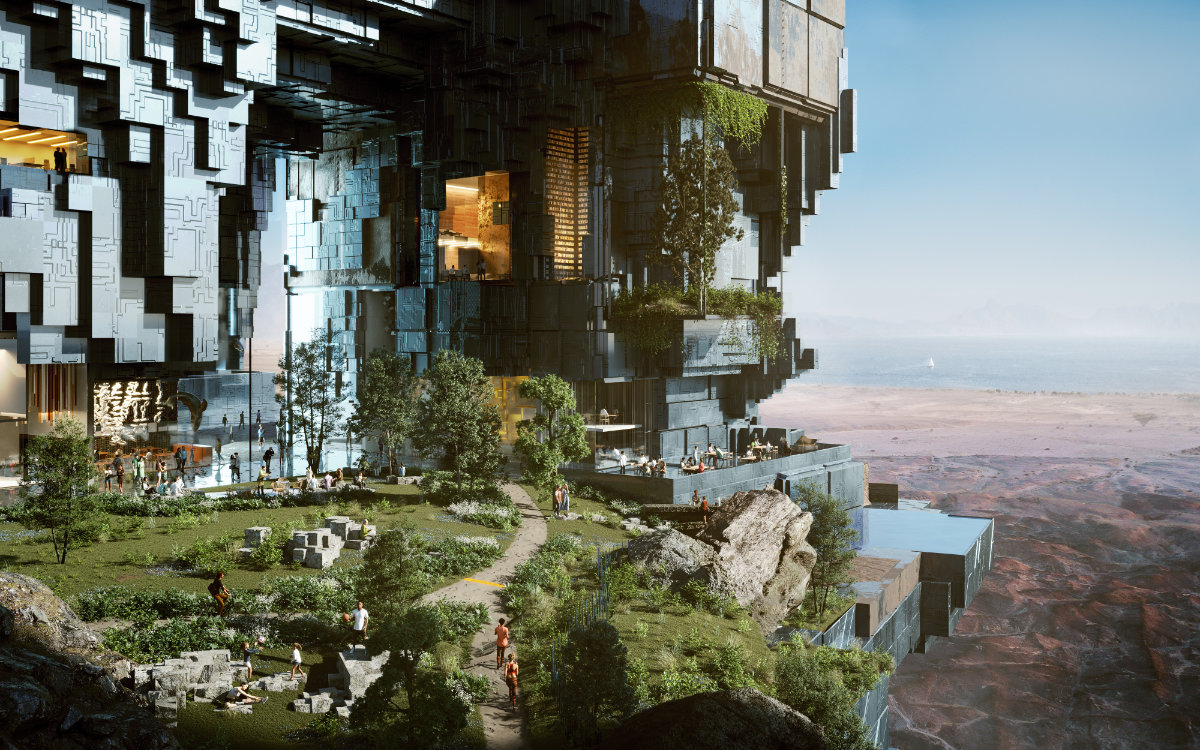
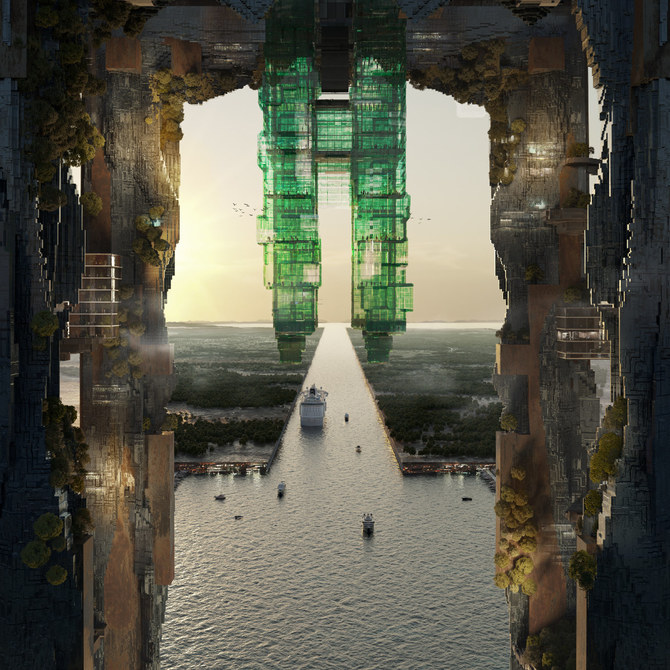
The Line designs embody how urban communities might look in the future in an environment free of roads, cars and emissions. (Supplied)
“NEOM is one of the most important projects of the Saudi Vision 2030 and The Line is an affirmation of our firm commitment to presenting a project to the whole world. NEOM is a place for those who dream of a better tomorrow,” he said.
The designs of The Line embody how urban communities will live in the future in an environment free from roads, cars and emissions, he added.
The crown prince said that the project, which offers a new approach to urban design, would run on 100 percent renewable energy and prioritize people’s health.
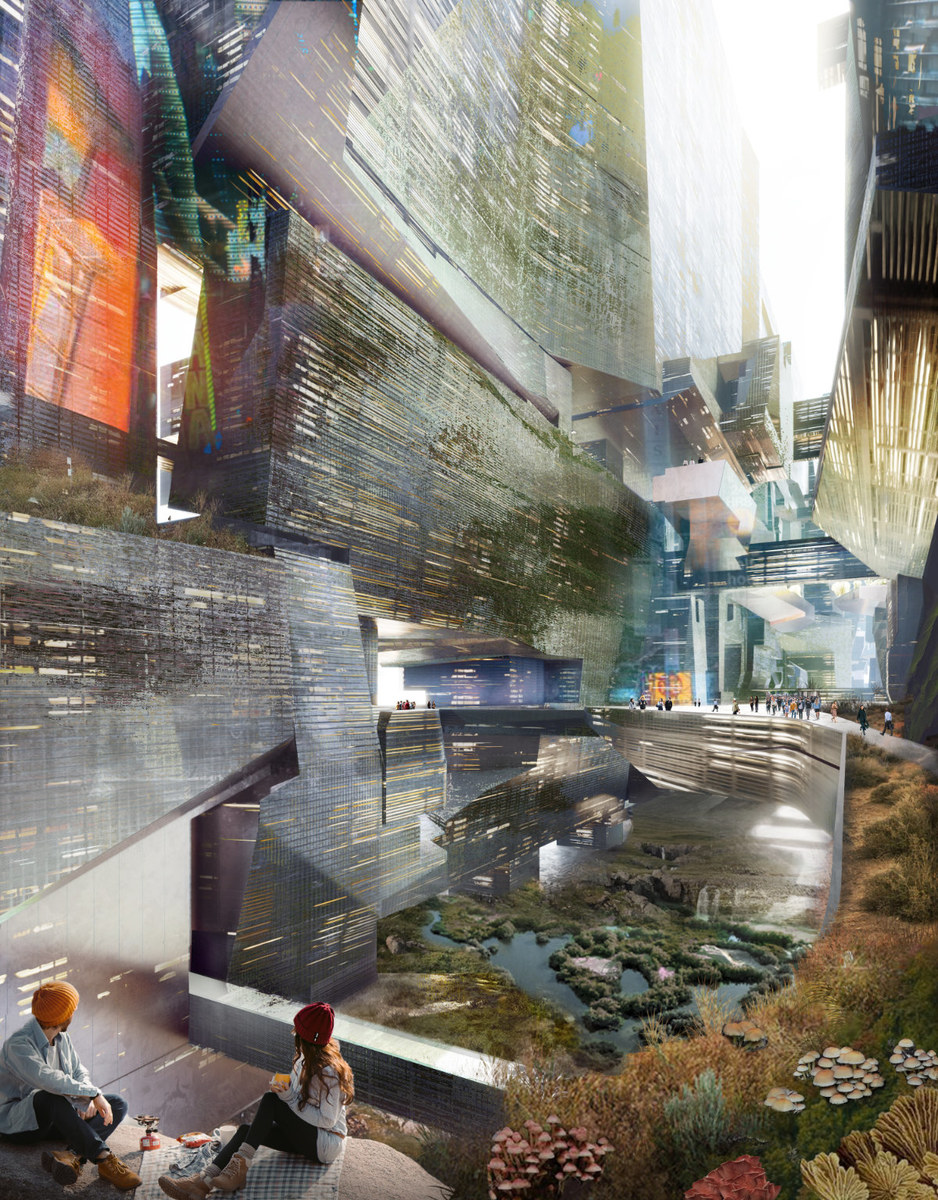
Different from tall buildings, the concept layers public parks and pedestrian areas, schools, homes and places for work. (Supplied)
“The idea of layering city functions vertically and giving people the possibility of moving seamlessly in three dimensions to access them is a concept referred to as Zero Gravity Urbanism,” he said.
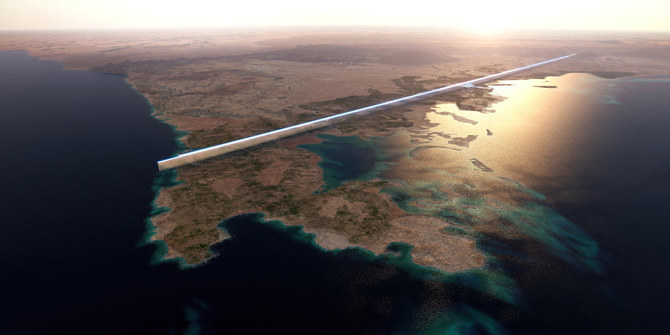
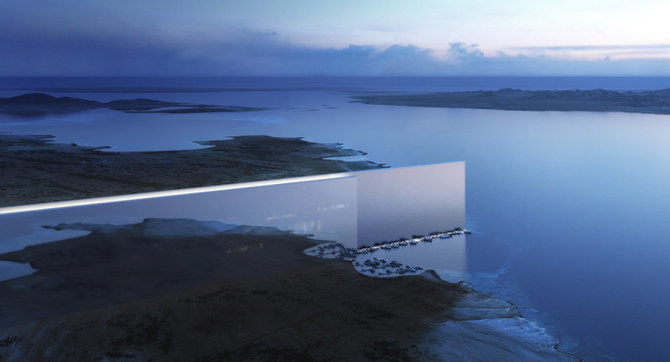
According to the design plan revealed on Monday, The Line will have an outer mirror facade that will provide the structure its unique character and allow even its small footprint to blend with nature, while its interior will be built to create “extraordinary experiences and magical moments,” the crown prince added.
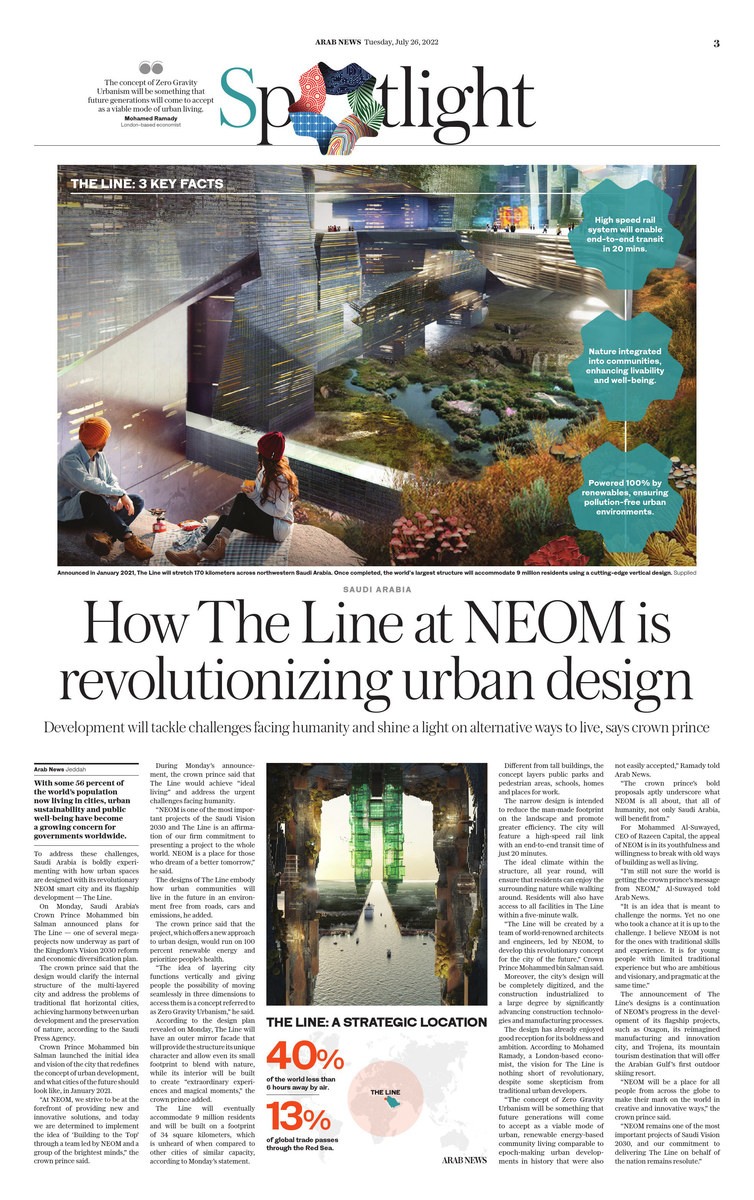
The Line will eventually accommodate 9 million residents and will be built on a footprint of 34 square kilometers, which is unheard of when compared to other cities of similar capacity, according to Monday’s statement.
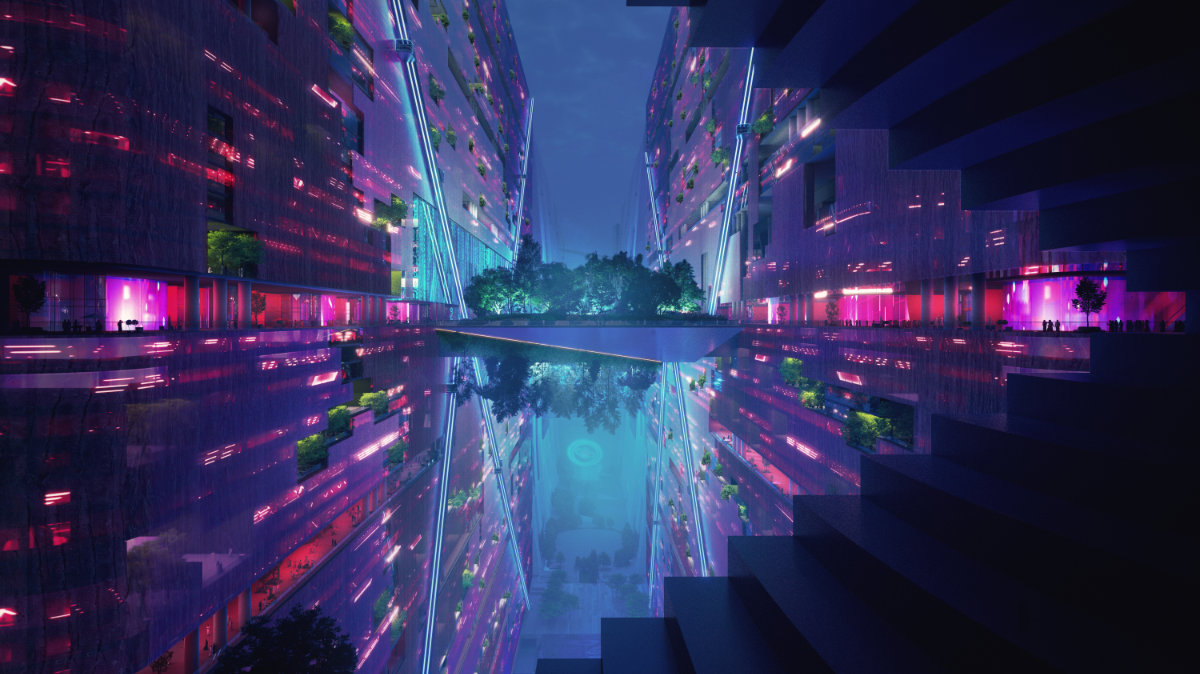
The designs of The Line embody how urban communities will live in the future in an environment free from roads, cars and emissions. (Supplied)
Different from tall buildings, the concept layers public parks and pedestrian areas, schools, homes and places for work.
The narrow design is intended to reduce the man-made footprint on the landscape and promote greater efficiency. The city will feature a high-speed rail link with an end-to-end transit time of just 20 minutes.
The ideal climate within the structure, all year round, will ensure that residents can enjoy the surrounding nature while walking around. Residents will also have access to all facilities in The Line within a five-minute walk.
“The Line will be created by a team of world-renowned architects and engineers, led by NEOM, to develop this revolutionary concept for the city of the future,” Crown Prince Mohammed bin Salman said.
Furthermore, the city’s design will be completely digitized, and the construction industrialized to a large degree by significantly advancing construction technologies and manufacturing processes.
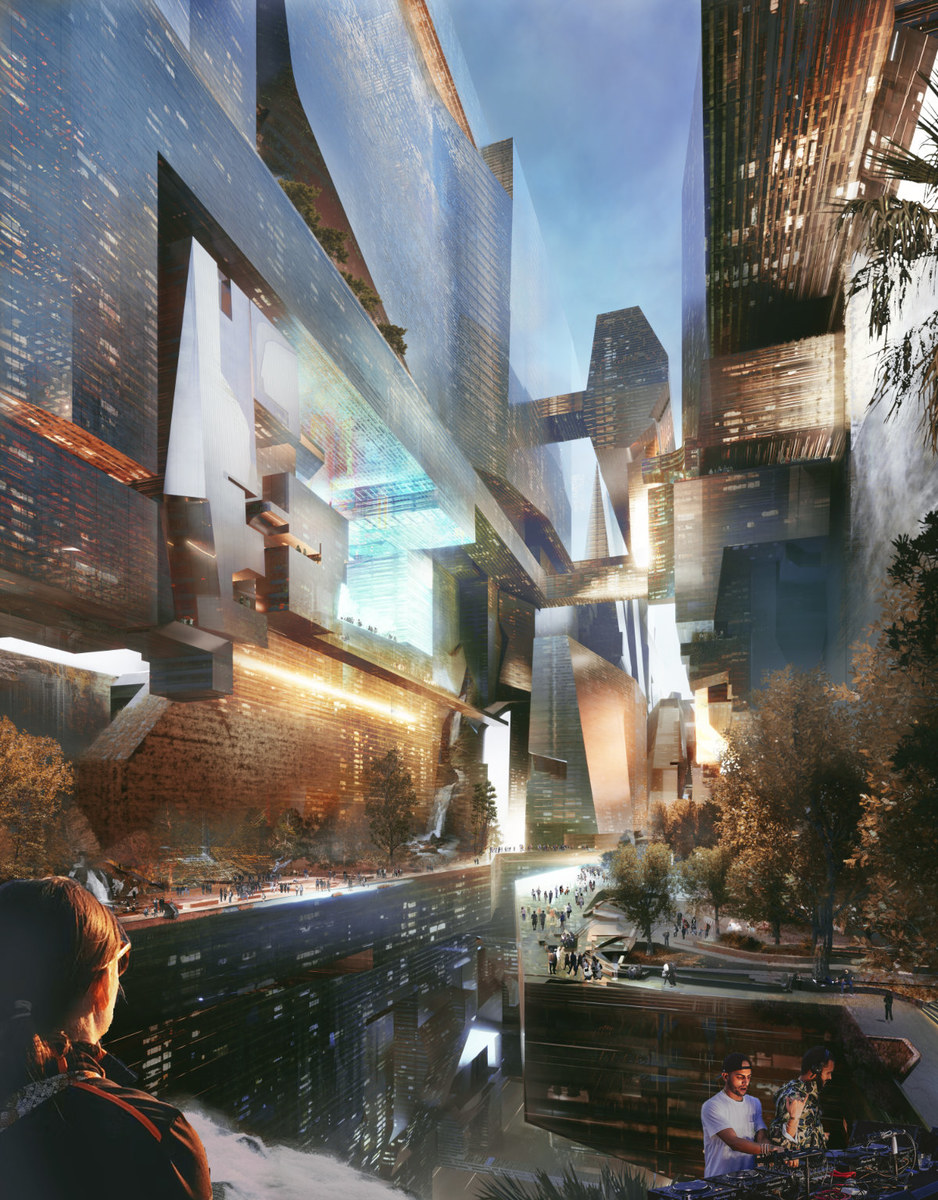
The ideal climate within the structure, all year round, will ensure that residents can enjoy the surrounding nature while walking around. (Supplied)
The design has already enjoyed good reception for its boldness and ambition. According to Mohamed Ramady, a London-based economist, the vision for The Line is nothing short of revolutionary, despite some skepticism from traditional urban developers.
“The concept of Zero Gravity Urbanism will be something that future generations will come to accept as a viable mode of urban, renewable energy-based community living comparable to epoch-making urban developments in history that were also not easily accepted,” Ramady told Arab News.
“The crown prince’s bold proposals aptly underscores what NEOM is all about, that all of humanity, not only Saudi Arabia, will benefit from.”
For Mohammed Al-Suwayed, CEO of Razeen Capital, the appeal of NEOM is in its youthfulness and willingness to break with old ways of building as well as living.
“I’m still not sure the world is getting the crown prince’s message from NEOM,” Al-Suwayed told Arab News.
“It is an idea that is meant to challenge the norms. I believe NEOM is not for the ones with traditional skills and experience. It is for young people with limited traditional experience but who are ambitious and visionary, and pragmatic at the same time.”
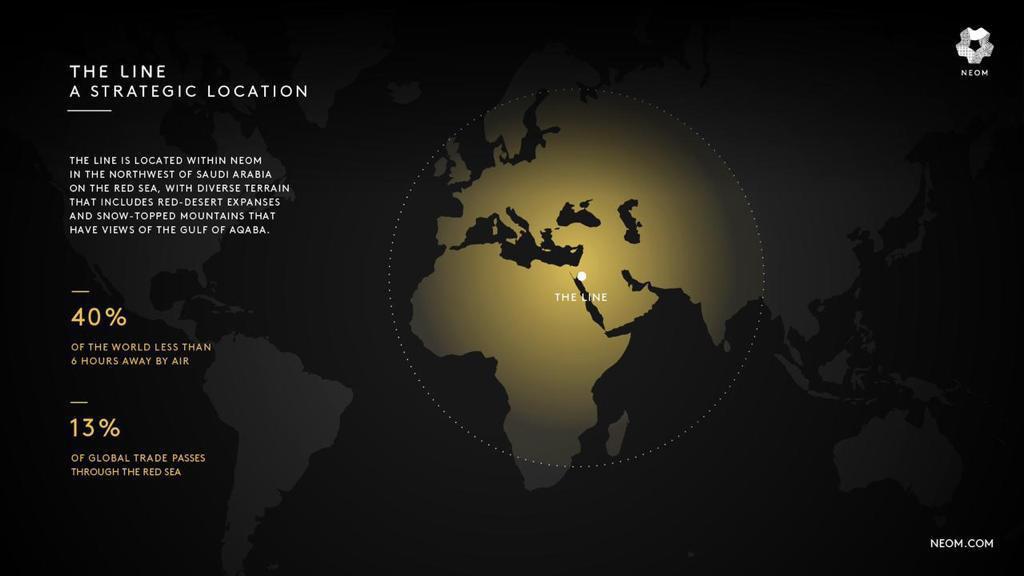
Situated in northwest Saudi Arabia on the Red Sea, spanning an area of around 26,500 square kilometers, and made up of 41 coastal islands, NEOM — which means “new future” — is billed as a living laboratory for entrepreneurship, new technologies, new models for livability, and environmental conservation.
With backing from the Saudi Public Investment Fund, as well as local and international investors, planners say the $500 billion NEOM project will include hyperconnected, cognitive towns and cities, ports and enterprise zones, research centers, sports and entertainment venues and tourist destinations.
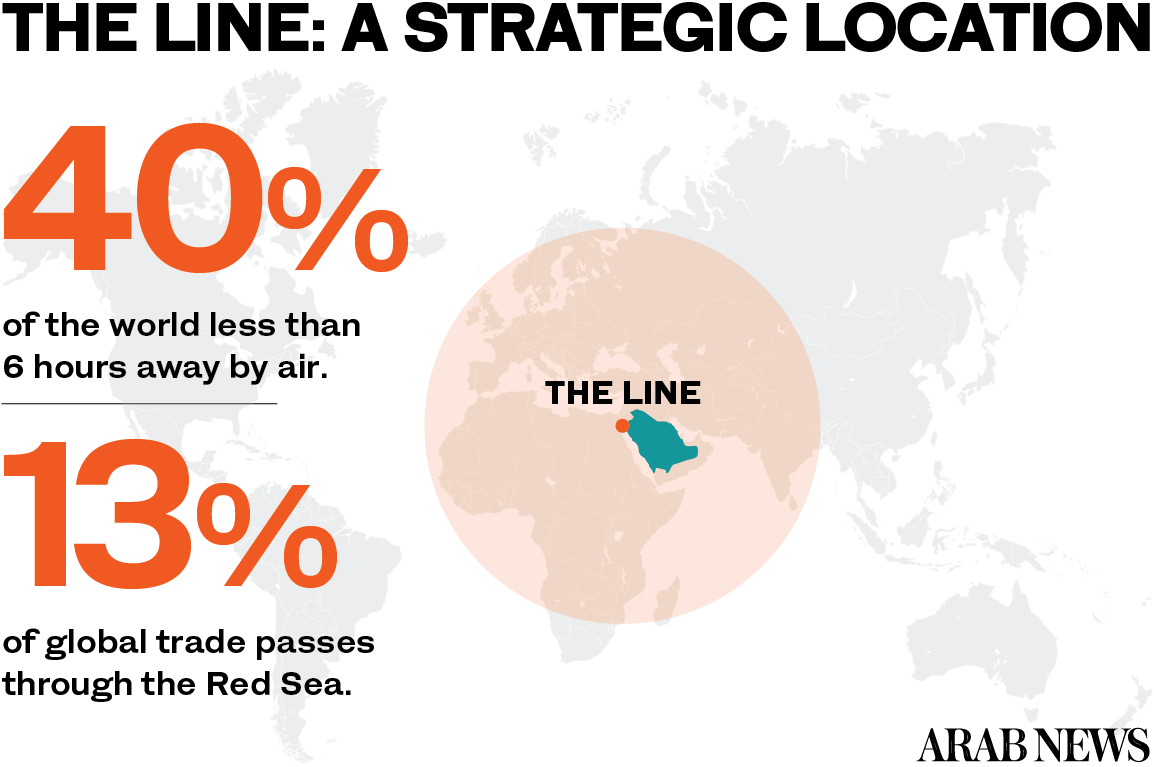
Its location means it is ideally situated to attract global investment by taking advantage of existing commercial routes. Around 13 percent of the world’s trade passes through the Red Sea, and some 40 percent of the world is less than six hours away by air.
The unique geographical location of NEOM ensures a temperate climate, roughly 10 degrees Celsius cooler on average than the rest of the GCC, cradled in a mountainous region that is home to some of the Kingdom’s most diverse terrain.
With sustainability at the core of the project, some 95 percent of NEOM’s land is conserved for environmental protection. All energy in NEOM will be 100 percent renewable — from solar, wind and hydrogen-based power generation — ensuring clean and pollution-free urban environments.

Communities will be built around people, not cars, with raised walkways connecting the site. Roads and streets will be replaced by piazzas and walkable boulevards filled with parks and green spaces. Communities empowered by artificial intelligence will learn and predict ways to make life easier to save time for residents and businesses.
The Line itself will connect four distinctive ecologies: coast, desert, mountains, and upper valley. Nature will be integrated into the heart of the communities, enhancing livability and well-being. It will also be supported by agricultural areas, supporting locally grown and sustainable food production.
Crown Prince Mohammed bin Salman launched the initial idea and vision with a view to redefine the concept of urban development and what cities of the future should look like.
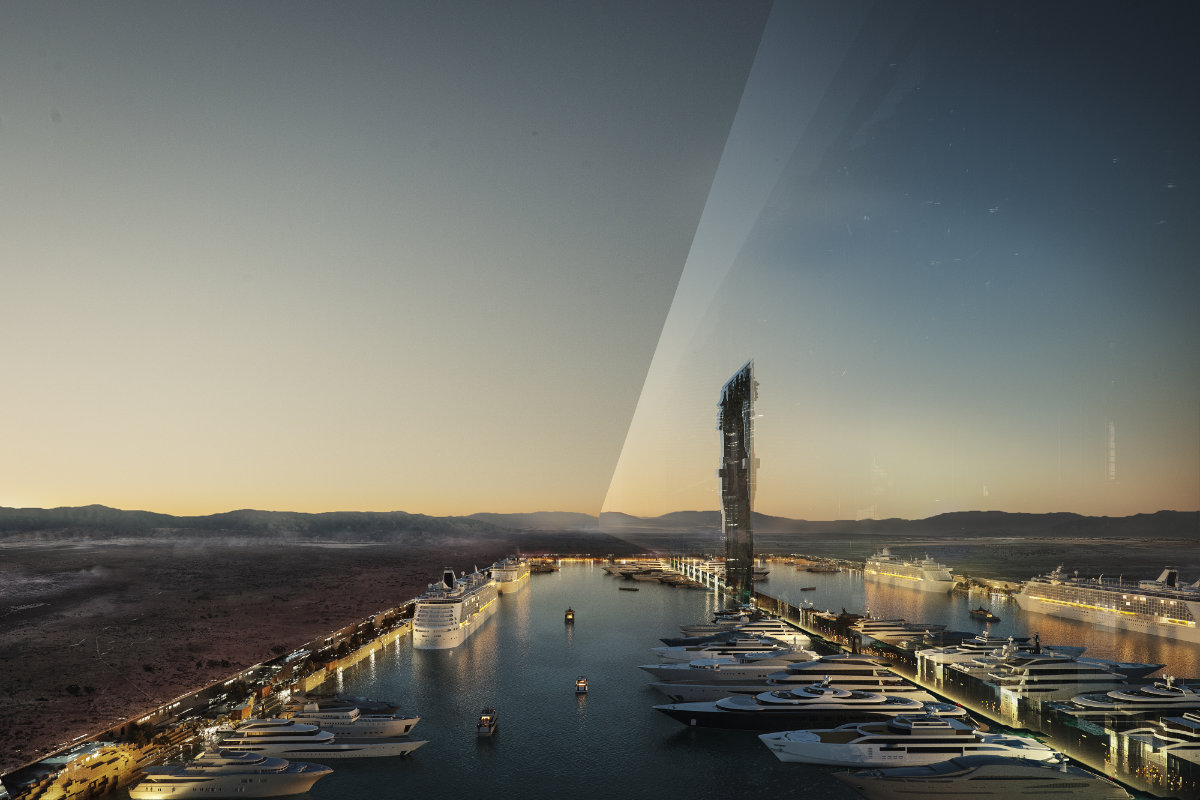
The ideal climate within the structure, all year round, will ensure that residents can enjoy the surrounding nature while walking around. (Supplied)
“At The Line’s launch last year, we committed to a civilizational revolution that puts humans first based on a radical change in urban planning,” he said on Monday.
“The designs revealed today for the city’s vertically layered communities will challenge the traditional flat, horizontal cities and create a model for nature preservation, and enhanced human livability.
“The Line will tackle the challenges facing humanity in urban life today and will shine a light on alternative ways to live.”
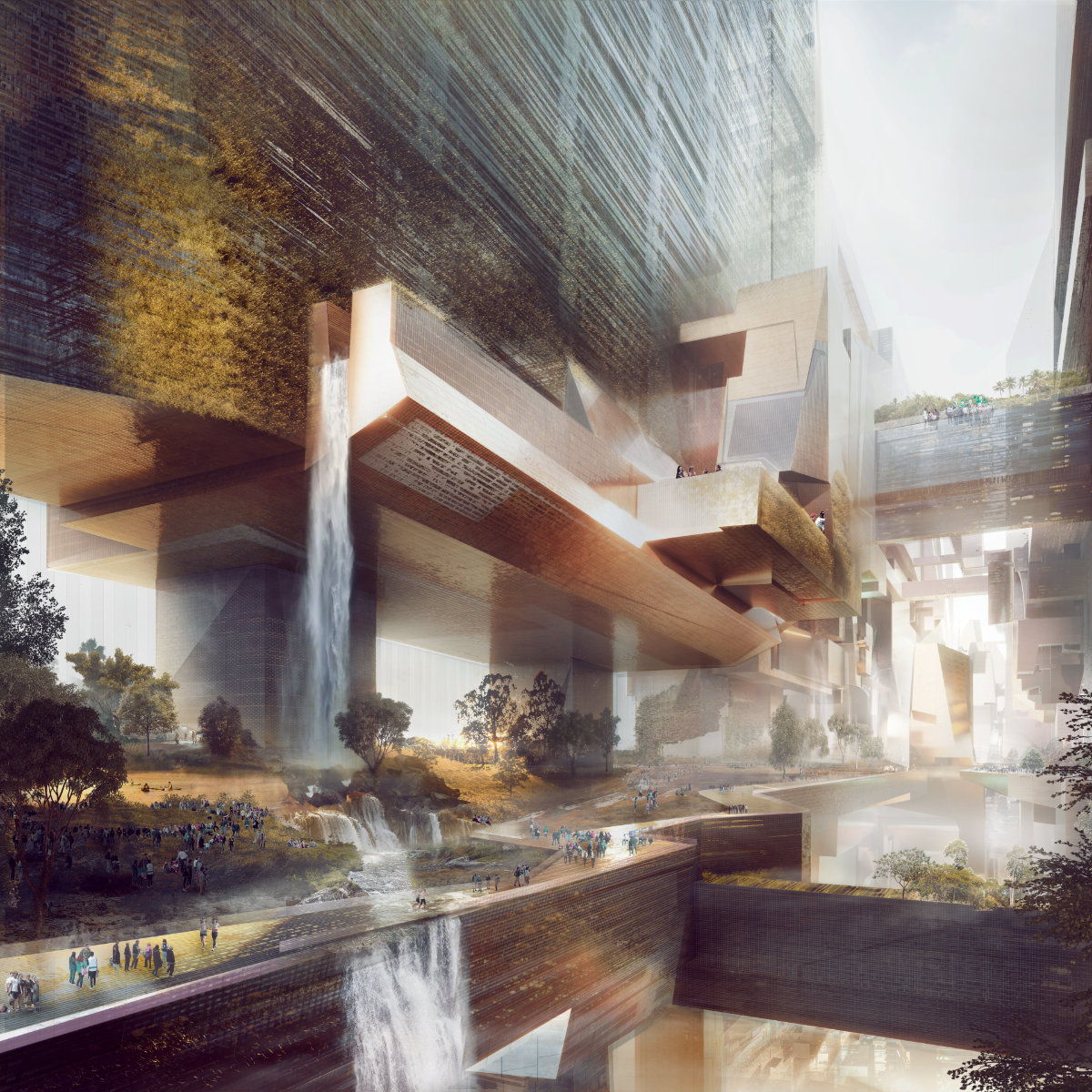
The ideal climate within the structure, all year round, will ensure that residents can enjoy the surrounding nature while walking around. (Supplied)
The crown prince added: “We cannot ignore the livability and environmental crises facing our world’s cities, and NEOM is at the forefront of delivering new and imaginative solutions to address these issues. NEOM is leading a team of the brightest minds in architecture, engineering and construction to make the idea of building upward a reality.”
The announcement of The Line’s designs is a continuation of NEOM’s progress in the development of its flagship projects, such as Oxagon, its reimagined manufacturing and innovation city, and Trojena, its mountain tourism destination that will offer the Arabian Gulf’s first outdoor skiing resort.
Covering an area of roughly 48 square kilometers, Oxagon will feature the world’s largest floating platform and will be powered using 100 percent clean energy.

keywords


