UN chief to visit Turkey as Ukraine grain export deal looms

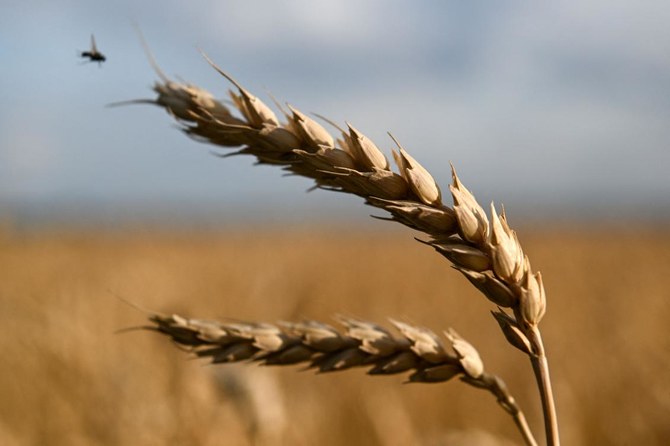
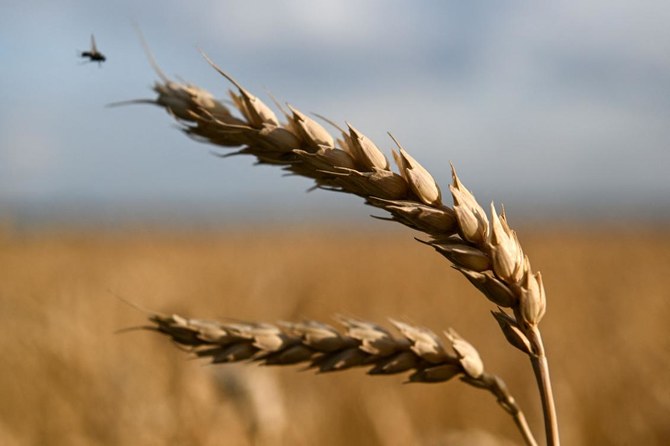
A view of a wheat field outside the village of Stefanidovka in the Voronezh region on Wednesday. (AFP)
Short Url
Updated 21 July 2022
Follow

UN chief to visit Turkey as Ukraine grain export deal looms

  • "The situation remains a little bit fluid," deputy U.N. spokesman Farhan Haq told reporters
  • Turkish Foreign Minister Mevlut Cavusoglu said on Thursday that he was hopeful about reaching a deal

UNITED NATIONS: UN Secretary-General Antonio Guterres will travel to Istanbul on Thursday, a UN spokesperson said as United Nations and Turkish officials seek to get a deal with Russia and Ukraine in writing to resume Ukraine’s Black Sea grain exports.
“The situation remains a little bit fluid, so I can’t really say when something will be signed,” deputy UN spokesman Farhan Haq told reporters in New York. “We’re not quite there yet.”
Turkish Foreign Minister Mevlut Cavusoglu said on Thursday that he was hopeful about reaching a deal and that talks were going well. Ankara said a general agreement was reached on a UN-led plan during talks in Istanbul last week and that it wants to put this into writing this week.
Before last week’s talks, diplomats said details of the plan included Ukrainian vessels guiding grain ships in and out through mined port waters; Russia agreeing to a truce while shipments move; and Turkey — supported by the United Nations — inspecting ships to allay Russian fears of weapons smuggling.
The United Nations and Turkey have been working for two months to broker what UN Secretary-General Antonio Guterres called a “package” deal — to resume Ukraine’s Black Sea grain exports and facilitate Russian grain and fertilizer shipments.
“The talks should be finalized in the course of this week. We await news at the end of this week,” Ukraine’s Deputy Agriculture Minister Taras Vysotskiy said on Thursday, adding that Ukraine could potentially quickly restart exports.
“The majority of the infrastructure of ports of wider Odesa — there are three of them — remains, so it is a question of several weeks in the event there are proper security guarantees,” he told Ukranian television.
Russia and Ukraine are both major global wheat suppliers, but Moscow’s Feb. 24 invasion of its neighbor has sent food prices soaring and stoked an international food crisis. The war has stalled Kyiv’s exports, leaving dozens of ships stranded and some 20 million tons of grain stuck in silos at Odesa port.
Moscow has denied responsibility for worsening the food crisis, blaming instead a chilling effect from Western sanctions for slowing its own food and fertilizer exports and Ukraine for mining its Black Sea ports.
A day after the Istanbul talks last week, the United States sought to facilitate Russian food and fertilizer exports by reassuring banks, shipping and insurance companies that such transactions would not breach Washington’s sanctions on Moscow over its invasion of Ukraine.


US allows oil majors to broadly operate in Venezuela, new energy investments

Updated 3 sec ago
Follow

US allows oil majors to broadly operate in Venezuela, new energy investments

  • Treasury Department issues general license allowing Chevron, BP, Eni, Shell and Repsol to operate oil and gas operations in Venezuela
  • Move is the most significant relaxation of sanctions on Venezuela since US forces captured and removed President Nicolas Maduro
WASHINGTON: The US ​eased sanctions on Venezuela’s energy sector on Friday, issuing two general licenses that allow global energy companies to operate oil and gas projects in the OPEC member and for other companies to negotiate contracts to bring in fresh investments. The move was the most significant relaxation of sanctions on Venezuela since US forces captured and removed President Nicolas Maduro last month.
The Treasury Department’s Office of Foreign Assets Control issued a general license allowing Chevron, BP, Eni, Shell and Repsol to operate oil and gas operations in Venezuela. Those companies still have offices in the country and stakes in projects, and are among the main partners of state-run ‌company PDVSA.
The authorization ‌for the oil majors’ operations requires payments for royalties and Venezuelan ​taxes ‌to ⁠go through ​the US-controlled ⁠Foreign Government Deposit Fund.
The other license allows companies around the world to enter contracts with PDVSA for new investments in Venezuelan oil and gas. The contracts are contingent on separate permits from OFAC.
The authorization does not allow transactions with companies in Russia, Iran, or China or entities owned or controlled by joint ventures with people in those countries.
The licenses “invite American and other aligned companies to play a constructive role in supporting economic recovery and responsible investment, ” the US State Department said in a release. Additional authorizations may be issued “as necessary,” it said.
A spokesperson for Chevron, ⁠the only US oil firm currently operating in Venezuela, said the company welcomed ‌the new licenses.
“The new General Licenses, coupled with recent changes ‌in Venezuela’s Hydrocarbons Law, are important steps toward enabling the further development ​of Venezuela’s resources for its people and for advancing ‌regional energy security,” the spokesperson said in a statement.
Eni said it is assessing the opportunities in ‌Venezuela that the authorization opens up.

Oil law reform

The US licenses follow a sweeping reform of Venezuela’s main oil law approved last month, which grants autonomy for foreign oil and gas producers to operate, export and cash sale proceeds under existing joint ventures with PDVSA or through a new production-sharing contract model.
The US has had sanctions on Venezuela since ‌2019 when President Donald Trump imposed them during his first administration. Trump is now seeking $100 billion in investments by energy companies in Venezuela’s oil and gas sector. ⁠US Energy Secretary Chris Wright ⁠said on Thursday, during his second day of a trip to Venezuela, that oil sales from the country since Maduro’s capture have hit $1 billion and would hit another $5 billion in months.
Wright said the US will control the proceeds from the sales until Venezuela stands up a “representative government.” Since last month, the Treasury issued several other general licenses to facilitate oil exports, storage, imports and sales from Venezuela. It also authorized the provision of US goods, technology, software or services for the exploration, development or production of oil and gas in Venezuela.
The Venezuelan government expropriated assets of Exxon Mobil and ConocoPhillips in 2007 under then-President Hugo Chavez. The Trump administration is trying to get those companies to invest in Venezuela as well. At a meeting at the White House with Trump last month, Exxon Mobil CEO Darren Woods said Venezuela was “uninvestable” at ​the moment.
Wright said on Thursday that Exxon, ​which no longer has an office in Venezuela, is in talks with the government there and gathering data about the oil sector. Exxon did not immediately comment.