

'Humanity over rivalry' says Indian woman as she re-visits Pakistan home after 75 years 

Reena Varma, 90-year-old Indian citizen born in Pakistan, gestures as she speaks with the members of the media outside her ancestral home while visiting after 75 years, in Rawalpindi, Pakistan July 20, 2022. (REUTERS)
Short Url
Updated 21 July 2022
Follow

'Humanity over rivalry' says Indian woman as she re-visits Pakistan home after 75 years 

  • Reena Varma’s family fled to the Western Indian city of Pune shortly before partition 
  • She urged both countries to ease their visa regimes to enable people of both countries to meet more frequently

RAWALPINDI: As 90-year-old Indian woman Reena Varma stands on the balcony of the house in Pakistan where she was born, visiting on Wednesday for the first in 75 years, she recalls her playful childhood.

“I would stand here and sing,” said Varma, as her eyes filled with tears. “These are tears of joy.”
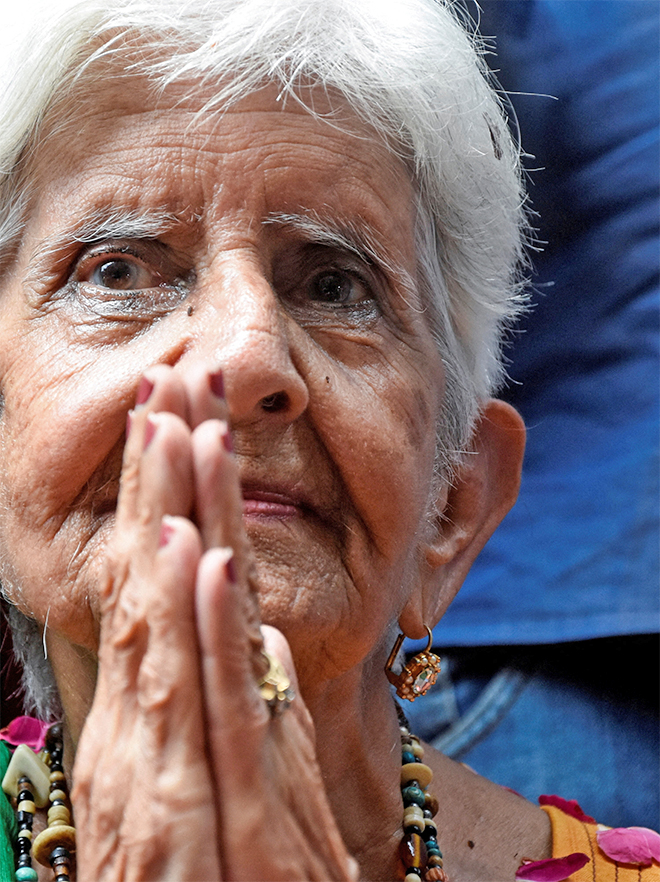


Reena Varma, 90-year-old Indian citizen born in Pakistan, holds her palms together as she speaks to the members of the media while visiting her ancestral home after 75 years, in Rawalpindi, Pakistan July 20, 2022. (REUTERS)

Varma has vivid memories of the day she and her family left the small, three-story home tucked away in the narrow alleys of the garrison city of Rawalpindi, where residents showered her with rose petals on her arrival on Wednesday.

She also danced with some of the residents who beat drums as she entered the street, where she said she used to play from dawn to dusk.

Her family were among the millions whose lives were thrown into turmoil by the partition of colonial India into two states, mainly Hindu India and mostly Muslim Pakistan, when British rule ended in 1947.

One of the biggest mass migrations in history was marred by violence and bloodshed as about 15 million Muslims, Hindus and Sikhs swapped countries in a political upheaval that cost more than a million lives.

“I’m very happy to see that the house stood intact,” she said after spending several hours inside recalling memories of a childhood spent with her parents and five siblings.
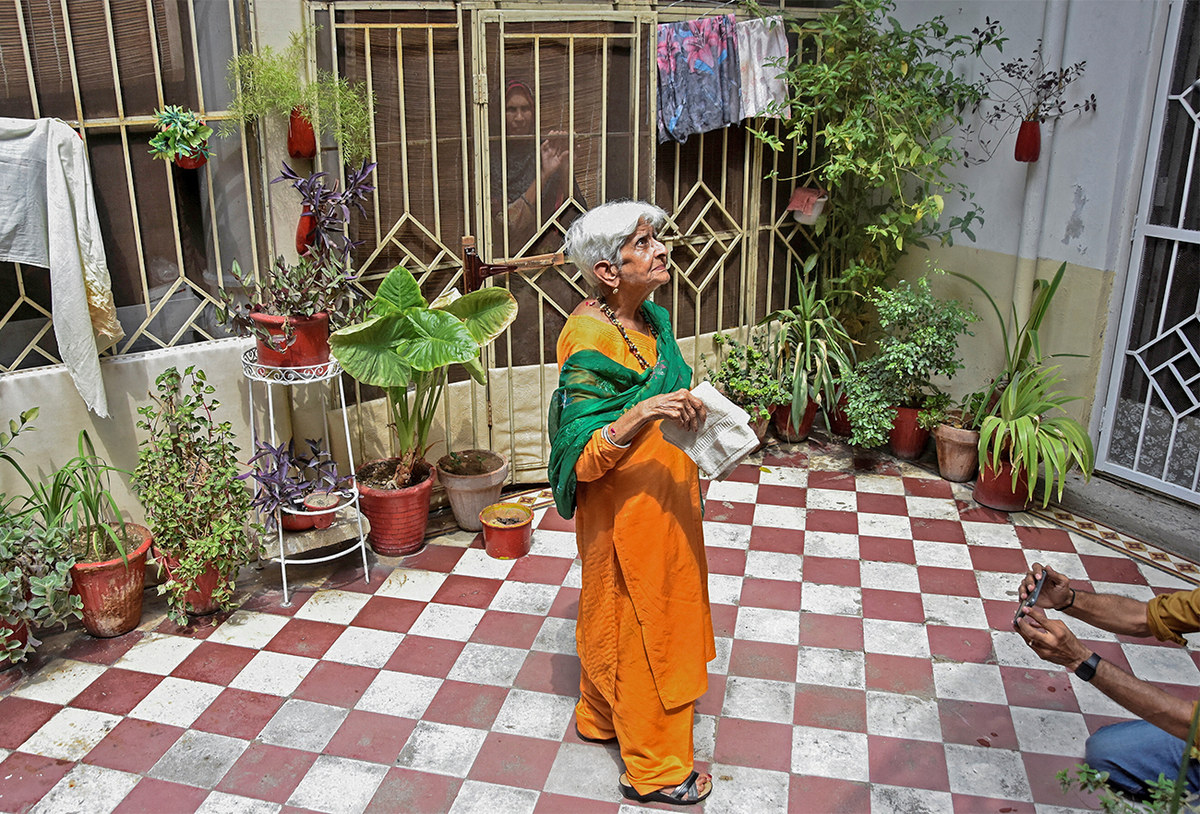


Reena Varma, 90-year-old Indian citizen born in Pakistan, stands at a neighbour's house next to her ancestral home while visiting after 75 years, in Rawalpindi, Pakistan July 20, 2022. (REUTERS)

At one point she burst into laughter over being unable to climb a staircase without a support, saying she had once tackled it “like a bird” countless times a day, according to a member of the family that now lives in the house.

LONG WAIT FOR VISA

Varma’s family fled to the Western Indian city of Pune shortly before partition. She was 14 years old at the time. The rest of the family all died without seeing their former home again.

Pakistan and India have fought three wars since 1947 and relations have remained tense, making travel between the two countries near-impossible.

But after decades of attempts to get a visa, Varma crossed into Pakistan last week by road at a border crossing near the eastern city of Lahore.
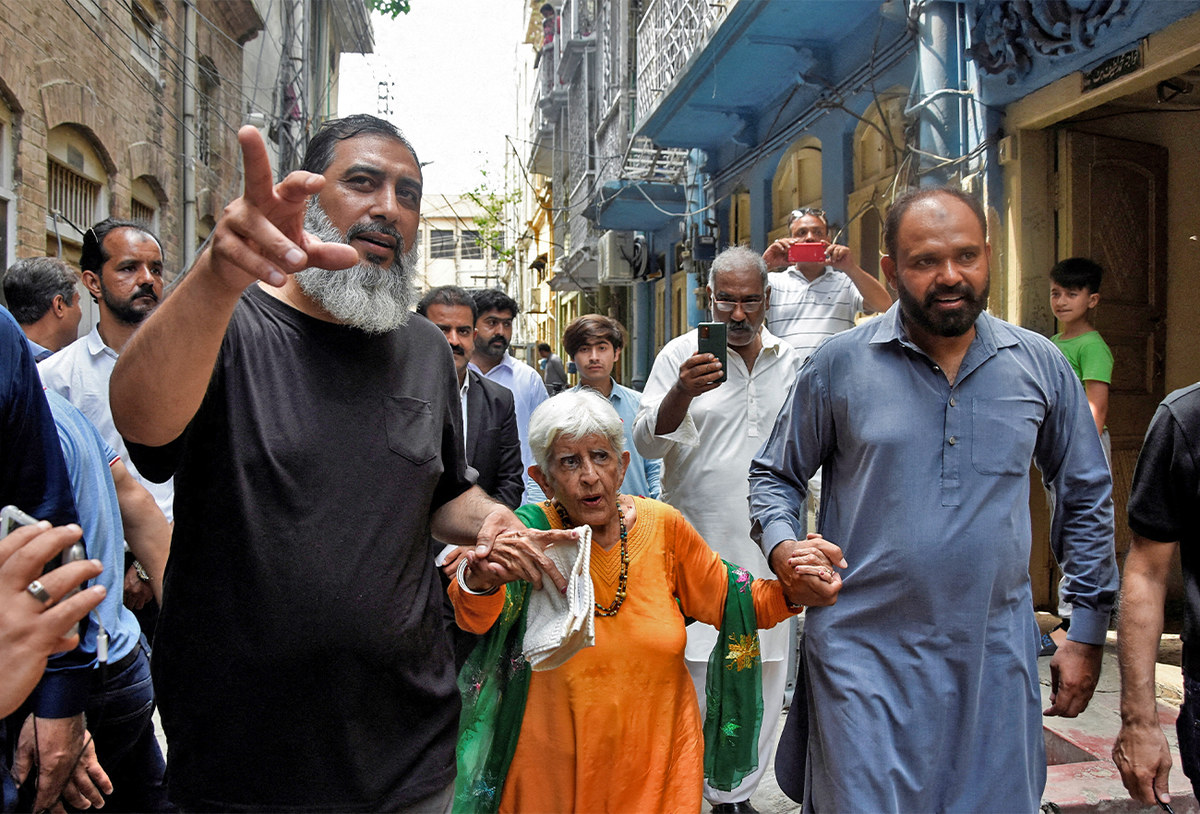


Reena Varma, 90-year-old Indian citizen born in Pakistan, walks with locals along a street, while visiting her ancestral home after 75 years, in Rawalpindi, Pakistan July 20, 2022. (REUTERS)

The India Pakistan Heritage club run by Imran William and Sajjad Haider, which works to highlight the shared heritage of the two countries and reunite families separated by partition, helped with the process of finally getting permission to travel.

Varma urged both countries to ease their visa regimes to enable people of both countries to meet more frequently.

“I would urge the new generation that they work together to make things easy,” she said. “We have the same culture. We have the same things. We all want to live with love and peace.”


Reena Varma, 90-year-old Indian citizen born in Pakistan, looks from the balocny of her ancestral home while visiting after 75 years, in Rawalpindi, Pakistan July 20, 2022. (REUTERS)

When she lived in Rawalpindi hers was a Hindu street, she said, but Muslims, Christians and Sikhs all lived in her neighborhood peacefully.

“I would say keep the humanity above everything,” she said. “All religions teach humanity.” 


At least 13 civilians killed in Pakistan strikes in Afghanistan, UN says

Updated 23 February 2026
Follow

At least 13 civilians killed in Pakistan strikes in Afghanistan, UN says

  • Pakistan said it launched the strikes after blaming recent suicide attacks on militants operating from Afghan territory
  • The reported toll adds to fears of a renewed cycle of retaliation between the neighbors, threatening a fragile ceasefire

ISLAMABAD/KABUL: At least 13 civilians ‌were killed and seven injured in Pakistani airstrikes in eastern Afghanistan, the United Nations said on Monday, as cross-border tensions escalated following a string ​of suicide bombings in Pakistan.

The reported toll adds to fears of a renewed cycle of retaliation between the neighbors, threatening a fragile ceasefire along their 2,600-km (1,600-mile) frontier and further straining ties as both sides trade blame over militant violence.

The United Nations Assistance Mission in Afghanistan (UNAMA) said it had received “credible reports” that overnight Pakistani airstrikes on February 21–22 killed at least 13 ‌civilians and injured ‌seven in the Behsud and Khogyani ​districts ‌of ⁠Nangarhar province.

Taliban ​spokesman Zabihullah ⁠Mujahid earlier reported dozens killed or wounded in the strikes, which also hit locations in Paktika province. Reuters could not independently verify the reported toll.

Pakistan said it launched the strikes after blaming recent suicide attacks, including during Ramadan, on militants operating from Afghan territory.

Pakistan’s information ministry in a post on X said ⁠the “intelligence-based” operation struck seven camps of the Pakistani Taliban ‌and Daesh (Islamic State) Khorasan Province ‌and that it had “conclusive evidence” the militant ​assaults on Pakistan were directed ‌by “Afghanistan-based leadership and handlers.”

Kabul has repeatedly denied allowing militants ‌to use Afghan territory to launch attacks in Pakistan.

The strikes took place days after Kabul released three Pakistani soldiers in a Saudi-mediated exchange aimed at easing months of tensions along the border.

Afghanistan’s defense ministry condemned ‌the strikes and called them a violation of sovereignty and international law, saying an “appropriate and measured ⁠response will ⁠be taken at a suitable time.” The Afghan foreign ministry said it had summoned Pakistan’s ambassador.

In a statement on the February 21-22 strikes, Afghanistan’s education ministry said eight school students; five boys and three girls, were killed in Behsud in Nangarhar province, and one madrasa student injured in Barmal in Paktika province, adding that dozens of other civilians were killed or wounded and educational centers destroyed. Reuters could not independently verify the information.

The latest strikes follow months of clashes and repeated border closures ​that have disrupted trade ​and movement along the rugged frontier.