

Saudi World Defense Show aims to get bigger and better, CEO says during Farnborough Airshow

1 / 4
2 / 4
3 / 4
4 / 4
Short Url
Updated 20 July 2022
Follow

Saudi World Defense Show aims to get bigger and better, CEO says during Farnborough Airshow

  • WDS organizers are at the event in the UK to promote their second expo, which will take place between Feb 4 and 8, 2024
  • ‘Really it’s about bringing some new things to the show, making the things we have even better and growing it,’ WDS CEO Andrew Pearcey told Arab News

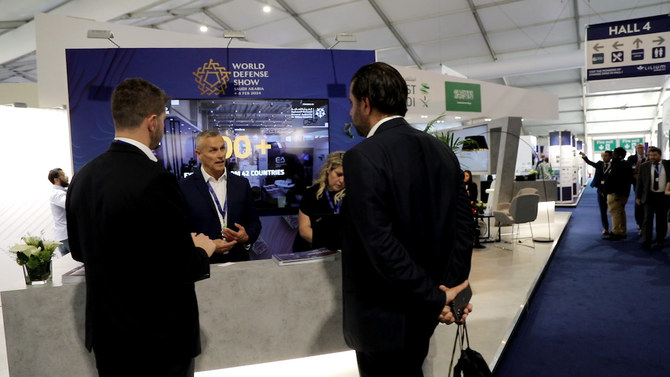
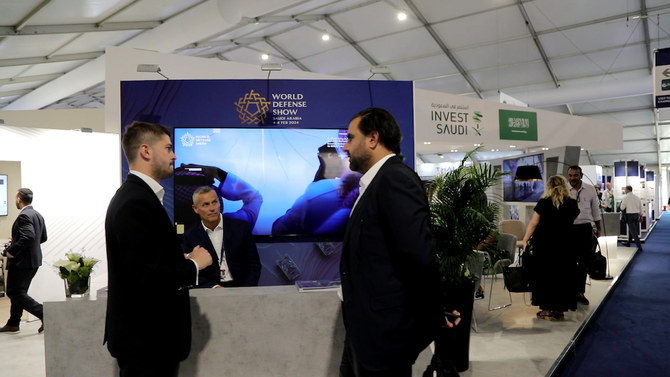
FARNBOROUGH, UK: Saudi Arabia’s World Defense Show is at the UK’s Farnborough International Airshow this week to promote its second expo, which organizers revealed on Tuesday will take place from Feb 4 to 8, 2024.

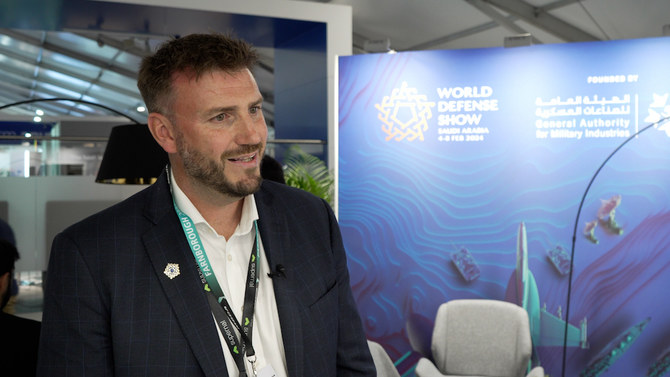
“We are here promoting the next World Defense Show in 2024, so really we’re selling the show to all of the exhibitors here,” WDS CEO Andrew Pearcey told Arab News.

“A lot of the exhibitors that attend Farnborough are the type of exhibitors we want attending the World Defense Show and there is a really international audience here, which really works well for us.”

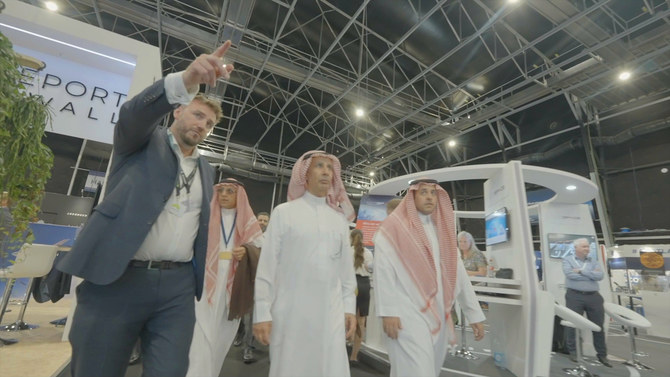
WDS is joined at the Farnborough show, which began on Monday and continues until Friday, by the Saudi General Authority for Military Industries, which is the Kingdom’s defense regulator; Saudi Arabian Military Industries, which is owned by the Kingdom’s Public Investment Fund; and Invest Saudi, which is part of the Ministry of Investment.

WDS organizers said that already a number of potential new exhibitors have expressed interest in taking part in the second staging of the event in Riyadh. The first WDS took place in March this year.


“We had such a successful inaugural show — 65,000 trade visitors, over 600 exhibitors, 35,000 square meters of exhibition space — and of course now it’s on the map, definitely awareness has grown. So, we’re expecting the show to get bigger and better,” said Pearcey.

He added that organizers are currently looking at ways to expand the show, including the addition of another exhibition hall. As a result, the floor plan for the event has not yet been finalized but when it is, by September, they will be ready to start contacting interested parties.

“There’s lots of new things, so we’re looking to bring space to the show,” said Pearcey. “So we want to create a space zone, because space is a big area for defense. And in fact aerospace here at Farnborough, it’s a big thing.”

He added there is also a desire to put a greater focus on technology at the 2024 event and showcase the latest developments in that area.


“Saudi Arabia has got really good SME (small-to-medium) innovation companies coming through; we want to showcase that,” said Pearcey. “We will have a technology area and zone that showcases the future of defense and technology … and on top of that we want to see more flying displays.”

When the first WDS was held in March, heavy sandstorms hit the Kingdom and forced the cancelation of most of the planned aerial displays. As a result, organizers decided to shift the next show to February, when the weather is likely to be better.

“So, really it’s about bringing some new things to the show, making the things we have even better and growing it,” said Pearcey.

Given the ambitious climate initiatives and targets adopted by the Kingdom, he added that there will also be a focus on sustainability during the planning and staging of the show, including recycling and other efforts to keep the event’s carbon footprint as small as possible.

“It’s quite difficult to do but it is on our agenda,” he added.


Saudi Arabia exports milk, dairy products worth $1bn in 9 months 

Updated 15 sec ago
Follow

Saudi Arabia exports milk, dairy products worth $1bn in 9 months 

RIYADH: Saudi Arabia’s exports of milk and dairy products reached approximately SR3.9 billion ($1.03 billion) during the first nine months of 2025, according to data released by the General Authority for Statistics and reviewed by Al-Eqtisadiah. 

The agricultural and industrial market for the dairy sector in the Kingdom is estimated at SR22 billion in 2024, according to Saudi Minister of Industry and Mineral Resources, Bandar Al-Khorayef, who spoke at the Saudi Dairy Forum in Al-Kharj. He noted at the time that Saudi Arabia has achieved 129 percent self-sufficiency in dairy products. 

Saudi Arabia’s exports of milk and dairy products in 2024 reached approximately SR4.8 billion, while exports in 2023 amounted to approximately SR4.2 billion, bringing the total export volume for the last three years up to September 2025 to more than SR13 billion. 

The licensed annual production volume of dairy products and infant formula is estimated at more than 29 million bottles, equivalent to 685 million kg and more than 818 million liters. 

Data indicated that the UAE was the largest importer of Saudi products during the three years up to last September, with imports totaling approximately SR4 billion, followed by Kuwait at SR2.6 billion, and Oman at SR1.3 billion as well as Bahrain at SR1.1 billion, Iraq at approximately SR1 billion, Jordan at SR997 million, and Yemen at SR837 million. 

The Zakat, Tax and Customs Authority told Al-Eqtisadiah newspaper that the volume of Saudi exports of dairy products and infant formula during the first half of 2025 reached 296.5 million kg. 

How many dairy and infant formula factories are there in Saudi Arabia? 

The Ministry of Industry and Mineral Resources told Al-Eqtisadiah newspaper that the number of dairy and infant formula production plants in Saudi Arabia reached 218 by the end of the first half of 2025. 

Riyadh and Makkah each have 65 plants, while the Eastern Province has 33, and Madinah has 14. Qassim has 11 plants, Al-Jawf and Tabuk 3 each, Hail and Asir 2 each, and Jazan and Najran 1 each. 

Al-Kharj accounts for more than 70 percent of Saudi Arabia’s dairy production. The protocol signed between Saudi Arabia and China last May approved the export of 13 dairy products, including infant formula. 

Up to 95% of Saudi Arabia’s milk production is certified with the “Saudi GAP” mark 

The Ministry of Environment, Water and Agriculture previously confirmed that 95 percent of Saudi Arabia’s milk production is certified with the “Saudi GAP” quality mark. This step highlights producers’ commitment to applying the highest quality and food safety standards and ensuring that local products conform to national and international standards. 

The Ministry added that the quantity of raw milk produced in specialized dairy farms, according to statistics, reached 2.7 billion liters in 2024. Riyadh led production with 1.6 billion liters, followed by the Eastern Province with 1.1 billion liters. The number of dairy cows in these farms reached 233,000 heads. 

By adopting the certified “Saudi GAP” quality mark, the ministry aims to enhance the reliability of food safety standards and deepen consumer confidence in local products. “Saudi GAP” is one of the ministry’s initiatives aimed at establishing the concept of sustainable agricultural practices and increasing the volume and quality of plant and animal production, thereby supporting the competitiveness of local products and contributing to achieving the goals of Vision 2030.