


COLOMBO: Sri Lankan lawmakers convened on Saturday to begin the process of electing a new leader, after president Gotabaya Rajapaksa fled overseas and resigned following mass protests over the country’s economic collapse.
Rajapaksa submitted his resignation on Friday as he left for Singapore, after he fled to the Maldives earlier in the week to escape a popular uprising over the role his family played in Sri Lanka’s worst economic meltdown since independence from Britain in 1948.
For months, the island nation of 22 million people has suffered through shortages of essential goods and days’-long fuel queues, while foreign exchange reserves dwindled close to zero and headline inflation hit 54.6 percent last month.
Protests over the crisis that began in Colombo in March and rippled across the nation culminated last week, when thousands of demonstrators stormed government buildings to demand the country’s leadership to resign. They continued to occupy the facilities until Thursday afternoon.
Prime Minister Ranil Wickremesinghe was sworn in as interim president on Friday, and will serve in the role until the Sri Lankan parliament elects a successor to Rajapaksa, whose term ends in 2024.
Parliament’s secretary general, Dhammika Dasanayake, announced that nominations for the election of a new president will be heard on July 19.
“If more than one member is proposed and seconded, the parliament is required to fix a date and time for the holding of the election,” Dasanayake said during a brief session on Saturday.
“That date should not be later than 48 hours from the time of receiving nominations.”
Dasanayake also read out Gotabaya’s resignation letter, the contents of which were not previously made public.
“I believed that the best possible steps were taken at the time to curb this crisis,” Rajapaksa said in the letter.
“I was born in this country and this is my motherland, and I have been working for the nation with all sincerity and I will continue my services toward the greater good of the country.”
Rajapaksa’s ousting formally ended the rule of his family’s political dynasty over Sri Lanka, where for years members had held top government positions. But protesters are against the idea of electing the current interim president, who they say still works in the family’s interest.
Wickremesinghe was selected as the ruling party’s candidate for president, while the opposition is nominating Sajith Premadasa. Another senior ruling party lawmaker from the Sri Lanka Freedom Party, Dullas Alahapperuma, has also announced his candidacy.
“We have told all the legislators in the parliament not to elect Ranil Wickremesinghe as the president, who is the henchman of the Rajapaksa family,” Namal Jayaweera, one of the protest leaders, told Arab News.
“Gotabaya purposefully planted Ranil as the prime minister to look after his family’s interests. Ranil will be another wolf in sheep’s clothing,” he said.
Wickremesinghe, who has faced calls to step down and whose own house was occupied by protesters last weekend, previously said that he would quit his premiership when a new government is formed.
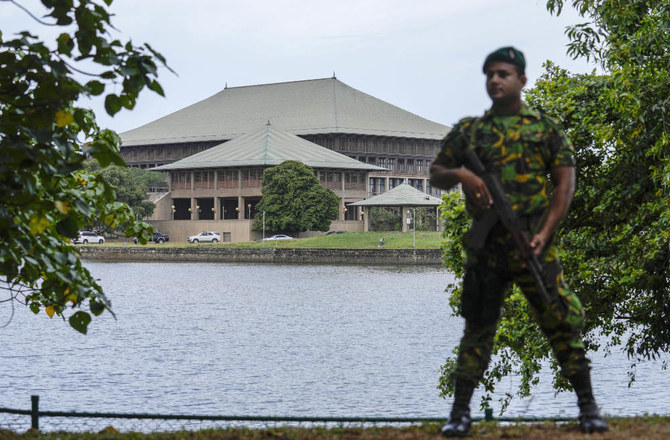
Security was tight around the Parliament building in Colombo on Saturday, with armed masked soldiers on guard and streets near the building closed to the public.
Mohammed Ihsaan Huzain, a Colombo-based medical student who took part in the mass protests, told Arab News that Sri Lanka needs “dedicated politicians who can work with all sincerity,” after a “heartless government” that was “deaf and blind” to the people’s sufferings.
“Our mission does not end with the expulsion of Gotabaya Rajapaksa,” he said. “We can see the end of the tunnel, which gives us hope and confidence.”


