Hajj kidney patients receiving dialysis treatment

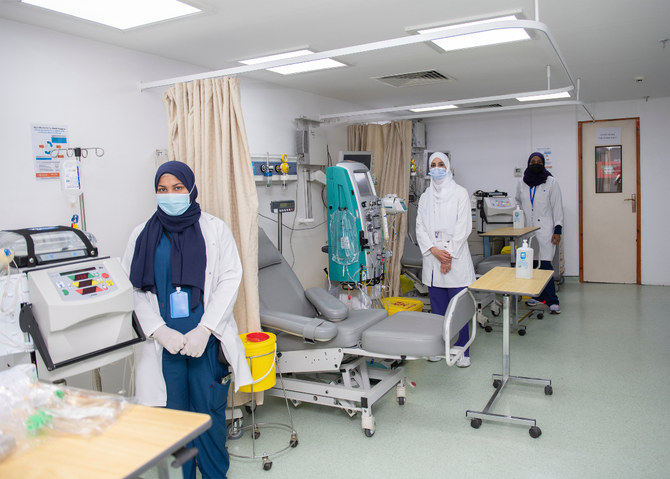
A team of well experienced 57 doctors and 228 nurses are working on 251 dialysis units. (Supplied)
Short Url
Updated 08 July 2022
Follow

Hajj kidney patients receiving dialysis treatment

  • 25 central and 10 mobile transfusion devices available
  • Pilgrims can get health advice in sign and seven other languages

MINA: As part of its efforts to provide medical care for this year’s pilgrims, the Saudi Ministry of Health is providing dialysis services for kidney patients in Makkah and Madinah.

According to the ministry, 57 doctors and 228 nurses are working on 251 dialysis units, which serves over 1,000 patients daily in the two cities.

There is centralized oversight of the kidney centers at hospitals in Makkah, Mina, Muzdalifah, and Arafat. Pilgrims have to be registered before receiving treatment.

This year, the ministry added 10 mobile dialysis units, which can be used by paramedics and hospitals where central machines are unavailable. Mobile units, the ministry said, can also be transported to the camps of pilgrims if needed.

In terms of general health provision, the ministry has stated that between May 31 and July 3, medical workers performed five open-heart surgeries, 66 cardiac catheterizations, 182 dialysis sessions, two endoscopic procedures, and 95 surgeries at the holy sites.

Dr. Mohammed Al-Abd Al-Aly, spokesperson of the ministry, on Thursday at a press conference in Mina, urged pilgrims to wear face masks to avoid respiratory infections, and to use umbrellas to protect them from the intense heat.
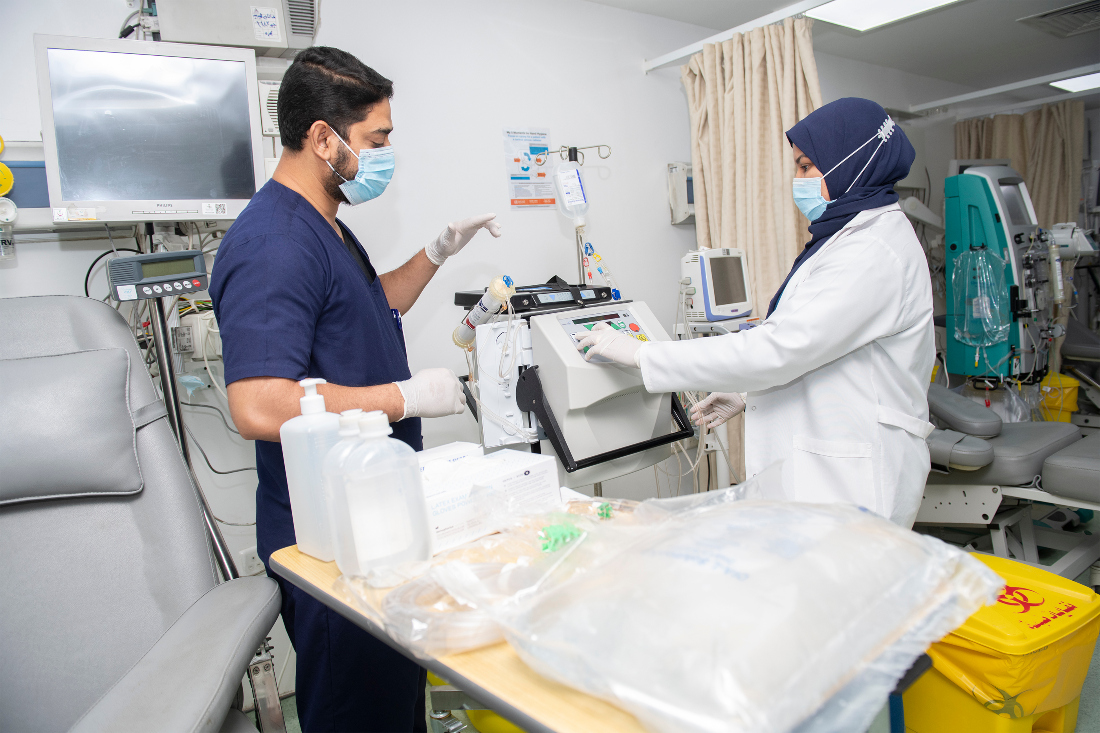


Saudi Ministry of Health is providing a dialysis service for patients with kidney failure, serving up to 1,000 patients round the clock in Makkah and Madinah. (Supplied)

He said pilgrims can contact the health ministry through various channels. “We would like to urge all pilgrims to not hesitate to call (937) for any remarks, comments, consultations, or any other medical assistance. On a daily basis, we are ready to receive their inquiries in seven languages, in addition to sign language,” he said.

The ministry has expanded its 937 call center for this year’s Hajj, focusing on providing quicker responses to health inquiries, addressing feedback on services provided, and identifying missing pilgrims who were admitted to medical facilities at the holy sites.

The center offers these services in seven languages — Arabic, English, Urdu, French, Indonesian, Turkish, and Farsi. It also receives inquiries and provides assistance through other channels, including WhatsApp, Twitter, e-mail, and the ISHARA application for persons with hearing difficulties.

Al-Abd Al-Aly said that 25,000 health workers are providing services in Makkah and Madinah, adding that 23 hospitals with 4,654 beds are available to pilgrims.

He also said more than 53,000 pilgrims have so far benefited from the country’s health services.


Saudi Cabinet condemns ‘blatant’ Iranian aggression; affirms Kingdom’s right to respond to threats

Updated 04 March 2026
Follow

Saudi Cabinet condemns ‘blatant’ Iranian aggression; affirms Kingdom’s right to respond to threats

RIYADH: Saudi Arabia has warned it reserves the “full right” to respond to Iranian aggression following a series of “blatant and cowardly” strikes targeting the capital and the Eastern Province.

The warning came during a late-night Cabinet session on Tuesday, chaired by Crown Prince and Prime Minister Mohammed bin Salman via videoconference, according to the Saudi Press Agency (SPA).

During the session, the Cabinet “reaffirmed Saudi Arabia’s full solidarity with the brotherly countries whose territories were subjected to blatant Iranian aggression”, signaling a united front against regional threats.

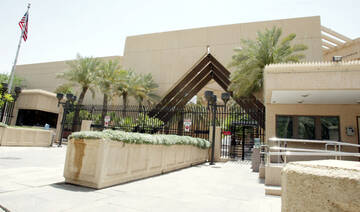
The session followed a dramatic escalation of hostilities, including a direct drone attack on the US Embassy in Riyadh. 

Major General Turki al-Malki, spokesperson for the Ministry of Defense, confirmed that while air defenses intercepted multiple threats, the embassy compound sustained a “limited fire and minor material damage.”

General Al-Malki further announced that Saudi forces successfully intercepted and destroyed eight additional drones targeting the cities of Riyadh and Al-Kharj early Tuesday morning.

In a sharp rebuke of the embassy strike, the Saudi Ministry of Foreign Affairs (MOFA) cited a flagrant violation of the 1949 Geneva Convention and the 1961 Vienna Convention on Diplomatic Relations.

“The repetition of this flagrant Iranian behavior... will push the region toward further escalation,” the Ministry stated, underscoring that these provocations occurred despite Riyadh’s explicit policy of not allowing its airspace or territory to be used as a launchpad for strikes against Iran.

Global condemnation and solidarity

The Cabinet expressed deep appreciation for the wave of international support as world leaders condemned Tehran’s “indiscriminate” behavior.

In a joint show of force, the US and GCC member states (Bahrain, Kuwait, Qatar, Saudi Arabia and the UAE) along with Jordan stood united, labeling the strikes a “dangerous escalation” and reaffirming a collective right to self-defense.

Leaders from the United Kingdom, France, and India. — including Prime Minister Narendra Modi — voiced strong solidarity with the Kingdom. The UK government confirmed its forces are engaged in “defensive actions” to maintain regional stability.

Amid the heightened military tension, the Cabinet reviewed the Kingdom’s hospitality efforts for GCC citizens currently stranded at Saudi airports due to regional airspace closures. The crown prince reaffirmed that the state would mobilize all capabilities to support brotherly nations in any measures they take to restore regional peace and stability.