

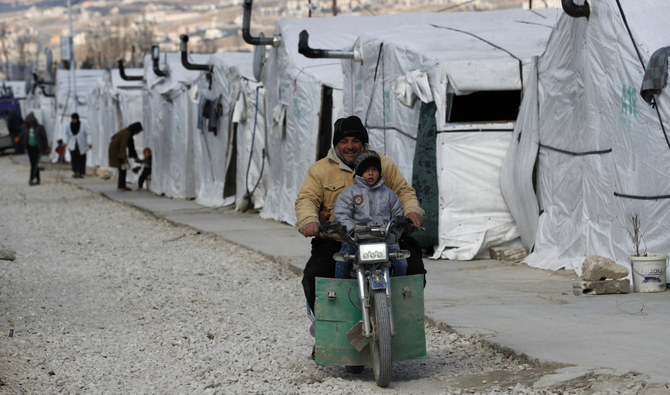

BEIRUT: Lebanon plans to start sending back tens of thousands of Syrian refugees within months over objections by the UN and rights groups, a minister said in an interview on Wednesday.
Lebanon has one of the world’s highest numbers of refugees per capita and currently hosts over 1 million Syrians who fled the decade-old conflict. Officials say the influx has cost Lebanon billions of dollars and further damaged its crippled infrastructure while it struggles with a financial meltdown.
“We are serious about implementing this plan and we hope to do so within months,” Issam Charafeddine, Lebanon’s caretaker minister of the displaced, said. “This is a humane, honorable, patriotic and economic plan that is necessary for Lebanon.”
The Lebanese government’s plan would entail sending back 15,000 Syrian refugees every month.
The UN High Commissioner for Refugees and rights groups oppose involuntary repatriation to Syria and say the practice risks endangering the returning refugees.
The UN refugee agency in a press statement denied that it is engaged in negotiations with Beirut and Damascus on refugee returns.
“UNHCR continues to call on the government of Lebanon to respect the fundamental right of all refugees to a voluntary, safe and dignified return,” the statement read.
The UN estimates that 90 percent of Syrian refugee households live in extreme poverty. But since late 2019, poverty has worsened for both Lebanese and Syrians as the Mediterranean country continues to struggle with crippling economic crisis. Sky-rocketing fuel prices coupled with a currency collapse has meant many essential commodities are now out of reach.
The Lebanese minister on Monday presented the plan to President Michel Aoun. A committee consisting of caretaker Prime Minister Najib Mikati, Charafeddine, six other ministers and the country’s General Security organization had been working on the proposal since March to gradually return some 1.5 million Syrian refugees from Lebanon.
Charafeddine plans to visit Syria next week to meet Local Administration and Environment Minister Hussein Makhlouf.
He hopes they will agree on a concrete timeline for the plan to repatriate 15,000 Syrian refugees every month. The minister says Makhlouf had told him that the Syrian government could provide temporary shelter for repatriated refugees in areas that are “entirely safe.”
“We have statistics from the Interior Ministry of the names of the displaced, where they live, and where they’re originally from, and so we would return them by neighborhood,” the minister said. He said Lebanon is willing to repatriate refugees in larger numbers if the Syrian government is able to receive them “at a later stage.”
Charafeddine said the Syrian government has agreed to drop charges against former opposition fighters and political opposition.


