

Oil Updates — Crude bounces back; OPEC general-secretary dies; US investors form venture eyeing Venezuelan oil

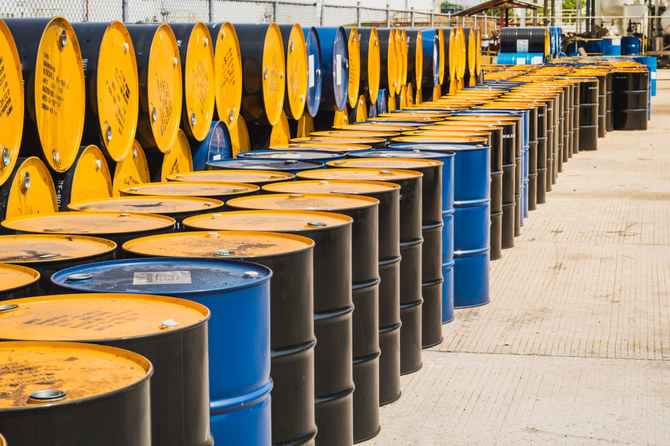
Brent crude futures rose as much as $3.08, or 2.9 percent, to $105.85 a barrel in early trade (Shutterstock)
Short Url
Updated 06 July 2022
Follow

Oil Updates — Crude bounces back; OPEC general-secretary dies; US investors form venture eyeing Venezuelan oil

RIYADH: Oil prices rose nearly 3 percent on Wednesday before paring some gains as investors piled back into the market after a heavy rout in the previous session.

Brent crude futures rose as much as $3.08, or 2.9 percent, to $105.85 a barrel in early trade after plunging 9.5 percent on Tuesday, the biggest daily drop since March. 

It was last up 92 cents, or 0.9 percent, at $103.69 a barrel at 0243 GMT.

US West Texas Intermediate crude climbed to a session high of $102.14 a barrel, up $2.64, or 2.7 percent, after closing below $100 for the first time since late April. It was last up 46 cents, or 0.5 percent, at $99.96 a barrel.

OPEC general secretary Mohammad Barkindo dies at 63

OPEC secretary-general Mohammad Barkindo has died at Abuja, Nigeria at the age of 63, Arab News learned.

He will be buried in his home town Yola, a source confirmed.

The news of Barkindo’s death was confirmed by Mele Kyari, managing director of Nigerian National Petroleum Corporation.

In a tweet, Kyari described Barkindo’s departure as a great loss to his immediate family, NNPC Nigeria, OPEC and the global energy community.

US investors form venture to pursue oil and gas projects in Venezuela

Two US investment funds on Tuesday said they formed a joint venture with a Venezuelan firm to pursue oil and gas exploration and production projects in the US-sanctioned South American country.

Gramercy Funds Management and Atmos Global Energy said their joint venture would work with an arm of Inelectra Group, a Caracas-based firm that holds a stake in the Gulf of Paria East oil project off Venezuela’s eastern coast, where it found oil in 2001.

US companies are barred from doing business with Venezuelan state-run oil firm PDVSA, a policy begun in 2018 by the Trump administration and continued under US President Joe Biden.

The companies did not disclose the size of their investment in the oil venture. Spokespeople did not immediately reply to requests for comment.

Any effort is subject to approvals by the US and Venezuela, the companies said.

Ali Moshiri, a US executive and former chief of Chevron Corp’s Latin American operations, set up an investment fund in 2019 to pursue energy projects in Venezuela. The partners aim to “contribute to balancing oil supply and demand,” he said in a statement.

The oil effort “will be beneficial to US interests in the region and the US economy by lowering fuel prices for American consumers,” said Matt Maloney, a partner at Connecticut-based emerging market investor Gramercy.

(With input from Reuters) 


Bahrain to roll out fiscal reforms to bolster public finances

Updated 5 sec ago
Follow

Bahrain to roll out fiscal reforms to bolster public finances

RIYADH: Bahrain’s government has unveiled a comprehensive package of fiscal reforms aimed at curbing public expenditure, generating new revenue streams, and safeguarding essential subsidies for citizens.

According to a report by the Bahrain News Agency, the measures include increases in fuel prices, higher electricity and water tariffs for certain categories, and greater dividend contributions from state-owned enterprises.

The Cabinet emphasized that electricity and water prices will remain unchanged for the first and second tariff bands for citizens’ primary residences, including homes accommodating extended families.

These reforms are aligned with Bahrain’s Economic Vision 2030, which seeks to reinforce fiscal discipline, diversify revenue sources beyond crude oil, and ensure long-term fiscal sustainability.

“The Cabinet confirmed that electricity and water tariffs for the first and second tariff bands for citizens’ primary residences will remain unchanged, taking into account extended families residing in a single household,” BNA reported.

The Cabinet also agreed to defer any changes to the subsidy mechanisms for electricity and water used in citizens’ primary residences until further studies are completed. At the same time, it approved amendments to electricity and water consumption tariffs for other categories, with implementation scheduled to begin in January 2026.

Under the proposed reforms, a 10 percent corporate income tax will be levied on companies with revenues exceeding 1 million Bahraini dinars ($2.6 million) or annual net profits above 200,000 dinars.

The new corporate tax framework is expected to come into force in 2027, subject to the completion of necessary legislative and regulatory approvals.

In addition, Bahrain plans to increase natural gas prices for businesses and reduce administrative government spending by 20 percent as part of broader cost-cutting efforts.

The government also aims to improve the utilization of undeveloped investment land that already has infrastructure in place by introducing a monthly fee of 100 fils per square meter, with implementation anticipated in January 2027.

The Cabinet further tasked the ministers of labor, legal affairs, and health with reviewing fees related to worker permits and health care services.

According to the report, revised fees will be phased in gradually over a four-year period starting in January 2026, with domestic workers exempt from the changes.

Authorities stressed that the reforms are designed to streamline government procedures that support investment, attract foreign capital, and strengthen the role of the private sector in driving economic growth.