



RIYADH: Contemporary artist Ahmed Mater’s first visit to Makkah sparked a magnetic attraction to the holy site that would shape his creative outlook on life.
Similar to many Saudis, his initial interaction with the city was as a child, but his most vivid memories of visiting Makkah came during his medical university years.
He told Arab News that on one trip, surrounded by construction cranes, he felt that his “imagination was more powerful than reality. Sometimes, we dream about change. And it happens because the power of imagination creates all of this movement.”
On his parents’ promise to take him to Makkah for the first time, he said: “They told me I would face something different when in front of the Kaaba, and that I would feel a magnet attraction.”
That moment stuck with him, and he continued building on it to inspire his work through his imagination.
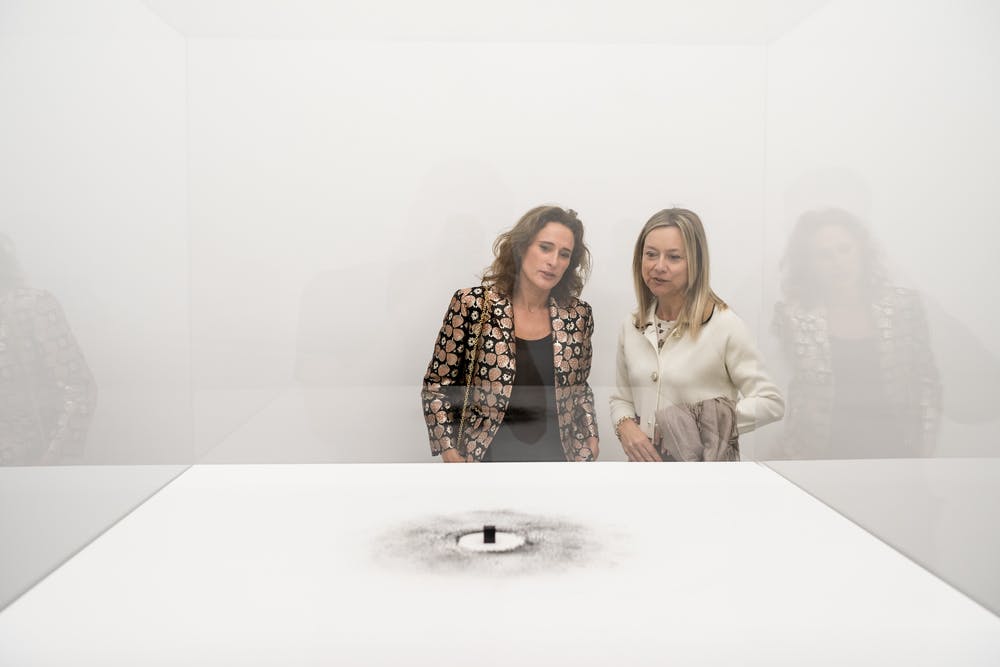
One of Mater’s most popular artworks, “Magnetism,” was constructed using thousands of iron particles surrounding a magnetic cuboid, a symbol of the Kaaba, which becomes the center of attraction to the small particles. “I create most of my artwork based on attraction,” he added.
The viewer’s eye is drawn toward the contrast and simplicity of the color palette, with the black elements set on white canvas and all the specs attracting simultaneously to the center. The exhibit is surrounded by four glass screens, signifying the holiness and sanctity of the performance of Hajj that should not be disturbed by outsiders.
His work also plays with the idea of repulsion.
In an essay, British writer Tim Mackintosh-Smith, said: “The Kaaba is magnet and centrifuge: going away, going back home, is the last rite of pilgrimage.”
Mater said: “I think it’s very important after the coronavirus pandemic that things come back to life. I spent more than four to five years attending Hajj as a photographer and researcher, and really, it’s one of the most beautiful scenes when you hear all of the people with one sound. And you feel it. It really cannot be described by words.”
While entrance to the city of Makkah and the Hajj performance itself is reserved strictly for those of Islamic faith, Mater caters to the curiosity of outsiders within the context of community and urbanism.
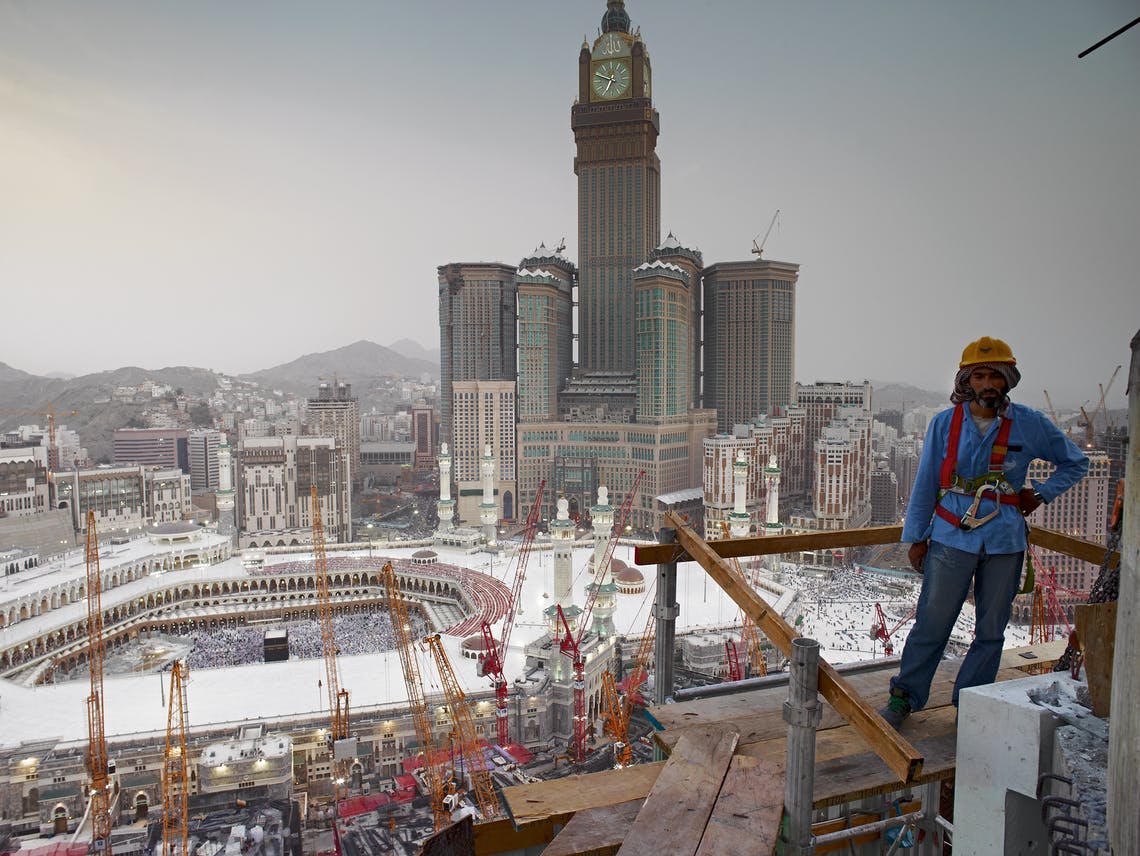
In his 2017 to 2018 exhibition, “Ahmed Mater: Makkah Journeys,” staged at the Brooklyn Museum in New York, he presented a series of multimedia artworks centering on working conditions, construction, and urban redevelopment that have characterized recent Hajj seasons.
“Sometimes it’s really about memory and about the way that our culture teaches about spirituality, imagination. Because we are a very spiritual culture, a very emotional culture, in our songs and our intimacy and families. So, I think that’s part of our life, and it’s created a lot,” he added.
In his work, “Leaves Fall in All Seasons,” a documentative on-ground video compilation, he focuses on the workers that contributed to the mass expansion of the metropolis. He noted that Makkah, as a city, had been nourished and built by Muslim immigrants and pilgrims of all backgrounds, bringing a lively and perplexing feel to the holy city.
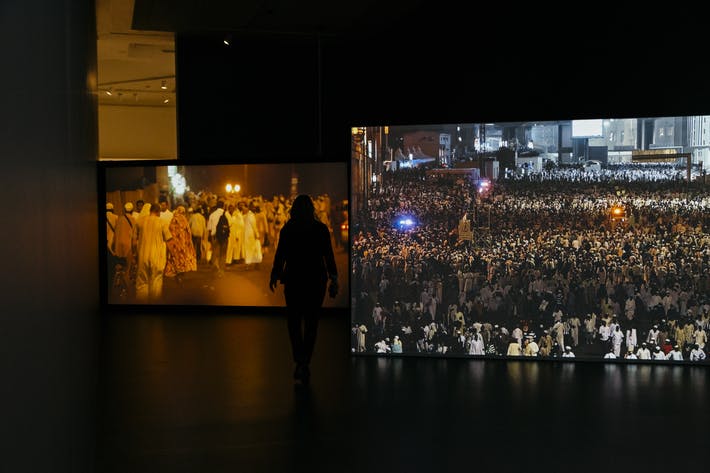
“Everyone dreams about this Islamic world. It’s their dream to do it once in their life,” he said.
His care for the social well-being of individuals and communities, attributed to his background as a medical doctor, shows through his work as he provides audiences with a glimpse of what a journey to Makkah would be like for those unable to go.
“My opinion is that our work now represents our time now. Every time represents its moment. For example, in the 1950s and 1960s there were great artists. They represent their time, and they built this kind of beautiful history. We are now building our time and history,” Mater added.
The physician-turned-artist is a powerhouse in documenting untold stories, and he has played a leading role in establishing the Saudi art scene and legitimizing it locally and internationally.
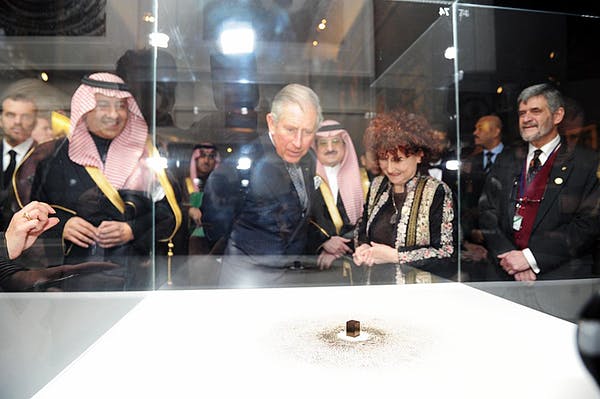
In 2016, Mater became the first Saudi artist to hold a solo show in the US with his symbolic cities display at the Smithsonian museum’s Arthur M. Sackler Gallery in Washington, D.C.
While most artists leave their work open to audience interpretation, Mater said he hoped the research and perception behind his art reached the viewer in some way. “My artwork has personal context, it’s personal. It’s my life,” he said.
The more the visual artist has delved into Islamic collective identity, the more appealing his work has become to global audiences.
“I think globally but act locally. We are in our timeline now, and it represents Saudi Arabia now,” he added.


