

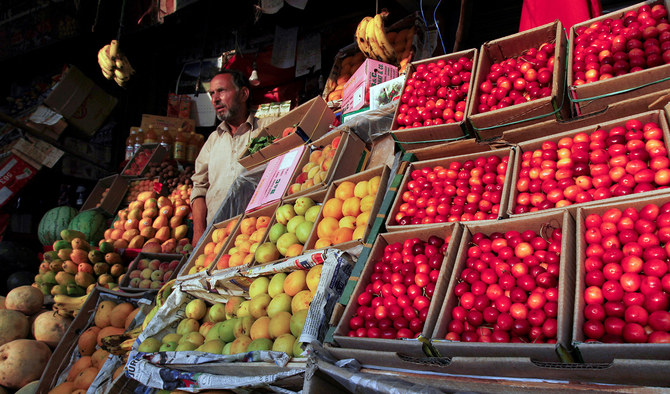

SRINAGAR: Fruit growers in Indian-administered Kashmir said on Monday they were facing huge losses as truck-loads of apples, pears and other produce got caught up in traffic jams caused by a security crackdown during an annual Hindu pilgrimage.
Hundreds of thousands of people have come through the contested region to visit a shrine in a Himalayan cave for the Amarnath Yatra pilgrimage.
Numbers are even higher this year, as the event was shut down in 2021 during the pandemic - and security is tighter after police said last week they had uncovered a militant plot to attack pilgrims.
Fruit-laden trucks were stranded as security forces held up traffic to check for threats, Bashir Ahmad Basheer, from the Kashmir Valley Fruit Growers and Dealers Union, told Reuters.
"Freshly harvested plums, peaches, pears and apples need to be transported outside Kashmir or else they may rot in this heat and we will face heavy losses," he said.
Lieutenant Governor Manoj Sinha, who leads the region, acknowledged there was a problem and said the government was working on plans to ease traffic.
"Trucks will only be stopped when pilgrims travel on the highway and trucks loaded with perishables won’t face any inconvenience," he told reporters.
Indian soldiers carrying automatic assault rifles and wearing flak jackets have been out guarding roads since the Hindu pilgrimage began in the Muslim-majority region in June.
"Pilgrims are our guests but our trucks should not be stopped," orchard owner Ghulam Mohammad Malik told Reuters.
He said farmers and traders would together face losses of 30 million Indian rupees ($380,000) per day if congestion did not ease.
Fruit cultivation is the backbone of Kashmir's economy, and gives work to about 3 million people, according to the growers union.
During the pilgrimage, Hindus cross glaciers and waterlogged trails to reach the mountain cave which contains an ice stalagmite that is considered a physical manifestation of the god Lord Shiva.
The cave is covered in snow for most of the year, but authorities let pilgrims visit it for 45 days over the summer as rising temperatures clear the passes.
India and Pakistan have twice gone to war over Kashmir, which is divided between them but both claim in full, and it remains at the heart of decades of hostility.


